


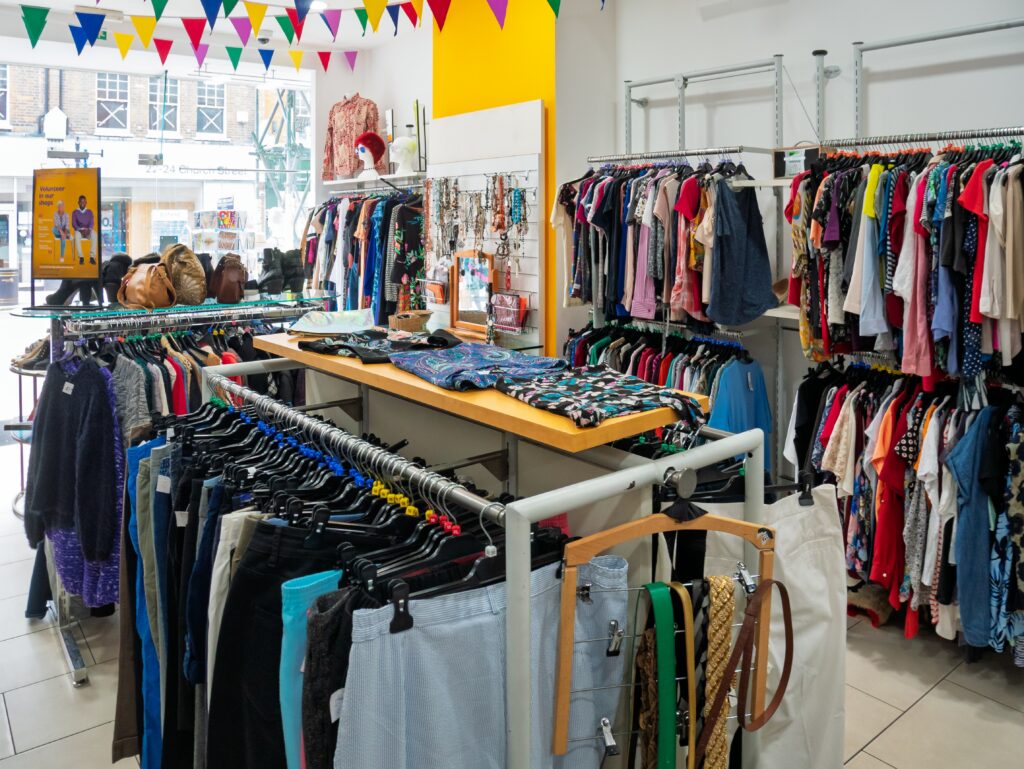
One merchant told letsrecycle.com that they alerted their customers that their prices had decreased by as much as 40% from 1 June 2026.
Prices for charity shop textile banks have reduced by £10 per tonne in the last two months, but direct charity shop collections have remained unchanged until now.
Jonathan Mail, Head of Public Affairs at the Charity Retail Association (CRA), said: “The prices paid by merchants for used clothing remain at historic lows, reflecting rising operational costs and challenges in the global market for used clothing.”
The sector has been waiting for the release of the Government’s Circular Economy Growth Plan since Autumn 2025.
Its release was delayed until “early 2026” and subsequently “Spring 2026”, with Defra recently indicating that it may be released “soon”.
Frustration has been growing as the sector continues to wait for the plan, which is tipped to include proposals for an Extended Producer Responsibility system for textiles.
Mail added: “To ensure the long-term future of recycling and reuse options for clothing that charity shops cannot sell, the Government urgently needs to publish its long-overdue Circular Economy Growth Plan and press ahead with Extended Producer Responsibility for textiles.”
While prices are only being reduced for now, some in the sector have warned that they may have to start charging charities for the collection of textiles.
Peter Page, Group Recycling and ESG Director at Textiles Recycling International (TRI), said: “Over the past 12 months, material quality [from the charity retail sector] has deteriorated to unsustainable levels, with as much as 40% of collected textiles now suitable only for non-commercially viable recycling processes or energy recovery through incineration.
“Without meaningful intervention to improve textile quality and support end-of-life infrastructure, there is a real risk that, within the next 12–24 months, charity shop textile collections could transition from a revenue-generating activity to a chargeable service, creating significant financial challenges for charities and undermining the sustainability of the sector.”
Difficult economic conditions
The second-hand textiles sector has faced tough economic conditions in recent years.
The industry is being flooded by “ultra-fast fashion” produced by brands like Shein and Temu which has reduced the quality of second-hand clothing while at the same time increasing supply.
Traditionally in the UK, textiles which charity shops cannot sell are traded to “collector, sorter and processor” merchants.
The same is true for textiles dropped off at textiles banks, for example at recycling centres or outside supermarkets.
The clothing is then usually graded by quality to be sent for reuse in secondary markets in Africa and Asia.
Items which cannot be sold overseas are discarded as waste via landfill or incineration.
However, the low value of ultra-fast fashion items has undermined this system, with overseas exporters no longer as interested in low-grade textiles coming from the UK.
At the same time, end markets such as those in Eastern Europe and the Middle East have been disrupted due to ongoing geopolitical tensions, including the ongoing Iran-US conflict.
The situation has seen textiles merchants cutting prices across the sector, including the implementation of gate fees for HWRC collections which tend to be the lowest quality.
The Salvation Army Trading Company has considerably reduced the number of textiles banks it operates in response to the crisis.
The British Heart Foundation announced earlier this month that it would be closing approximately 150 stores to ensure its “commercial sustainability”.

Register for free to comment