


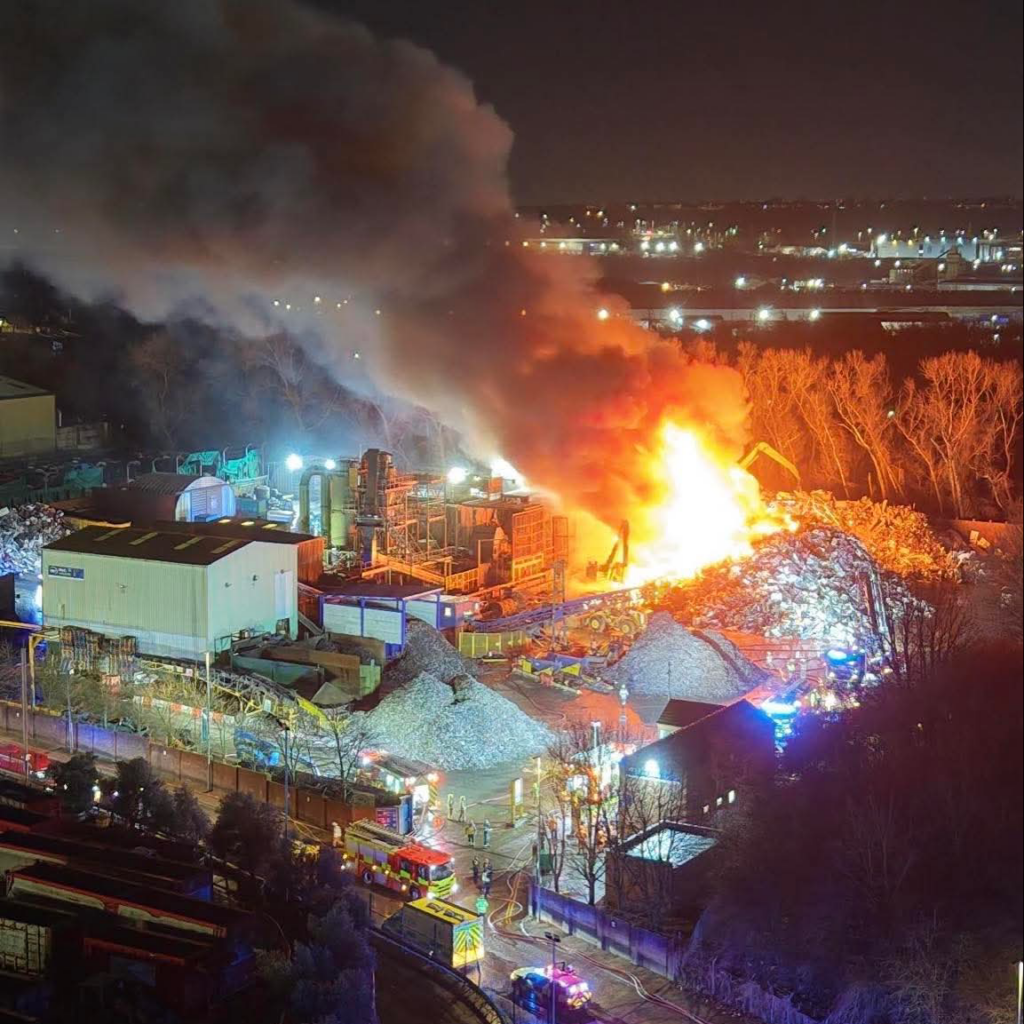
A Freedom of Information (FOI) request from global insurer QBE found that fire services are now responding to an average of 4.8 lithium-ion battery fires each day across the UK, compared with around two incidents a day in 2022.
Lithium-ion batteries are commonly used in e-bikes, e-scooters, mobile phones, laptops and power tools.
However, growing use of the technology has been accompanied by increasing concern over fire risks linked to damaged, defective or incorrectly disposed batteries.
Lithium-ion fires are commonly caused by a process known as thermal runaway, a chemical reaction in which batteries irreversibly overheat. This can occur following impact damage, overcharging or overheating.
Unlike conventional fires, thermal runaway can cause fires to spread rapidly and burn intensely for prolonged periods, making them more difficult for firefighters to extinguish and increasing the risk of injury and property damage.
According to the research, almost half (46%) of lithium-ion battery fires occurred in homes, while 31% took place outdoors and 23% were recorded at commercial properties.
The London Fire Brigade recorded the highest number of incidents in 2025, attending 522 lithium-ion battery fires during the year – accounting for almost a third (30%) of all such incidents nationwide.
The London Fire Brigade and North London Waste Authority (NLWA) launched a public awareness campaign in October 2025 to tackle the increasing number of fires caused by electricals at its waste facilities.
The rise of battery fires in the waste sector
The figures come amid mounting concern from the waste and recycling sector over the impact of discarded batteries entering the waste stream.
The Environmental Services Association (ESA) has previously warned that battery fires in the UK waste sector are reaching “epidemic levels”, driven largely by batteries disposed of incorrectly in household bins.
Industry bodies estimate the financial cost of battery fires now exceeds £1 billion annually, alongside the wider impact on critical infrastructure, service disruption and worker safety.
Waste operators say lithium-ion batteries pose a particular challenge when they are hidden within residual waste loads. Batteries can ignite if crushed or punctured during collection, compaction or processing, triggering fires in refuse vehicles, transfer stations and recycling plants.
The sector has warned that such incidents are becoming increasingly frequent. Some large waste operators report experiencing an average of 15 vehicle fires each month.

Register for free to comment