

The funding was awarded through the Battery Innovation Programme delivered by Innovate UK and supported by the Department for Business and Trade.
It will support the ReCAM project – a collaboration between UK Battery Industrialisation Centre (UKBIC), Watercycle Technologies, Recyclus Group and Polaron.
The consortium said the project will focus on developing a modular lithium-ion battery recycling technology capable of processing 250kg of material per hour on-site at recycling facilities.
The initiative comes amid growing concerns around the UK’s ability to process increasing volumes of end-of-life electric vehicle batteries.
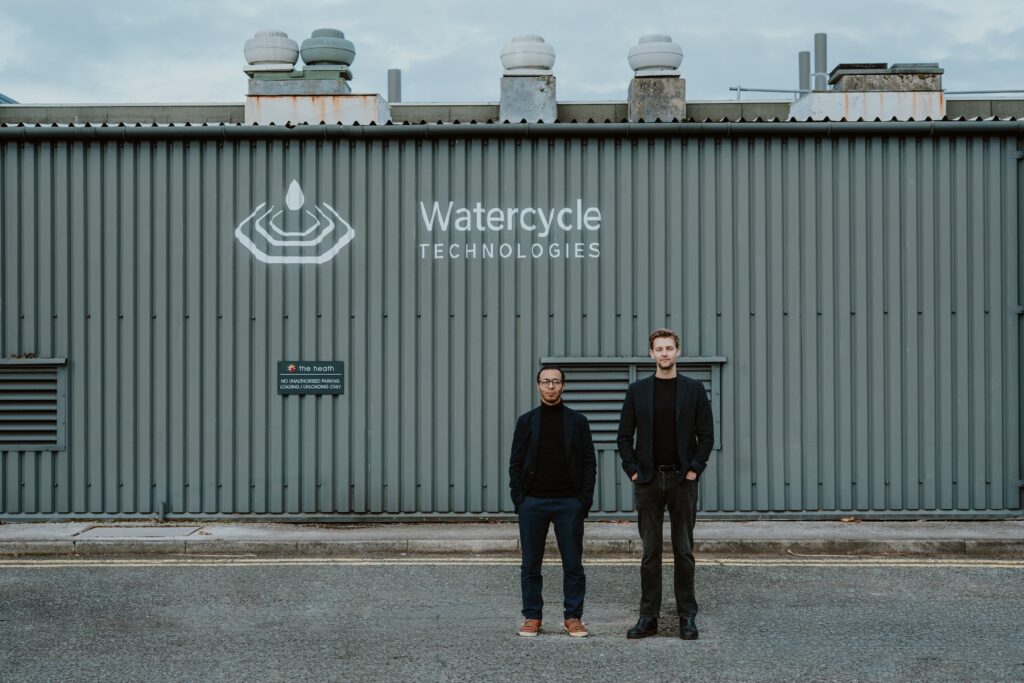
Dr Ahmed Abdelkarim, Co-founder at Watercycle Technologies, which led the funding application, said: “By establishing a viable UK-based route for refining battery waste into reusable materials we can unlock significant economic value, reduce emissions associated with exports and enhance the resilience of the UK battery ecosystem.”
ReCAM to recycle black mass
Black mass, a material produced during the disposal and recycling of lithium-ion batteries, contains valuable critical minerals including lithium, nickel, cobalt and manganese.
According to the consortium, the UK currently lacks a commercially viable route to process the material domestically, meaning it is typically exported overseas for refining.
Partners involved in the ReCAM project said this results in lost economic value, higher transport emissions and greater dependence on international supply chains.
The project aims to address this through a patented “short-loop” refining process which converts black mass directly into cathode active material (CAM) for reuse in new batteries.
Unlike recycling technologies that separate materials into individual metals through multiple chemical processing stages, the ReCAM system is designed to convert black mass into reusable battery material in a single streamlined step.
As part of the project, Polaron will use its AI-based materials platform to characterise and optimise the recycled cathode materials, helping the consortium understand how process conditions affect battery performance.
Dr Isaac Squires, CEO and Co-founder of Polaron, added: “For recycled battery materials to be used again at scale, they need to prove they can be performant.
“Our role in ReCAM is to help the consortium understand how process conditions shape cathode microstructure and performance, so promising recycled materials can move closer to battery-grade use as quickly as possible.”

Register for free to comment