
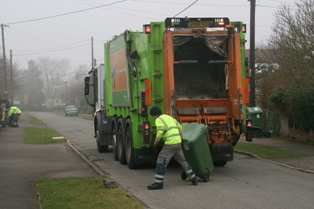
The rural districts showed that a magical 70% recycling rate might soon be possible after achieving recycling rates of 68.7% and 67.9% respectively.

We are very proud of what has been achieved, says Matt Prosser, strategic director with responsibility for waste and recycling at South Oxfordshire and Vale of White Horse councils. We set an aspirational target of 55% recycling by 2020 and we hit that within the first month. The recycling rate has gone a lot higher than we ever expected which is brilliant.
Around 250,000 residents live in South Oxfordshire and Vale over a large area of 500 square miles.
The success of the local authorities performance derives largely from their decision to establish a joint waste service and award a 50 million integrated waste management contract to Verdant, now Biffa Municipal, in January 2009. The contract saw Biffa take over recycling collections in South Oxfordshire from previous contractor Grundon in June 2009, before taking over the service in Vale from Veolia in October 2010.
The councils wanted a simple service but asked the industry how they wanted to deliver it through a competitive dialogue procurement process, which Mr Prosser says was key. The brave thing we did was say to industry how can you deliver a high recycling rate most efficiently and that is what we got. The beauty of the service is that it is simple. Tandridge has now moved to the same system and Surrey Heath, which is the top dry recycler. We are really pleased with the response we got from industry.
Service
The service now in operation in the two districts involves alternate weekly collections of dry recycling and residual waste, with a strict policy not to collect side waste. All recyclables are collected commingled in a 240 litre wheeled bin and include paper, cardboard, metal, mixed rigid plastics, glass and batteries. These are sent to Biffas materials recycling facilities in Edmonton and Aldridge for sorting.
Biffa also provides weekly collections of food waste, which is sent for treatment to Agriverts anaerobic digestion facility at Cassington, and a charged-for fortnightly garden waste collection service.
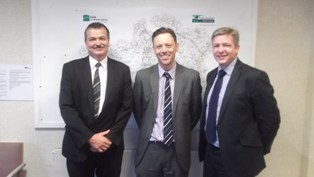
A lot of the councils snapping at our heels have a free garden waste service, explains Mr Prosser. But it is not just about the recycling rate but also about the efficiency of the contract. We have a cost efficient service for residents which is key for us.
Communications
One of the things that Mr Prosser says he is particularly proud of is the clear communications delivered through Biffa. Integral to this is Biffa-managed customer service unit which includes a call centre. Melanie Penfold, who used to work for South Oxfordshire council, plays an important part in delivering communications as Biffas senior waste and recycling officer.
Simon Chown, Biffa business manager for the contract, says that if he was going to recommend anything to other local authorities, it would be to allow their contractors to runs call centres.
He says: This has taken out unnecessary communications with residents. Now residents can call us directly and we can deal with their problems much quicker.
The council and Biffa also endeavour to educate residents about what happens to their waste.
Mr Prosser explains: We have highly affluent and articulate residents and in the early days we got a number of calls about where the recycling was going. We took them to a MRF and it had a powerful impact and they are now ambassadors for the service. It reinforces the message that it is all being recycled.
Mr Prosser acknowledges that although socio-economic factors have helped South Oxfordshire and Vale perform so well on recycling, with none of the large conurbation issues faced by many local authorities, the joint nature of the service and the partnership with Biffa are what make this contract exceptional.
“It is not just about the recycling rate but also about the efficiency of the contract. We have a cost efficient service for residents which is key for us”
Matt Prosser, South Oxfordshire and Vale of White Horse
We would recommend joint contracts. We save 1.2 million a year on the contract compared to the previous arrangements. We can use resources from both sides to solve an issue.
Partnership
Mr Chown agrees that the partnership approach between Biffa and the council is key and notes that, unlike with some council deals, the contract does not come to operations meetings.
He comments: What we have is a genuine partnership and we have regular meetings with the council. When I have worked in previous contracts the contractor and clients were on different sides of the fence whereas here the focus is on providing a good service.
Today, as well as being the top recyclers in the country, over 90% of residents in both South Oxfordshire and Vale are either satisfied or very satisfied with the waste collection service something which the councils and Biffa are very proud of.
If you are brave with a contract it will deliver results, says Mr Prosser. With change there will always be some resistance but you do get results.
Momentum
Looking forward, the councils and Biffa are not complacent, and are already looking at ways to improve their performance further and keep up momentum.
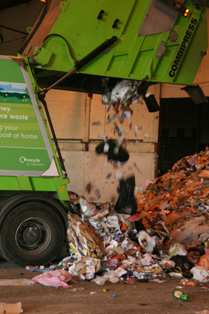
This is expected to be particularly challenging due to changes to Environment Agency guidance which says that leaf litter collected from streets and composted can no longer count as being recycled.
Mr Prosser says: We anticipate this leaf fall accounts for a couple of percentage points in our recycling rates so it will have an impact. We will continue to lobby the Environment Agency on that issue and look for a solution if there is one.
Despite this, the council is confident that more progress can be made in boosting recycling rates and is hoping to push through the 70% recycling rate barrier, which has never before been achieved by an English local authority.
Ways this could be achieved, suggests Mr Prosser, could be through enhanced communications campaigns, marketing of a new Binfo smartphone application, targeting more food waste from the residual bin alongside materials such as textiles and nappies and perhaps even one day introducing a smaller residual waste bin and reducing residual waste collections to once every four weeks.
He says: Our central objective is to say within the top ten recyclers in the country. We are not relying on past performance we will remain focused.

Register for free to comment