


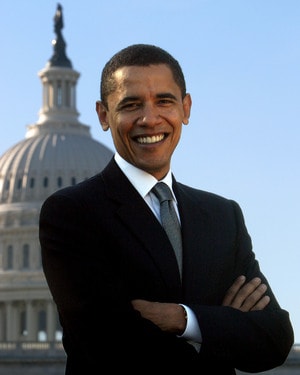
This week in its Pre-Budget Report (November 24), the UK government welcomed steps taken by the President-Elect to “help build momentum internationally” on the topic of climate change, with the green agenda of Mr Obama being a topic of considerable interest for many countries since he was voted in as the successor to George Bush.

America currently recycles 33.4% of the municipal waste it generates, which equates to 82 million tonnes of the waste arising in the country, and anybody involved in the practise will now be looking toward January 20 2009 with a keen eye on what part recycling will play in the incoming Democratic regime’s environmental policy.
Recycling in America is hardly a small concern, even in basic business terms, with the American Environmental Protection Agency (EPA) claiming that the American industry is currently a $200 billion dollar (£129 billion) enterprise involving more than 50,000 recycling and reuse companies or projects, employing more than one million people, and generating an annual payroll of approximately $37 billion (£24 billion).
Although, despite its size, the matter was barely discussed on the path to the White House and the only recycling mentioned during Presidential campaigns appeared in attack ads, with both sides accusing the other of trying to pass off other’s policies as their own.
The candidates’ focus fell largely on climate change and plans to address issues such as offshore drilling and carbon capping when environment was discussed, while recycling was merely taken as another facet of the green agenda, on which neither candidate stated an outright position.
Promise
In President-Elect Obama’s home state, Mike Mitchell, executive director of the Illinois Recycling Association, agreed that there had been little or no room for discussion of the topic during the campaign, but claimed that it was nothing new and generally believed that Obama is “pro recycling”.
He told letsrecycle.com: “There has not been a lot of solid waste or recycling legislation in recent years for Obama to be involved in. We wrote [to] him about three years ago in support of the recycling incentive program in the US Energy Bill and he, or a staffer, wrote us back thanking us of the letter and pledging always to support recycling, but there has been not other contact with him since then.”
Despite the lack of concrete evidence, the consensus is that the presidency of Obama is at least likely to offer a more environmentally-minded approach than the previous eight years of the Bush regime.
Mr Obama has the added bonus of having shown an extracurricular interest in green issues while studying at New York’s Columbia University in the 1980s.
He worked for three months as an environmental activist to promote recycling in Harlem, New York and as a community organiser he fought against perceived ‘environmental racism’ by helping residents of public housing to demand to have their apartments tested for asbestos.
Speaking at the time, Mr Obama said: “Environmentalism is not an upper-income issue, it’s not a black issue, it’s not a South or a North or an East or a West issue. It’s an issue that all of us have a stake in.”
Credentials
True to this green sentiment, the League of Conservation Voters (LCV), which accumulates American politicians’ votes on matters of environmental concern to assess their green credentials, endorsed Barack Obama on his crusade for the presidency and labeled him a “consistent supporter and co-sponsor of pro-environment legislation”.
Mr Obama currently enjoys a ‘lifetime’ rating of 72% on the LCV Scorecard accumulator, after showing commitment to votes on the use of renewable energy, cutting oil dependence and a pledge to generate ‘green jobs’, with his combatant in the Presidential campaign, Senator McCain, possessing a lifetime rating of 0% in comparison.

Nonetheless, good intentions cannot always be carried out and the one thing that would prove problematic in truly positioning himself as a green President is the current global economic crisis, which is far from likely to have passed by the time Mr Obama has settled into the Oval office.
Jad Mouawad of the New York Times claimed that some of Mr Obama’s bigger or bolder proposals, such as a planned Global Warming Bill, could potentially be hamstrung by the failing economy and that spending on environment would be competing with spending on the financial crisis and two war fronts.
However, Brian Taylor, editor of Ohio-based recycling magazine Recycling Today, suggested that the Democrats would be “more likely to prop recycling collection up with funding or mandates” than a Republican regime if the recovered material markets remain depressed for an extended period.
He said: “At the very least, if municipal recycling collection (kerbside) programs are called into question because commodity prices are depressed, a US Environmental Protection Agency under Barack Obama may offer greater sympathy to support recycling than an EPA directed by the other political party.”
“However, several of the other recycling-related initiatives-such as mandatory recycled content in government purchases or loans to innovative secondary commodity consumers-seem to enjoy fairly strong bi-partisan support,” he added.
UK
Mr Obama’s planned policies for the US could have a knock-on effect for the UK; despite no direct influence it could become increasingly difficult for the UK not to adopt a similar approach given the two nation’s close working relationship.
The London-based Environmental Industries Commission, an environmental technology and services body representing 330 members, has claimed that the policies announced by the President-Elect show considerable promise and could leave the UK “trailing” on environmental issues and urged the UK Government to take heed.
Highlighting Mr Obama’s call to create five million ‘green-collar’ jobs by 2020 through investing £150 billion in the sector, the EIC claimed that this would lead to increased opportunities in environmental technology, and build on the strong work done in the environment sector by the previous Democratic presidency of Bill Clinton.
Under Mr Clinton and his vice-president Al Gore, the EIC explained that the Government offered support for the environmental sector through a Technology Innovation Strategy; the Environmental Technology Initiative; a National Environmental Technology Strategy; and the Environmental Technologies Exports: Strategic framework for US Leadership, which led to a $9 billion (£5.8 billion) trade surplus.
Transition
Adrian Wilkes, EIC chairman, said: “Obama has set out a comprehensive and exciting set of policies to support the USA in the transition to a low carbon and resource efficient economy. This is a warning to Gordon Brown and Peter Mandelson that the UK risks falling behind in the race to develop the environmental technologies of the future.
In addition to the massive investment, the EIC claimed that President-Elect Obama also planned to develop a ‘Green Job Corps’ for “disconnected youths” to work on energy efficiency projects, and to double the amount of money in scientific and research funding.
Mr Wilkes said: “The Environmental Industries Commission calls on the UK Government to follow President-Elect Obama’s lead and commit to a comprehensive environmental industry strategy of incentives, research funding and skills development needed for the UK to lead the low carbon and resource efficient economy of the future.”
The reality seems to be that Mr Obama has recycling at least on his radar but it is grouped with a range of environmental issue. However, work in this area could be held up by pressing needs to tackle other elements of American policy such as the financial crisis and withdrawal from Iraq but, on a positive note, Mr Obama has exposed himself as someone who is at least more concerned with the green agenda than his predecessor.

Register for free to comment