

The city council, which through contractor Veolia provides a commingled kerbside service for the collection of dry recyclables, as well as separate collections of paper and card, has claimed that any potential switch to a fully separate service would not be ‘economically practicable’.
Council officers carried out an assessment of Sheffield’s compliance with the Waste (England and Wales) Regulations 2011, which places a requirement on waste authorities to carry out separate collections of material unless it is not technically, economically or environmentally practicable (TEEP) to do so, or necessary to produce ‘high quality’ recycling.
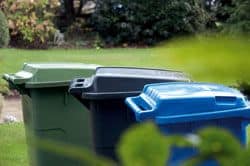
At present, recyclables are collected from Sheffield homes on a fortnightly basis, using split body vehicles to keep paper and card separate from other dry recyclables. Mixed glass, plastic bottles and cans are collected in blue wheeled bins, while residents also have a blue box for paper and cardboard.
Sorting
Paper and card collected by Veolia is taken to the company’s materials recycling facility (MRF) in Beighton, while glass, cans and plastics are taken to Glass Recycling UK in Barnsley, via a transfer station in Tinsley. Overall the recycling service costs the council a total of £5.9 million per year.
And, according to the council’s own assessment of the service presented to councillors last month: “The necessity test has found that in Sheffield, the introduction of separate collections for glass, cans and plastics would not, in all likelihood, lead to an increase in the quantity of material collected of the quality of output material sent for reprocessing. In addition, the high proportion of material sent for closed loop recycling means that a move to separate collections would not lead to an increase in the proportion of waste sent for closed loop recycling.”
Added to this, the council claims that the move would also not meet the ‘economical practicability’ test due to the cost involved in switching to a separate service.
Costs
It added: “Over the next two years, the council needs to achieve a £3.4 million saving from its waste management budget. Given that additional costs associated with introducing separate collections have been estimated at £2,980,418, together with the projected reductions in recycling tonnages collected and no increase in the quality of recycling achieved, the council deems that the costs associated with extra collections does not provide value for money, and indeed would realise a backward step in terms of environmental benefit.”
Estimated costs associated with the possible switch to a fully separate collection system are detailed in the report following discussions with Veolia – and largely arise due to the necessary investment in vehicles, staff and an anticipated increase in the volume of residual waste from households.
Councillors considered the findings of the assessment at a meeting late last month, and agreed to continue with the existing collection arrangements.

All councils should look at their existing collections to establish cost effectiveness of their multi-bin recycling and processing systems, also carbon footprints from source to final destination.
Recycling for its own sake is bonkers and many councils have difficulty justifying waste to energy plant as they have already tied themselves to long term multi-bin collection and uneconomic systems of disposal.