
There have been numerous examples of road rage in 2016, including one particularly shocking incident where a driver reversed his truck into a lorry before smashing a window with a spade. These incidents often make the news.
But – while we may see the headlines about road rage – there is an increasing level of violence being experienced right here in the waste industry, which often goes unnoticed by the general public.
Whether it’s collection crews working out on the streets or teams managing Household Waste Recycling Centres, in waste services we’re working on the frontline. And that means our employees are on the frontline when customers get angry, abusive or even violent.
In fact, in the past year alone Amey has seen a 26% increase in verbal abuse and threats of violence at the Household Waste Recycling Centres it manages.
The majority of these threats arise when people are told they cannot leave certain types or amounts of waste. This leaves our employees exposed to abuse.
In 2016 alone we saw items being thrown at employees when customers were told they did not have the right permit to use the HWRCs. In another incident an employee suffered neck injuries in an assault – all because he had simply asked a customer to wait for a few moments while a ramp was closed off.
Priority
As a company, the safety of our employees is our top priority. We also need to protect our customers and those living in the communities we operate, which is why we’re taking a stance on safety and looking at how we can change behaviours, as well as protect our workforce from abuse.
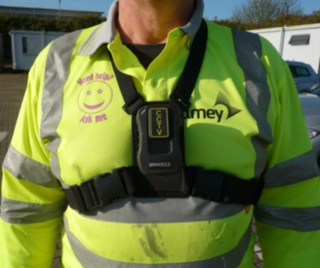
In 2016 we’ve been trialling body camera technology at the HWRCs we manage in Northamptonshire. Two types of camera have been put to the test, which are attached over an employee’s PPE.
The “bodycam” technology provides clear video footage of the area in front of the employee, including audio recording. Furthermore, when activated by the wearer, it stores the previous 30 seconds ensuring any incidents are captured, including the events immediately prior to activation.
However, Amey’s main aim with the bodycam technology has been to try and prevent incidents in the first place – by knowing they are on camera we believe customers will think twice about their behaviour. Already we’ve seen some success, with employees reporting they feel safer and customers being less aggressive when they become aware of the camera.
Playback
In the event an incident does occur, it can be recorded via the bodycam. Video and audio playback of incidents allow a recording of actual events as and when they happen, rather than relying on what people remembered. Footage can be submitted to the police for further investigation and action if needed.
This is vital. In the incidents experienced by Amey in 2016, some did lead to police charges, but others were difficult to prove due to lack of evidence. Bodycam provides that clear evidence and is of a quality over and above standard CCTV footage.
The next step in the trial is to assess how the bodycam technology can be used with collection crews, before we look at a wider roll out across the company.
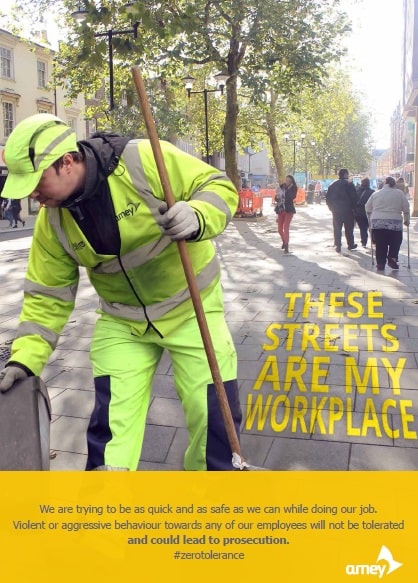
But technology is only one part of the picture. Ideally we need to stop incidents before they even occur. That’s why Amey has been working with customers in various areas of the country on a campaign to reduce abuse.

The campaign is focused on changing behaviours, encouraging the public to understand the streets/HWRCs are our crews’ workplace and somewhere they need to be able to operate safely. Numerous tools have been used to promote this message, including vehicle livery.
HWRCs
Amey manages more than 40 HWRCs and provides collection services for local authorities from as far afield as the Isle of Wight right up to Cumbria, as well as providing waste services for more than 15,000 commercial waste customers.
That means we have hundreds of employees out in the frontline each and every day and it’s not acceptable that they are exposed to unnecessary abuse and harm. We will continue to focus on steps to reduce this risk in 2017.

Register for free to comment