


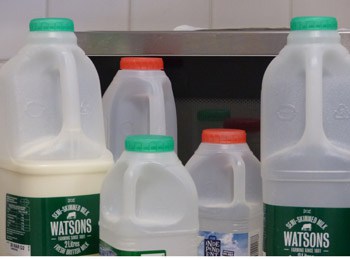
The warning came in the wake of last year’s closure of the Closed Loop plant in Dagenham which suffered when the dairy industry stopped purchasing plastic bottles made from pellet produced at the plant.
But, despite the stepping back from using some recycled products last year, the retailers today (1 March) claimed they had made huge strides in improving their environmental credentials over the last decade, particularly around reducing food waste and the overall volume of waste sent to landfill.
The British Retail Consortium, which represents major retailers ASDA, Morrisons, Sainsbury’s, Tesco, and others, published the latest update to its ‘A Better Retailing Climate’ report today (1 March), outlining progress its members have made towards increasing sustainability across a number of areas including energy, transport and waste. The initiative includes targets for retailers on environmental performance up to 2020.
Milestones
Among the milestones highlighted in the 2015 report are efforts to cut carbon emissions in store by 35% and reductions of food waste in agriculture, brought about by action to review product specifications.
But, BRC also highlighted the challenges faced throughout 2015 when a fall in oil prices led to a drop in the value of virgin plastics, which in turn affected demand for recovered plastics for use in products such as milk bottles.
This particularly affected recyclers such as Dagenham’s Closed Loop Recycling, which supplied recycled plastic for the dairy sector. Closed Loop accused retailers of reneging on their commitments to source recycled polymers in milk bottles when virgin plastics prices dropped and the business ultimately closed in summer 2015.
The incident led to questions as to whether manufacturers and retailers had backed away from producer pledges such as the Courtauld Commitment and the Dairy Roadmap, in order to cut costs in light of the oil price collapse (see letsrecycle.com story).
Sustainability
Commenting on the issue at the launch of the report this morning, Alice Ellison, BRC’s environment policy advisor, said that support for the reprocessing sector would depend on the ‘sustainability’ of the business models adopted in the recycling industry.
She said: “Our line was that retailers are signed up to a number of commitments, the Dairy Roadmap and the Courtauld Commitment. At the same time our members are working on very tight margins. Lots of members have recently restructured, so this is a complicated backdrop.
“The business models behind reprocessing need to be sustainable in the long term.”
Food waste
Elsewhere, BRC has highlighted work being done by retailers in a bid to improve efforts around waste reduction and diversion from landfill. This includes a greater focus on redistribution of surplus food from stores to charities, particularly through digital apps and online platforms which can connect local stores with charity partners seeking food for redistribution.
The report adds: “The environmental sustainability landscape has changed immeasurably in the last ten years. While retailers have delivered significant environmental achievements within their own operations, the focus of retail environmental initiatives has broadened to address the fact that the environmental impacts that arise at retail are relatively minimal compared to those that arise from the production and consumption of products.
“Our members are exploring ways to reduce carbon, waste and water in the retail supply chain, considering the entire lifecycle of the products they sell and are investigating business models, which will enable them to move away from a largely linear economy towards a more circular economy.”

Register for free to comment