


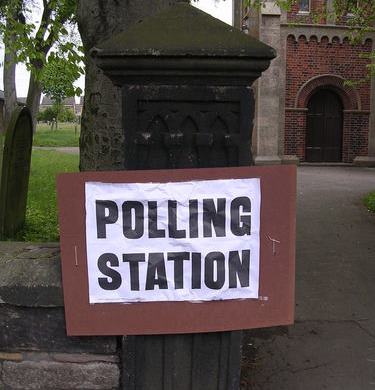
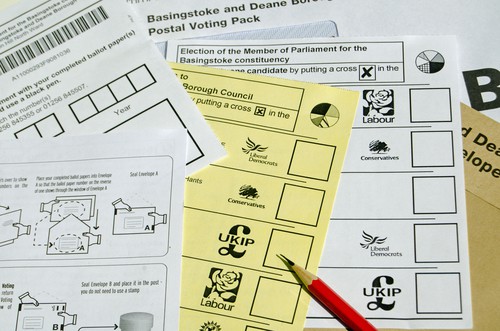
Guidance provided by the Electoral Commission to local returning officers for today’s General Election states that after being safely retained for a year after polling day, election documents must be ‘securely destroyed’.
According to the chief executive of trade body the Recycling Association, Simon Ellin, these ballot papers and related documents will mostly be securely shredded, and would constitute Sorted Office Waste (SOW) – wood free paper which includes white and coloured letters and forms.
Mr Ellin told letsrecycle.com that trying to quantify the volume of this material from an election is difficult and depends on voter turnout and how many separate local council election ballots are running alongside General Election polling across the UK.
The number of voters at the previous election in 2005 rose to 29.6 million in the UK, with a turnout of 65.1%. But, in what commentators believe will be one of the most tightly contested General Elections in generations, the number of people voting could well increase further this time around.
[testimonial id = “229” align=”right”]
And, considering these factors, Mr Ellin estimated that if on average each ballot paper weighs around 4.5 grammes, the overall value of used 2015 General Election documents for the waste and shredded paper industry could be between £250,000 and £350,000.
Mr Ellin remarked: “The current system probably gives a little boost in May every four years for our members! It is not insignificant but it is not going to be the greatest amount of material on the market. If that all went into one line, that would be quite a bonus.”
But, with the documents being stored and later disposed of by returning officers across the UK rather than securely disposed of in one place, Mr Ellin said that the value “will be diluted up and down the country”.
Shredding
However, with the possibility that today’s election will not deliver a stable government, some – including the Liberal Democrat leader Nick Clegg – have speculated that another General Election could be on the cards this year.

And, with the Conservative Party, UKIP and the Green Party all in support of holding a referendum on the UK’s membership of the European Union, could the paper recycling industry benefit from a potential surge in ballot paper material over the next two years or so?
President of the United Kingdom Security Shredding Association (UKSSA), Reuben Bolton, with a smile, told letsrecycle.com: “Lots of ballots and referendums would be good for our business really and recycling could probably be the most positive use of ballot papers!”
He added: “I have shredded ballot papers in the past for local borough councils, but never for a General Election.”
Mr Bolton said he did not have any data on the possible impact on the industry of past elections, but said that the security shredding services provided by the association’s members will prove sound. “There will be an increase, but as long as it’s handled securely then it should be ok.”
Outside the UK, many countries use electronic methods of voting, but the UK continues to use paper ballots.
Asked whether any future move towards electronic voting in the UK could be a loss to the paper recycling industry, Mr Bolton said: “Any move to digital technology is always a bit of a loss to the paper industry and the shredding industry. But it is also understandable as it is easier to record and manage I suppose.”
What are the rules about used ballot papers?
Guidance provided by the Electoral Commission to local returning officers for today’s General Election states that election documents must be ‘securely destroyed’, although it does not stipulate the manner in which this is done – this is up to the relevant Returning Officer.
However, there are various time limits for which different documents must be retained before they are securely destroyed.
In England and Wales, the majority of election documents – including all ballot papers, postal votes, proxy votes, and various voter lists and accompanying documents – are forwarded to the relevant registration returning officer and “must be kept securely for one year from the date of the poll”.
In Scotland, though, the Returning Officer must retain the above election documents for their constituency for one year from the date of the poll.
According to the Electoral Commission, these documents are then securely destroyed.
However, home address forms “must be kept securely stored for a period of 21 calendar days after you have returned the writ” and must be “securely destroyed on the next working day” after the 21-day period, or on the day after the conclusion of petition proceedings, should one these proceedings take place.
A spokesperson for the Electoral Commission added: “Concerning other materials connected to the election (i.e. not falling under the categories above, such as publicity material etc, these will be disposed of in accordance with the Local Authority’s usual recycling policy. Similarly, many of the materials used in the course of the election (for example other stationery items) will be re-used.”
More information is available on the Electoral Commission website.
Related Links:
–Electoral Commission guidance
–Recycling Assocation
–UK Security Shredding Association


Register for free to comment