


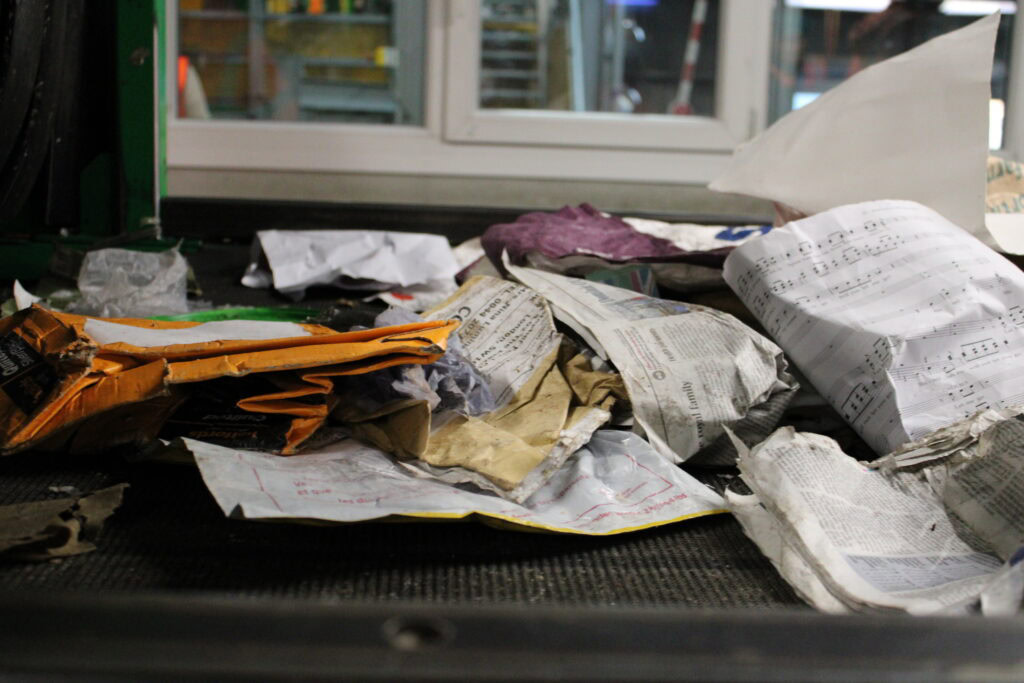
While there has been plenty of discussion surrounding local authority preparedness and anaerobic digestion (AD) capacity, the effect on paper and card recover rates has largely been missing from national debate.
As part of the changes, local authorities will be made to provide separate collections for food waste, residual waste and dry mixed recycling – with, crucially, the default option to separate out paper and card. A co-mingled approach can be used if it can be justified based on technical or economic impracticability.
According to PackUK data, this material stream makes up about 32% of packaging waste, second only to glass at 37%.
Paper and card: A window of opportunity
New data from Greyparrot has shed some light on the effect the new policy may have on paper and card recovery rates.
The AI waste analytics company looked at over 17 billion individual items going through Material Recovery Facilities (MRFs) in England – representing 20% of the country’s recycling stream.
For the 2025 data, it found that just under a third (29.3%) of paper and card still ended up in streams destined for landfill or incineration.

PackUK officially classes 76% of paper and card as recyclable, so there is definite incongruency between what can be and what actually is being recycled – which represents an opportunity to increase recovery rates.
While a portion of packaging is harder to recover, such as composite cartons, waxed or plastic-coated cardboard and padded paper mailers, moving away from co-mingled collections will likely help close the gap by capturing easily recyclable material.
The problem with co-mingled collection
Contamination in mixed steams leads to degradation in the quality of paper and card streams. The fragile material is often soiled or damaged by food and liquid, meaning that it can’t be recycled.
It also becomes harder to separate the material once it’s at the MRF, especially if shards of broken glass end up contaminating the stream.
Greyparrot said it can see the process happening through at the MRFs it analysed.
On average, 98.3% of material on the fibre belt they looked at were target recyclable paper and card – while the remaining 1.7% was non-target contamination including plastics, metals, glass and non-recyclable paper. Plastic alone accounted for 1% of contamination.
Greyparrot CEO and Co-Founder Mikela Druckman said: “That fraction sounds small. It isn’t.
“Reprocessors operate to tight quality thresholds and reject entire bales on this basis, meaning good fibre goes with the bad.
“With the introduction of Simpler Recycling, we predict more fibre will be recovered from what’s already in the system, strengthening feedstock for UK reprocessors.
“For brands, this is a promising shift as cleaner, separated streams become the norm, well-designed packaging will deliver on its recyclability goals. This unlocks environmental impact and real economic value.”

Register for free to comment