
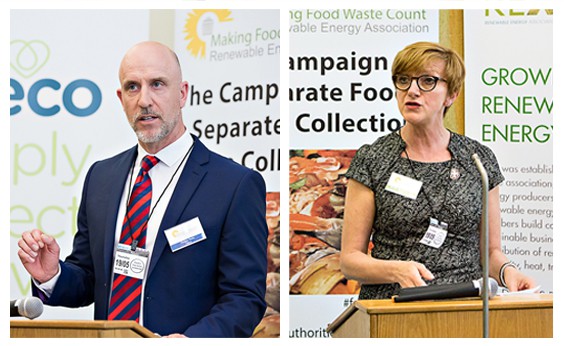
The message of positive financial benefits from food waste collections has been highlighted in research produced for the Organics Recycling Group of the Renewable Energy Association (REA).
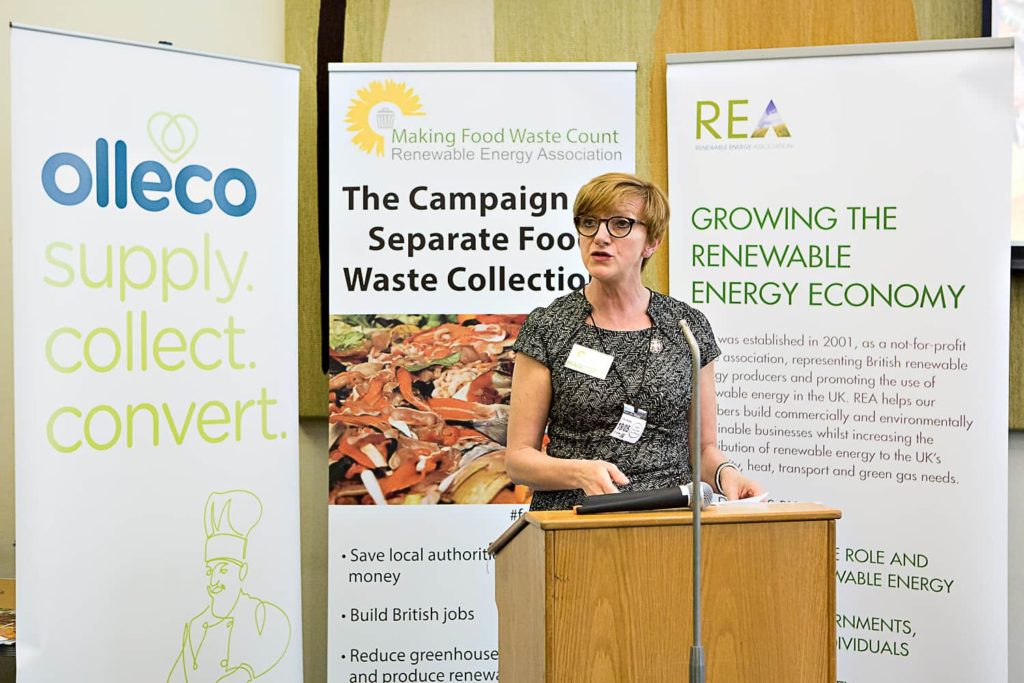
The report, which was launched in Parliament last week (19 May), was supported by food waste recycling company Olleco.
Titled ‘The Real Economic Benefit Of Separate Biowaste Collections’, the document examines the cost of introducing measures to mandate source separation of food waste by councils and businesses and discusses how to overcome legislative challenges.
Produced by consulting company Eunomia, the document is part of a wider campaign from the REA for legislation to be introduced to mandate separate food and other biowaste collections in commercial and domestic settings (see letsrecycle.com story). The backing of the study and a wide range of organisations will bolster the REA’s argument to government.
Saving costs
According to the report, there is a need in England to address the approximate 1.85m tonnes of commercial and industrial food waste that is currently being disposed of through thermal treatment or landfill. However, businesses are currently reluctant to take on separate food waste collections due to the initial costs involved.
The report says: “For larger food waste producers, emerging charging practices are already making food waste collections an option that saves money, although perhaps not a significant amount.
“The savings arising from avoided disposal can significantly offset the costs of collection.”
REA
“However, were food waste collections to become more widespread through a mandatory requirement on food businesses to separate their food waste, it would have a significant impact on the amount businesses can expect to pay for this service. Even relatively small producers of food waste could then expect to make savings on the overall cost of their waste collections through source separation.”
Nina Skorupska, chief executive of the REA, said: “It’s important to work with the larger food waste businesses to help them stick to the waste hierarchy. Scotland, Northern Ireland and Wales are leading on this. A lot more needs to be done so we are too.”
Household waste
The report also examines how councils can make direct savings by separately collecting food waste. “At its simplest, collecting food waste has the potential to remove a substantial amount of waste from the residual stream, allowing it to be diverted to lower cost and more environmentally beneficial forms of treatment,” it adds.
An off-putting feature for local authorities embarking on separate food waste collections is the initial cost of bins and collection contracts. However, it is argued that, “the savings arising from avoided disposal can significantly offset the costs of collection.” According to the report, increases in dry recycling and food waste collection means that local authorities can switch to a fortnightly or three-weekly residual collection, which can reduce collection costs by around 25%. The report states that in many cases this saving is typically between £10-£20 per household per year.
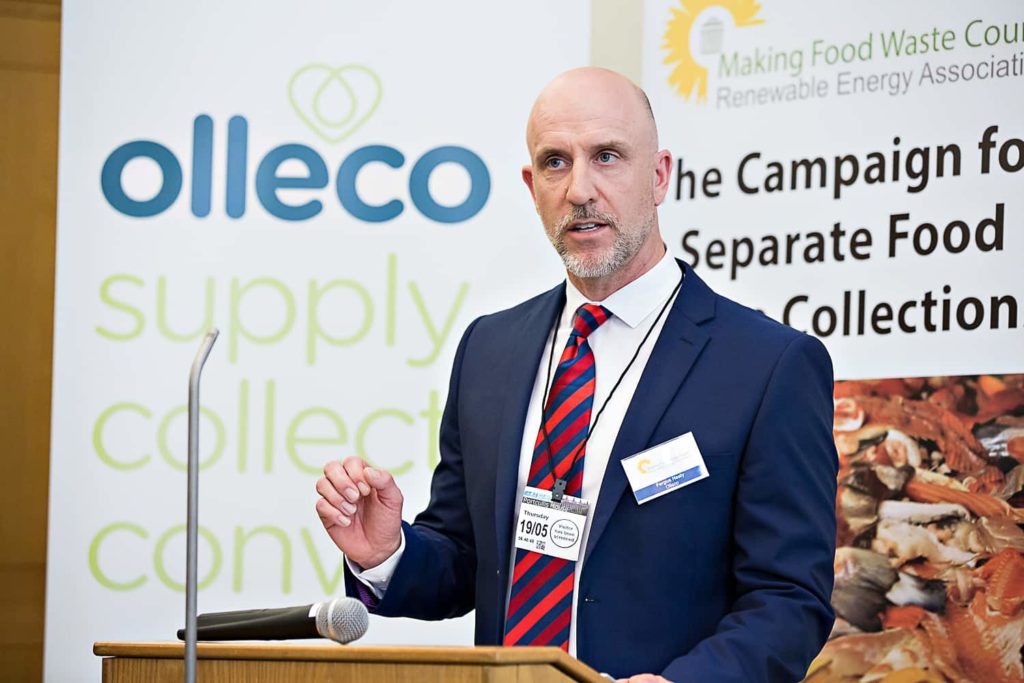
Fergus Healy, food waste and anaerobic digestion director at Olleco, said: “Millions of tonnes of food waste still travels to landfill sites, releasing damaging greenhouse gases and contributing to global warming.”
Next steps
Recommendations made in the study express that a similar model to Scotland’s Zero Waste Regulations should be implemented, whereby regulations outline and enforce legislation on businesses to increase the amount of food waste they present for collection.
“We want to make sure local authorities are aware of this in the UK as well. We’re open and willing to work with whichever stakeholder in order to promote this important message. We plan to work with colleagues and government parties in order to get the message across,” concluded Dr Skorupska.

Register for free to comment