

The Environment Agency is being urged to explain a big fall in the amount of glass packaging sent to aggregates by accredited UK reprocessors, after it released figures showing a 48% drop since 2010.
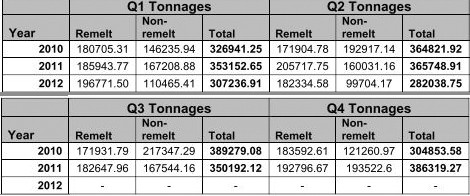
The figures provide for the first time a breakdown of the amount of glass sent to remelt and non-remelt in the UK between 2010 and 2012. They show that the tonnage of glass sent for remelt has remained relatively stable, but the tonnage of glass sent to non-remelt applications dropped by almost half between the second quarter of 2010 and the same period in 2012, from 193,000 tonnes to 100,000 tonnes. Export figures have been released separately.

While the Agency said the data was not conclusive, as reprocessors are not required to submit data on the split between the two, it appears to shed some light on where the UKs glass packaging recycling performance has suffered this year.
It is also important because it comes ahead of the introduction of split glass packaging recycling targets in 2013, which require businesses to meet a minimum amount of their recycling obligations through remelt.
The figures appear to indicate that this remelt target should be just about attainable, but raise worrying questions over businesses ability to meet the overall glass packaging recycling target in both 2012 and 2013.
Some have linked the fall in performance on the aggregates side to a downturn in the construction industry and the development of fewer roads. However, others are concerned that it is down to the removal of fraud from the system and therefore could be more of a permanent market correction which will make it hard for obligated businesses to meet their targets.
Earlier this month (October 8) Welsh glass recycling company Nationwide Recycling was found guilty of glass PRN fraud (see letsrecycle.com story).
Phil Conran, of consultancy 360 Environmental, who obtained the data through a freedom of information request, said the pressure is now on to establish the reason behind the fall in tonnage.
He explained that if the fall in tonnage is due to fraud, then the Agency could face complaints from businesses that are unable to meet their obligations.
He said: If there genuinely isnt enough tonnage because of fraudulent activity then there will be complaints from the industry that the reason they havent complied is out of their control.
Similar concerns came from Myles Willingale, contracts manager for Days Aggregates.
He told letsrecycle.com: One of the issues is what we believe to be fraudulent activity that has been committed within the system. The concerns we have is how long has it been going on for and how much of an impact has it had within the figures? It could well be that we have overestimated the figures for a couple of years meaning we didnt meet the targets.
The Environment Agency declined to comment on the figures.
Story continues below…
Story continues…
Prices
On the back of the decline in the amount of glass packaging recycled by accredited reprocessors, the price paid for glass packaging waste recovery notes (PRNs) has risen to up to 70. It is hoped that the increase in price could help the UK to meet the packaging recycling targets by making it more attractive to recycle material that otherwise would have been disposed of.
However, Mr Willingale said there was also a risk that the high prices would encourage unsavoury business to the market.
He said: The concerns are that with such a high price for the PRNs the opportunity to make a quick buck within the glass industry is there and could well attract unsavoury business into the industry that are here for the short term.
We want to encourage the use of glass into the aggregates industry but also to ensure that its done correctly and in line with the WRAP protocol. And we want to ensure that everybody in the industry is adhering to the rules. Which means the Environment Agency needs to monitor aggregates producers far more carefully.
Quality
Mr Willingale warned that the high price paid for glass PRNs, and consequent increase in commodity price, could be damaging to the industry.
He added that operators of materials recycling facilities (MRFs) could be discouraged from investing in their facilities as they are able to sell the poor quality material on for a profit, whereas previously they would have had to pay to get rid of it.
MRF operators are being lulled into a false sense of security because they can shift the material for a price, whereas normally there would be a gate fee.
They need to make sure they are doing all they can to produce a superior quality material but there is no reason for a MRF to invest capital when they can get money at the back end.
All eyes are now on the third quarter reprocessor and exporter figures which are due to be released at the end of October 2012.


Register for free to comment