


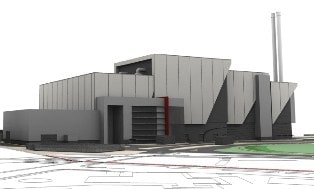
Planning isnotthe barrierto the development of residual wastetreatment capacity in the UKthat many believe, according to a new report from Eunomia.
The Bristol-based consultancy has published the third edition of its bi-annual Residual Waste Infrastructure Review in which it says that, contrary to industry perception, residual treatment capacity is quickly receiving planning consent with capacity being consented faster than applications are made.
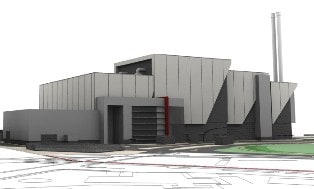
The report says that in the last six months, 2.6 million tonnes of capacity were granted planning consent and, although some facilities are finding difficulties in reaching financial close, an additional 1.1 million tonnes of treatment capacity has come on stream.
This leads to a position whereby the UK now has seven million tonnes more consented residual waste treatment capacity than there is residual waste requiring treatment, says the consultancy.
James Fulford, Eunomia director, said: Its the first factual analysis which were aware of showing that planning isnt the problem which others have made out. Weve now got more capacity consented than were ever going to need.
Arisings
The report explains that in the UK, there were over 29.6 million tonnes of residual waste arising from local authority and commercial and industrial (C&I) sources in 2011/12.
Currently, it says the UK has around 16.9 million tonnes of residual waste treatment capacity either operating or under construction. This capacity is made up of 36 dedicated incineration facilities, five gasification facilities, 27 pre-treatment facilities (using either mechanical-biological treatment (MBT) or autoclave technologies), 11 Waste Incineration Directive (WID) compliant biomass facilities and eight cement kilns processing solid recovered fuels (SRF).
“The forthcoming end of the Renewable Obligation (RO) regime and uncertainty over forthcoming Feed-in Tariffs (FiTs) is hastening the development of many incineration and gasification projects”
Adam Baddely, Eunomia
Based on residual waste arisings in 2011/12, there is a capacity gap of around 12.7 million tonnes (per annum) between the quantity of residual waste and the amount of treatment infrastructure capacity currently either operating or under construction.
But, without any change in residual waste quantities, Eunomia says there would be overcapacity of 6.9 million tonnes (per annum) if the 19.6 million tonnes of waste treatment capacity that has planning consent reaches financial close and subsequent operation. In addition, planning consent is being sought for a further 4.4 million tonnes of waste treatment capacity.
Adam Baddeley, the reports lead author, said: The evidence shows that all regions of the UK are on track to reach sufficient or over-capacity of residual treatment infrastructure between 2015 and 2018. The forthcoming end of the Renewable Obligation (RO) regime and uncertainty over forthcoming Feed-in Tariffs (FiTs) is hastening the development of many incineration and gasification projects and the evidence shows there will be an acceleration of the development of infrastructure capacity, beyond even the rates seen in the last six months.
The full report can be found here.
Contract
The publication of the review came as Eunomia announced that it has been awarded a contract to conduct a major study for the European Commission DG Environment to help assess the impact of different levels of waste management performance across the Member States.
Building on work done by the European Topic Centre on Sustainable Consumption and Production, the company will work with the Copenhagen Resource Institute on a model that will cover all 27 EU Member States together with Croatia.
The project follows on from Eunomias appointment last year as the lead contractor in a consortium which is the sole supplier to the Commission of technological, socio-economic and cost-benefit assessments related EU waste legislation. In future, it is expected that the model could be used to assess the impact of revising EU targets.
Related Links
Dr Dominic Hogg, chairman of Eunomia, is leading the project. He said: Our modelling work will highlight where Directives have been implemented in a patchy way across Europe, and the costs and benefits of improved implementation. It will help the Commission identify which Member States have further to go to achieve full compliance, and illustrate the benefits that compliance can bring to those Member States.



Register for free to comment