



This week, Peterborough council launched a consultation to find out if using anaerobic digestion (AD) or in-vessel composting (IVC) is best way to treat food waste for the city with the aim of reducing the amount of waste that goes to landfill.
Councillor Wayne Fitzgerald, cabinet member for the environment said: “Under the city council's waste strategy we have promised to introduce a system for collecting and treating food waste to prevent it being dumped.
“There are two main options for achieving that objective and we want to choose a system that is both effective and easy for householders to operate. They both involve natural processes but require different methods of collection and processing,” he added.
Options
The two food recycling options are being discussed by the cross-party Members' Waste and Recycling Working Group. Currently no food waste is recycled in Peterborough.

Under the city council's waste strategy we have promised to introduce a system for collecting and treating food waste
Cllr Wayne Fitzgerald
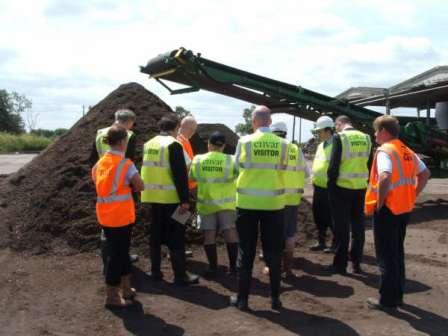
Councillors serving in the Group have undertaken fact finding visits to AD plants and IVC facilities to help draw up recommendations for the introduction of food waste treatment in Peterborough for next year.
IVC involves mixing food waste with organic garden material. It then goes though a double heat treatment process that kills harmful bacteria like e-coli and salmonella. Oxygen-breathing microbes convert it into compost which can then be used to improve garden soils, in agriculture or used for landscaping and brownfield regeneration.
AD requires separate collection of food waste. The waste then goes through an oxygen free process during which microbes create biogas. This biogas is siphoned off, captured and then burned to generate heat and renewable electricity. The end product can be used as farmland fertiliser or compost.
A spokesman for the council explained that collection to go to IVC would involve residents putting food waste in with organic garden waste in 240-litre brown wheeled bins. These bins are currently emptied on alternate weeks.
He added: “However, experience elsewhere suggests that householders do not like alternate weekly collection of food waste and tend to put food waste in the black bin one week and in the brown bin the alternate week – thus reducing capture rates.”
Collections to go to an AD plant would be slightly different, the spokesman explained. Residents would be provided with a small caddy for food waste, which would then be emptied into a smallish 20-litre lidded bin that could be collected each week.
Facility

The council is expected to apply for planning permission for the food waste centre in November this year. A contract is also expected to be let to build and operate the facility.
Peterborough currently landfills 50,000 tonnes of biodegradable waste which it must cut to 34,135 tonnes by 2009/10, 22,736 tonnes in 20012/13 and 15,909 by 2019/20. Local authorities that fail to meet landfill reduction targets will incur fines of £150 per tonne for any waste that goes over the target figure.
On-the-Go
In addition to the composting plans, Peterborough council has also become one of the first councils to launch 'on-the-go' recycling in the city centre to help combat the amount of waste that is going to the local Dogsthorpe landfill site.
From yesterday (July 3) residents who are on the move in the city centre have been able to recycle their waste at strategically-placed recycling bins.
The green bins, which feature the Recycle Now logo, have replaced black rubbish bins on the city's Bridge Street. The new bins are part of Peterborough City Council's campaign to increase recycling rates under the Governments' 'Recycle on the go' initiative (see letsrecycle.com story).
Kirsty Martin, senior community engagement officer at the city council, said: “Thousands of canned and bottled drinks are consumed by people as they move around the city centre. Most are dumped in rubbish bins and ultimately add to the tonnes of materials buried in the Dogsthorpe landfill site.
“This means that large quantities of valuable aluminium and plastic are lost as resources. We hope the new bins will encourage a change of behaviour and help people make recycling a natural part of everyday life no matter where they are,” she added.

Register for free to comment