
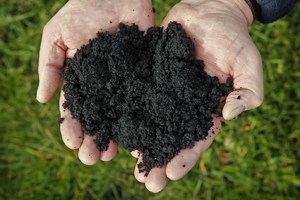
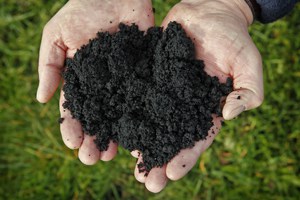
The PAS 110 specification for anaerobic digestate has been updated by Renewable Energy Assurance Ltd (REAL) in order to tighten-up contamination limits and change the digestate stability criteria.
Under the certification scheme, originally launched in 2010, digestate stability criteria now reflects the materials equivalence to organic materials commonly spread to land such as pig slurry, rather than its previous equivalence to cow slurry.
And, coming into effect from yesterday (July 30), the limits on physical contaminants, such as plastics, have also been tightened to increase the standards for quality and safety, according to REAL, which carries out certification activities on behalf of the Renewable Energy Association (REA).
Produced as a co-product at anaerobic digestion (AD) food-waste-to-energy facilities, digestate which meets criteria on the PAS 110 quality standard scheme can be used for agricultural purposes.
It can also now be marketed as a biofertiliser under REALs Biofertiliser Certification Scheme (BCS), with 15 AD plants across the UK currently producing BCS-certified fertiliser.
There are now 130 on-farm, food waste and industrial AD plants now operational in the UK, and over 340 projects currently under development, according to a report published in April by bioeconomy consultancy NNFCC (see letsrecycle.com story).
The review of PAS 110 was commissioned and funded by the Waste & Resources Action Programme (WRAP).
WRAPs head of food resource management, Ian Wardle, said: With the increasing need to deliver sustainable markets for digestate, WRAP has worked closely with the other PAS110 steering group members to ensure that the revised specification continues to deliver a safe, quality-driven product.
‘The changes announced mean that more AD operators will be able to use or trade their digestate as certified biofertiliser, whilst environmental protections will be stronger than before.’
Virginia Graham, REAL chief executive
REALs parent company the REA is a trade association that incorporates the Organics Recycling Group (ORG) and represents nearly 1,000 members.
REAL chief executive, Virginia Graham, said: Everyone involved in AD has learned a lot about digestate as the industry has developed. Working closely with industry, we have used these lessons to improve the PAS 110 for producers, end-users and the environment. The changes announced mean that more AD operators will be able to use or trade their digestate as certified biofertiliser, whilst environmental protections will be stronger than before.
PAS 100 Compost Certification Scheme
REAL has also today (July 31) announced the re-launch of its Compost Certification Scheme (CCS) with a new website, logo and updated scheme rules.
The CCS provides a safety and quality standard for compost made from source-separated organic waste, such as food waste and green waste, in line with the PAS 100 specification and the Compost Quality Protocol.
According the REAL, the new website (www.qualitycompost.org.uk) is designed to make it easier for producers to find the information they need to gain and maintain certification under the CCS, and also to enable farmers and growers to find local certified compost.
REAL said the new scheme rules should be simpler for producers to use, with 70 pages of rules condensed down to 30 pages plus technical annexes.
REAL chief executive Virginia Graham said: We hope the CCS members and their customers find the new website and updated scheme rules easier to use and we welcome any feedback.
The re-launch is part of REALs gradual take-over of responsibilities for ORGs certification schemes since the ORG merged with the REA in 2012.

Register for free to comment