
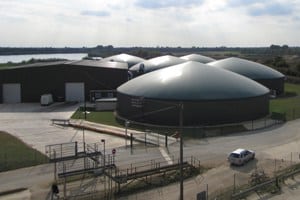
The UKs anaerobic digestion industry could be facing over-capacity compared to the amount of food waste available for treatment in several years, data has suggested.
A new regional report, published by bioeconomy consultancy NNFCC today (April 9), predicts that 5.5 million tonnes of waste food would be needed if all small and large-scale anaerobic digestion facilities currently under development were to become operational by 2017.

However, a report published by the Waste & Resources Action Programme (WRAP) in November last year found that food waste volumes generated by UK households were falling, with 7 million tonnes generated in 2012 a reduction of 1.1 million tonnes over five years (see letsrecycle.com story).
The WRAP study concluded that a further estimated 1.7 million tonnes of avoidable household food waste alone could be cut from the waste stream by 2025, which would bring volumes in the UK down to 5.3 million tonnes.
But, NNFCCs data suggests that a possible treatment over-capacity could still be some way away with just 30-50% of the waste-fed AD plants under development in the UK likely to be completed.
Tariff
The report, which can be found on the NNFCC website, provides a region by region breakdown of AD sector development across the country. It found that gradual reductions of the subsidy being offered via the feed-in tariff could restrict future deployment of new small-scale AD sites.
NNFCCs research charts sector development in Scotland, Wales, Northern Ireland and the 10 regions of England, providing information on feedstock requirements, installed capacity and energy outputs for all AD-based projects except sewage waste treatment plants.
‘This report provides a comprehensive picture of the AD sector. The information contained in it will prove invaluable for any stakeholder in the industry. The data contained in it will provide those looking to invest with information fundamental to the decision making process.’
– Dr Jeremy Tomkinson, chief executive officer of NNFCC
The information, which is aimed at developers, investors and policymakers in the industry, is based on the NNFCCs AD deployment database. The database is updated monthly using a number of data sources, which combined provide accurate insights into the various types, scales and statuses of AD projects throughout the UK.
The report scope extends to agricultural and non-sewage waste AD facilities, and includes both combined heat & power (CHP) and biomethane-to-grid projects.
Comprehensive
Dr Jeremy Tomkinson, chief executive officer of NNFCC, said: This report provides a comprehensive picture of the AD sector. The information contained in it will prove invaluable for any stakeholder in the industry.
He added: The data contained in it will provide those looking to invest with information fundamental to the decision making process.

Register for free to comment