

The changes would be needed under the looming European Union Open Scope system. And, the official has warned that the new system, which comes into force in January 2019, may see producers of electrical products paying more towards recycling.
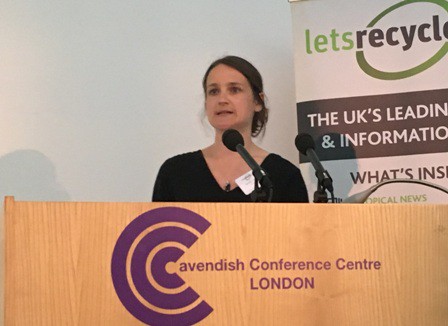
Ms Foster, team leader for product regulation and producer responsibility at Defra, was speaking on product regulation and the move to Open Scope at the WEEE conference in London last week where she posed the question “What does EU exit mean for WEEE regulations?”
Environment
Firstly, she reminded the audience that the ‘new’ government has said it is committed to ensuring “we become the first generation to leave the environment in a better state than we found it.”
She explained that Open Scope will “come into force from 1 January 2019 as currently drafted”. There will be a move to six categories and “it is not easy to convert 14 categories into six – this could have a significant impact on the amount producers could have to pay”. She added: “We don’t know what the costs will be but there will be significant losers and winners.”
Ms Foster told the audience that there were four main options for implementing Open Scope. One would be to keep the status quo by amending the current UK position; a second was to let the regulations take effect as written. A third, which is the preferred option, was to amend the UK regulations to retain 14 categories but to be able to report to the EU, if necessary, under six categories although protocols would be need to allow this.
A fourth option could be to have six categories but using three sub categories. A consultation will take place in September with a consultation response and regulations in April 2018.
The Defra official emphasised that the department “wanted industry to provide us with their views”. And she said that on other areas of the WEEE systems, such as the Producer Balancing System, Defra would welcome views from local authorities. She later explained that Defra will “be looking to amend the regulations, before the UK leaves the EU, over Open Scope. After that we will look to amend and improve them.”
Illegal

For the Environment Agency, Chris Grove, environment and business senior advisor, spelt out the impacts of a number of developments including a new dedicated unit to tackle illegal activities across producer compliance.
Mr Grove said the Agency was in the process of “embarking on a review of charges. This happens once every five years and we will consult this autumn”.
And, he signalled that charges for registration and other activities under producer schemes could rise as the Agency “is under recovering and we will try and correct that”.
“The big one”, he said, “is around the permitting regulations and how we levy those subsistence fees.”
If the review is successful after a consultation this autumn, Mr Grove said the new charges would be introduced in April 2018.
And, the Agency official indicated that there was going to be more attention and greater scrutiny on those businesses “looking to enter the WEEE system. Last September there were a number of AATF applicants that we refused.”
Tougher line
Mr Grove also signalled a tougher line on AATFs with the Agency ending its streamlining approach to monitoring and supply of information. “this has stopped from 2018. The balance of risk has tipped in our view and we now need all that information every year. Also, Defra are looking at this and during the summer are undertaking a consultation on operator competence. We will look at linking to that.”
On the monitoring front, the audience were told that the Agency is increasingly taking a “holistic view” and is adopting “holistic enforcement” using a “focused team in Sheffield. This is a wholly different approach, not just for WEEE but for packaging and batteries as well.”
Over the past year there were times when large volumes of fridges as WEEE arose at civic amenity sites and through other routes and Mr Grove commented on this. He said the Agency “can’t drive the economic model” in terms of when the public buy fridges but he emphasised that the Agency is sympathetic. “We are sympathetic if there is a backlog and storage issues and this may be something we can look at on a temporary basis for issues such as storage and allow for additional capacity.”
Flytippping
Mr Grove also confirmed that flytipped fridges are household WEEE and when taken to designated collection facilities, then the relevant producer compliance scheme has responsibility for them.
He said that the PCS is obligated for:
- All separately collected WEEE brought to DCF by householders
- WEEE from private householders delivered to DCF through:
1. Household bulk waste collection services
2. Commercial waste contractors
3. Fly tipped waste originating from private household
And, he would expect local authority DCFs to have procedures to determine if WEEE is from private household.
Brexit
John Redmayne, general manager of ERP, talked to delegates about the potential impacts of Brexit.
He said he expected that EU environmental legislation which is UK law by the time of Brexit “will remain UK law until amended”. But, he explained he was not sure the UK would have the appetitive for new legislation, such as the circular economy package, at the same as time leaving the EU. “What the status of the circular economy package will be remains unclear, we don’t even have a clear timetable and it is not likely to be in UK law before Brexit.”
Education
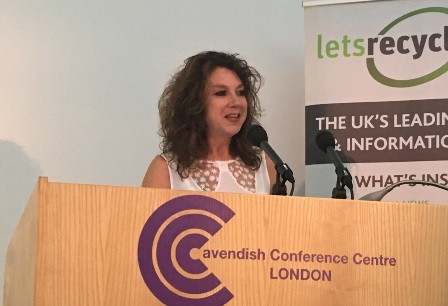
On the topic of work by local authorities to promote WEEE recycling, Fiona Swinburne, contract manager at the South Tyne and Wear Waste Management Partnership, told delegates about the partnership’s work “to encourage residents to reduce, reuse and recycle”. This ranged from electrical goods to batteries with a lot of involvement of schoolchildren in the three authorities which make up the partnership, Gateshead, South Tyneside and Sunderland.
She explained that funding had been received from “the Distributor Take Back Fund which was a brilliant opportunity and we were able to run an intensive education programme.”
This included the recruitment of a dedicated WEEE officer at the partnership’s education centre who also went out into the community to maximise coverage.
Producer responsibility
Another speaker at the event, Susanne Baker, head of programme, environment and compliance at TechUK, questioned the whole EPR extended producer responsibility model.
She asked: “As we leave Europe, we have to ask do we need EPR? As uncomfortable as it might be this question will come up and we have to be prepared to answer if we think it is important and to have an answer if we don’t think it is. Waste companies are pro-EPR she said, but Ms Baker suggested that “we should see this as an opportunity to look at what has been achieved through EPR and what more can be done, if anything”.
And she emphasised that Brexit meant that “we do have an opportunity to think about what we want out of EPR and the system for the future in the UK.”
Also under discussion the TechUK head said was: “How would the waste industry respond to making products easier to upgrade and repair and the extent to which contaminated recycled materials could be reused?
What is Open Scope?

Register for free to comment