
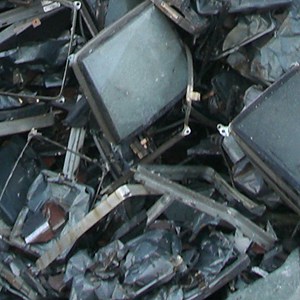

It uses state-of-the-art technology developed in co-operation with German firm RTG to process 25,000 tonnes of CRTs each year, including CRTs received in a broken state.
Chairman and managing director David Burton explained that the process allows funnel glass and panel glass to be separated mechanically, allowing processed glass to be used in markets other than CRT manufacturing.
Mr Burton said the delay in implementing the European WEEE Directive, which came fully into force in the UK in July, gave his company time to develop the system.
He said: “The delay gave us time to develop new processing technology, and bring on board RTG's expertise in the intervening years – their systems have proved to be an absolute success.”
Mr Burton said his plant was committed to taking CRTs from UK suppliers, but would also be taking CRTs from Europe and outside the EU. He added: “With the coming of the TV digital changeover in the UK we will be planning to increase capacity.”
The plant's technology means the splitting of individual CRTs can be avoided, which the company claimed would cut costs for electronics producers and their compliance schemes seeking to comply with the WEEE Regulations.
RTG director, Andre Assmann said: “The costs, bottlenecks and marketing challenges of conventionally splitting CRTs can now be avoided.”
CRT Recycling and RTG will be jointly marketing the glass processed at the plant, making use of RTG's status as a European supplier of companies like Samsung.
With concerns about recent increases in export charges to the Far East at the moment, and its impact on the economics of recycling CRT glass, the company also said it has developed additional markets for the material, the funnel portion of which contains lead.
“We can assure producers, who need to meet recycling targets, that we have the answers,” Mr Assmann declared.

Register for free to comment