


And, the Department for the Environment, Food and Rural Affairs has highlighted the importance of minimising waste by this year naming the councils which produced the least household waste during the last financial year.
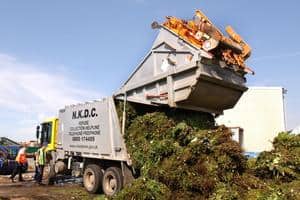
In first place, North Kesteven council in Lincolnshire achieved a 55.5% recycling rate in 2006/07 as predicted by letsrecycle.com (see letsrecycle.com story) – up from 51.5% in 2005/06. The council has put its performance down to a simple alternate weekly waste and recycling service, which enables it to collect glass in with other recyclables, and a successful green waste scheme.
In close second place, and the second highest climber in terms of recycling, was South Shropshire district council – with a recycling rate of 53.2% – over 16% higher than it achieved the previous year.
Other high performers included Rushcliffe Borough council (52.2%) Huntingdonshire district council (51.7%) and Ryedale district council (51%).
At the bottom of the table, meanwhile the London borough of Tower Hamlets remained the country's worst performing authority with regards to recycling and composting – diverting just 11.75% of its waste from landfill. Other poor performers included fellow urban authorities Liverpool (12.72%) and Newham (13.58%).
Unveiling the figures, Ms Ruddock said: “These statistics show that many householders and local authorities have got the “reduce, reuse and recycle” message and are doing a great job. They are helping in our battle against dangerous climate change. The best local authorities have achieved close to double the average. But some authorities are not doing anywhere near enough. Under-performing councils must do more to help their residents reduce their rubbish and recycle more from their homes.”
Minimisation
In order to highlight waste minimisation, Defra revealed that 83% of local authorities collected less residual household waste than in 2005/06.
In particular, it recognised the success of South Somerset district council for producing the lowest tonnage of residual household waste – at only 180 kilograms per head.
The Department also named Hyndburn borough council, based in Accrington, as the authority with the lowest total arisings of household waste.
Perhaps more surprisingly, the London borough of Haringey was singled out for praise as the council with the most improved levels of household residual waste – falling by 38% between 2005/06 and 2006/07 to 256 kilograms per head.
Other urban authorities which proved that recycling success did not have to be confined to the countryside included Sheffield city council, which, through using energy from waste, sent 20% less municipal solid waste to landfill than in 2005/06.
Westminster council was the waste disposal authority with the lowest total household waste per head – at only 335 kilograms a year.
Defra pointed out that since revealing England's overall recycling figure for 2006/07 earlier this month (see letsrecycle.com story) , there had been a small revision to the residual household waste figures for London and hence England.
Due to improved information from one London waste authority, the total household waste estimate for London and England reduced by around 80 thousand tonnes, increasing London's household recycling and composting rate by half a per cent from 22.4 % to 22.9 %.
This means that London's recycling rate rounded up now stands at 23%, whereas previously a rounding of the data would have put the data at 22%, but has not effected England's rounded up figure.
A Defra statement confirmed: “Local authorities have collectively boosted national recycling and composting rates to 31 per cent and disposed of 1 million tonnes less waste in landfill in 2006/07, compared to 2005/06.”

Register for free to comment