

Friends of the Earth criticises Scottish government’s recycling record
Friends of the Earth has warned that at the Scottish government’s current rate of progress, “it will take nearly 100 years to reach a 70% recycling rate”.
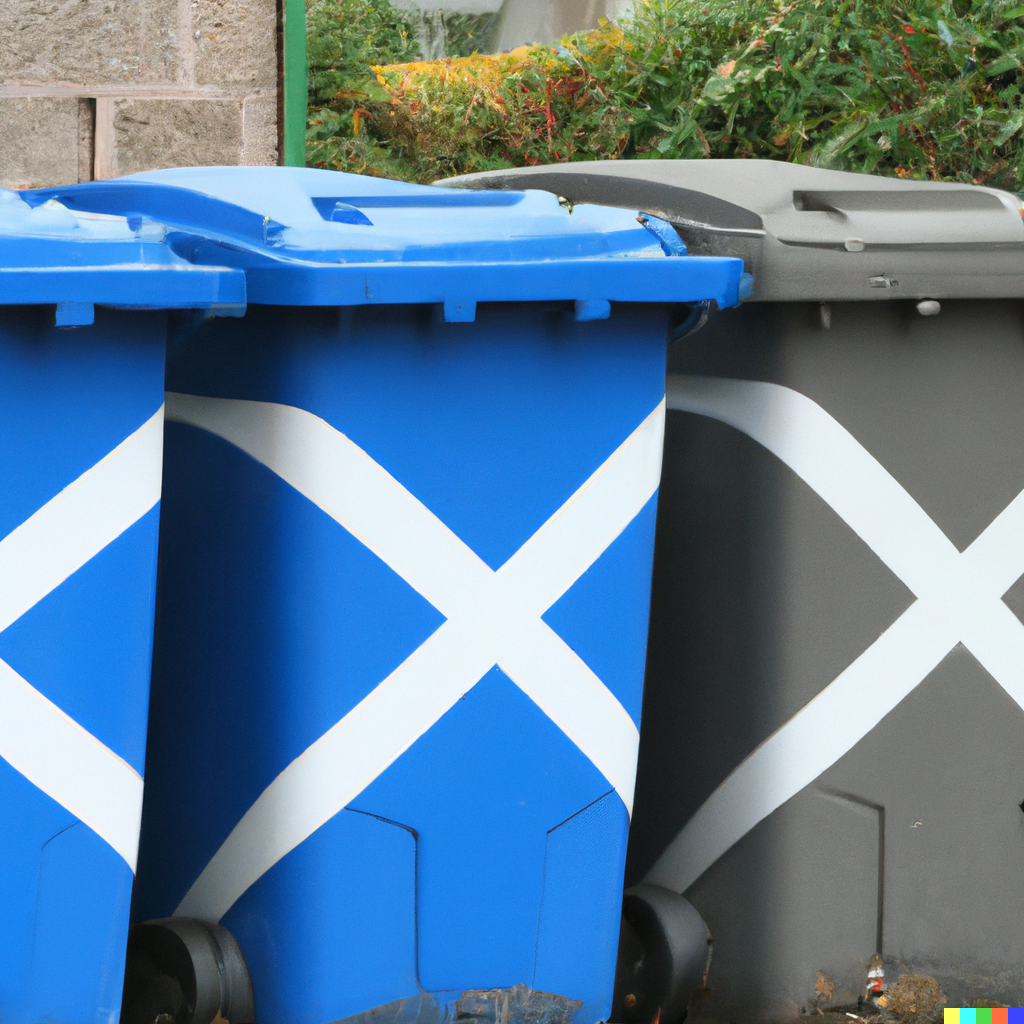
The remark was made in response to statistics from SEPA, which show that Scotland’s household recycling rate nudged up to 43.3% in 2022 ( see letsrecycle.com story).
Kim Pratt, circular economy campaigner at Friends of the Earth Scotland, said: “The continued failure of the Scottish Government to improve recycling rates shows that real action is needed to tackle our waste problem. The Circular Economy Bill is an opportunity to change the way we use materials in Scotland, but at the moment it’s not strong enough to make a significant impact. It needs to include targets to reduce our consumption.
“The Scottish Government must be bold and decisive to create the change needed to meet the threat of climate breakdown.”
AI helps councils tackle littering
Glasgow and Cardiff councils have shared the results of their project to use AI to help tackle littering.
Scientists from Ellipsis Earth and environmental charity Hubbub employed vehicle cameras and AI data-processing to create a detailed map of litter locations.
The findings highlight that authorities should target areas where vehicles slow down, such as junctions, slip roads, and roundabouts, as well as near fast-food outlets at junction exits.
In Cardiff, 20% of litter was found concentrated on just 2% of the land at junctions. The research also recommends combining bins and signage for more effective litter reduction and encourages collaborative efforts between highway agencies, councils, and businesses.

The surveys revealed that paper, cigarette butts, and plastic fragments were the most common types of roadside litter. Initiatives like placing bins strategically and using signage resulted in a 25% greater reduction in littering compared to bins or signs alone.
The research aims to save time, money, and reduce the impact of roadside litter. Local authorities and businesses are encouraged to work together to tackle littering effectively.
Somerset says nearly half of average bin contents could be recycled
council has revealed that nearly half of the contents in the average residual waste bin in the region could have been recycled.
This year’s “composition analysis” showed that 48% of the contents could have been recycled, marking an 11% decrease from 2018 when the analysis was last conducted in the county.
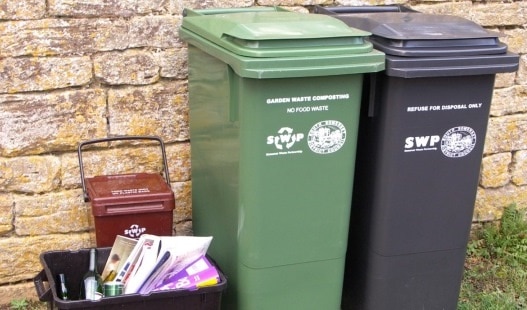
To arrive at these figures, the contents of 550 households’ refuse bins were emptied, sorted, and weighed, representing various areas in the county. Of the 48% that could have been recycled:
• 14% was recyclable at the kerbside (e.g., cardboard or drinks cans)
• 21% constituted food waste, which can be recycled in the food waste bin
• 7% included garden waste and pet bedding
• 7% was recyclable at a recycling site (e.g., wood and metal)
The 11% reduction from the 2018 figure is attributed to the expanded Recycle More collections and less plastic pots, tubs, and trays being placed in refuse bins. Residents have also reduced the amount of food being discarded, with a 5% decrease since 2018.
Councillor Dixie Darch, Somerset council’s lead member for Climate and the Environment said: “Most people in Somerset are recycling and we know that people are recycling more than they ever have. Our kerbside collections mean that most of our waste can be recycled from home. We’re making good progress but there is always more we can do, particularly when it comes to recycling – or even better – reducing food waste.”
iWaste acquires four new vans for its fleet
Intelligent Waste Management Ltd (iWaste), an electronic waste recycling company, has said it has made an investment of £100,000 in new vans as part of its continued business expansion.
Following its relocation to a “larger and more scalable premises” near Reading in April, the Berkshire-based company has expanded its fleet with the acquisition and conversion of four new vans.
iWaste says it provides electronic waste collection services, secure data destruction, electronic recycling equipment, and WEEE (Waste Electrical and Electronic Equipment) disposal services for businesses across the UK.
These vans are tailored to meet the company’s needs for collecting electronic waste, with modifications including the addition of tail lifts.
Director Sam Prentice, who co-founded the business with operations director Sam Mountain in 2013, said: “Ongoing business development has necessitated new transport options. It is a good position to be in. We need to constantly overhaul our fleet as our vans do between 40,000 and 45,000 miles a year so their lifecycle is about three years – and we need to always be certain they are robust and will not compromise our second-to-none customer service.”


Register for free to comment