
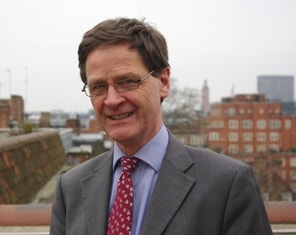
Its a time for change at the top of the Department for the Environment, Food and Rural Affairs at the end of March. This time though it is a move round of officials, including the director involved with waste and recycling, rather than the appointment of a new recycling minister.
.jpg)
Into his place comes Colin Church who moves over from having responsibility for climate change, exotic diseases and agency relations in the food and farming group.
Career
Mr Thornton told letsrecycle.com that he had much enjoyed his time working on waste and recycling issues as well as climate and atmosphere topics. He has been with Defra since 1996 having joined from the Department of Trade and Industry – now BIS. Originally he came in to join MAFF, the ministry of agriculture, food and fisheries, which was to become part of the new Department for the Environment created in 2001.
He recalls his early days there which were spent in the wake of the BSE crisis. We had the enquiry, all the aftermath and I was working with all the industry including slaughterhouses. The aim was to keep the beef chain running.
Then there was another crisis, foot and mouth, which he says softly gave me an awareness of food issues. Foot and mouth was a stressful time for everybody, from us as officials going back to our beds but far worse for those out on the farms and in the farming communities. We necessarily didnt travel too much into those areas as it was a transmissible disease but I did visit some parts of the country such as Cumbria where I could see the issues first hand.
In contrast Mr Thornton considers that waste doesnt lend itself to crises although it has come close to this on occasions. He reflects: There have been times when waste has got troublesome. Concerns about fridge mountains were before my time but they were there in everyones mental image. We had fears of a hazardous waste mountain during the Margaret Beckett years and we did a lot of work behind the scenes to avoid this.
We put together a very strong working group with the industry. This was very prominent and we identified issues, in particular data was an issue. The great ghost ships, the US ships, there was a lot of excitement about this at the time. Out of it came a UK lead for ship recycling nationally and internationally. We had images of ships that were looking for a place to go and which were potentially full of hazardous materials. Now there is a dedicated facility – somebodys got to do it and it has to be done well, and there have to be full concerns for the workforce.
Explaining some of the methodology behind resolving the ship recycling issues, he said, We did that in a way that involved everyone, the bird table approach. A very rapid gathering together daily on the telephone. Even the White House was involved.
Waste strategy
Having joined in 2003, Mr Thornton inherited the 2000 Waste Strategy with the major issues that the government had to find a way of reaching landfill targets. Colleagues had started to put in place WIDP [the Waste Infrastructure Delivery Programme] and we had started to phase in waste PFI.
There were a lot of discussions about the need for infrastructure and for increasing rates of recycling, it was important to get household recycling up. At that point Europe had defined what the rules were and England was therefore watching. The challenge for us was that it was an infraction risk. One of your jobs is to avoid infraction risks, a lot of work is to meet our obligations in Europe.
Targets
Today Mr Thornton says that the UK has comfortably met the targets through 2010 and expects to do so in 2012. But, he cautions that the 2020 target is not a shoe-in and a continued improvement in recycling rates and efforts on waste prevention is needed, if the 50% household recycling rate target for 2020 in the Waste Framework Directive is to be met. And, he says that what happens with the economy will also be a factor, saying 2020 is neither implausible nor straightforward.
As a director of the Waste & Resources Action Programme appointed by the Secretary of State, Mr Thornton has been able to follow its activities closely. He explains that WRAP is part of the departments implementation delivery infrastructure. They are in the third sector, they get a substantial grant. They provide a really valuable service to resource efficiency and getting businesses and households working effectively.
WRAP
He believes that WRAP finds it useful to have someone in the room who explains what government policy is today and points to WRAPs support from the devolved regimes. WRAP is an interesting achievement for the three regimes. We in Defra look after waste policy in England and UK waste policy. Waste is very fundamentally devolved and has been since the devolution settlement and while its important not to think that we shouldnt have overviews, Northern Ireland, Wales and Scotland very much do their business. Mr Thornton emphasises that Defra still has to make sure that the UK does meet its targets.
In job satisfaction terms, within Defra he believes that the waste post offers more than most. What I enjoy most is not the individual pieces of work; at director level you dont do those. Basically I enjoy waste as a subject area: waste is fun and its big enough to be important yet small enough to get your arm around. It is my policy area – it has tax, a certain amount of spontaneity, information and it is something that people care about, at least with household waste policy. Local government and waste policy is the stuff of daily conversations and the front pages of newspapers.
He accepts that not everyone has been happy with the governments work, including the waste review published last June. As a public servant I am always a bit disappointed if people are not happy. However, we are in a world where we are extremely constrained, it is a very different world from 2007.
In terms of policy issues, he says that zero waste is there for all governments. It is firmly there in the waste reviews. The language is clear although there are questions of how fast you can move which is a question of how the economy goes.
Progress
He is enthused by the increases in recycling over recent years. Over the period I have been working it is much more the norm, people do take part in their recycling societal norm. Some things dont change, such as peoples fear of energy from waste and incineration, we havent made as much progress on this as government would like to.
On business wastes he believes that the UK is beginning to see consumers expecting a good performance from businesses and it is now much less the case that the economy and the environment are seen as an antithesis.
On a personal level he says he has greatly enjoyed working with the waste world, the waste industry, the third sector, all those in local government involved with waste and the ESA and CIWM.
His final note is the message is that, while waste has been enormous fun it remains a serious issue and one which he will miss. Without government actions on waste, it would pop all over the place, such as hazardous waste in watercourses, or we would be throwing away valuable resources.

Register for free to comment