

Glass
Glass prices have largely remained stable over the past month with some very minor increases and decreases.
The PRN/PERN market resumed at the end of February and demand has increased as a result.
The glass PRN looks to have reduced in February and early March, which has pulled the price of glass down slightly.
View our more detailed glass price index here.
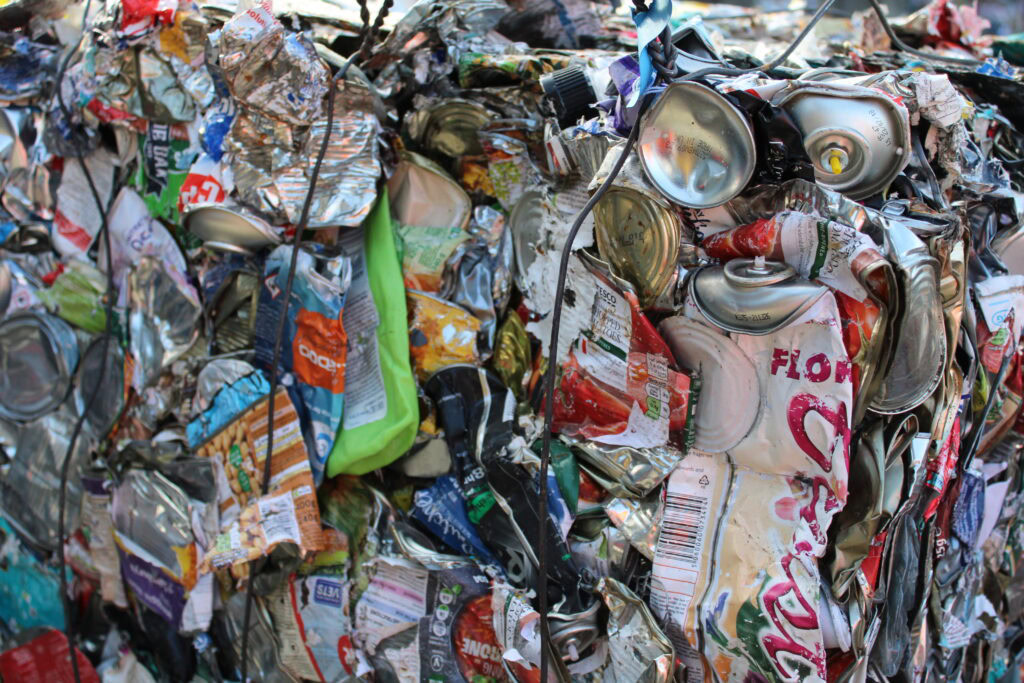
Metals
The metals market has been subdued this month, with increasing uncertainty weighing on trading activities. Prices have come under pressure across several grades, reflecting a combination of geopolitical disruption and ongoing structural challenges within the sector.
This cautious stance has been linked to the ongoing conflict in the Middle East, which have created uncertainty around supply chains and future demand.
Whilst prices have remained overall fairly stable, there is growing expectation that they could face downward pressure in the short-term.
View our more detailed metal price index here.
Organics
Gate fees for anaerobic digestion continue to trend upwards, driven by increasing demand for capacity as local authorities prepare for the rollout of mandatory food waste collections under the Simpler Recycling reforms.
With the implementation date of 31 March approaching, councils are actively transitioning services to accommodate separate food waste streams, which is expected to cause a notable uplift in feedstock volumes entering the market.
View our more detailed organics price index here.
Plastics
While plastics prices remained relatively stable at the start of the month, there has been upwards pressure on prices in recent weeks, with an uplift seen in the prices paid for most grades.
The increase has been driven by the situation in the Middle East, which has created unstable trading conditions but also pushed up crude oil prices and in turn prices for virgin polymer, thereby driving demand for recycled material.
Additional price support has also come this month from the increasing value of the plastics PRN, which reached £350 in the middle of the month. Demand for HDPE remains strong and demand for PET is expected to increase as we move into the warmer months. Those in the sector are hoping that the market will settle and that plastics prices will increase further going into April.
View our more detailed plastics price index here.
Textiles
The textiles sector has been particularly hard-hit by the war in the Middle East due to many export destinations being within the conflict zone or needing to transit through to end destinations such as Pakistan.
The sector has already been facing tough time due to the influx of low quality ultra-fast fashion, the creaming of good quality material through resale sites and charity shops, and disruption in end markets in Eastern Europe, the Middle East and Africa.
The cost of textiles from textiles banks located in Household Waste Recycling Centres (HWRCs) now sit firmly in the gate fee zone. Other prices continue to decrease and it is likely more pressure will be applied soon, especially to charity textile banks.
View our more detailed textiles price index here.
Wood
The wood market has continued to face challenging conditions this period, although gate fees have decreased as the market transitions out of the winter period.
There has been a reduced outlet for waste wood due to high volume of material in circulation and offline plants. As a result, many operators are having to manage excess material with fewer disposal or processing options available.
However, strong demand over the winter period has helped to absorb a portion of the surplus material. This has led to a softening in gate fees.
View our more detailed wood price index here.
