



While the reasons for the waste being chucked are varied, Joan Ruddock, minister for waste, biodiversity and climate change, encouraged householders to be more careful with what food they bought and how they stored it.
And, she pointed to the problems caused by retail offers such as “buy one get one free” – and that there were messages for supermarkets in the study as well.
She said: “I think that it will be interesting to see what responses supermarkets say to this report as it does have messages for them.”
Mrs Ruddock explained that in line with the Waste Strategy 2007, food waste prevention was a top priority for Defra in tackling climate change because it accounted for 18 million tonnes of carbon dioxide equivalent a year.
The minister said that the government would play a role in helping the public and retailers to raise awareness and drive change.
She said: “There is clearly a role for government here and we will continue to work with WRAP, both in support of the ‘Love Food Hate Waste' campaign and through the Courtauld Commitment – our voluntary agreement with retailers and food manufacturers to identify ways to reduce packaging and food waste.”
Study
The WRAP study -believed to be the largest ever conducted – was based on waste analysis, surveys and kitchen diaries from over 2,000 households in 11 local authority areas – including Manchester, Ealing and North Shropshire.
Compositional food waste analysis was carried out by Waste Works, with data analysed by Exodus Market Research.
While WRAP had already established a high level of food waste arisings at the launch of its Love Food Hate Waste Campaign last year (see letsrecycle.com story) the report revealed that consumers were spending £10 billion pounds on wasted food a year – £2 billion more than previously thought.
Much more detail also emerged of of what type of food was being wasted, where it is wasted and any socio-economic patterns.
Key findings included that single occupancy households produced the most waste per capita and that younger people were not necessarily more wasteful.
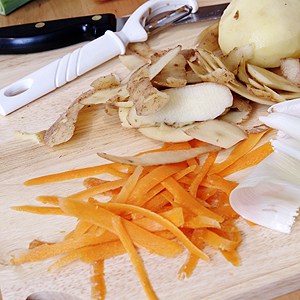
The most avoidable wasted food was potato, with 359,000 tonnes of going uneaten every year. And, nearly 1 million tonnes of food was thrown away whole or unopened; with 45% of salad alone thrown in the bin.
Liz Goodwin, chief executive of WRAP, described the figures as “shocking.”
She said: “Food waste has a significant environmental impact. This research confirms that it is an issue for us all, whether as consumers, retailers, local or central government. I believe it will spark a major debate about the way food is packaged, sold stored at home, cooked, and then collected when it is thrown out.”


Register for free to comment