

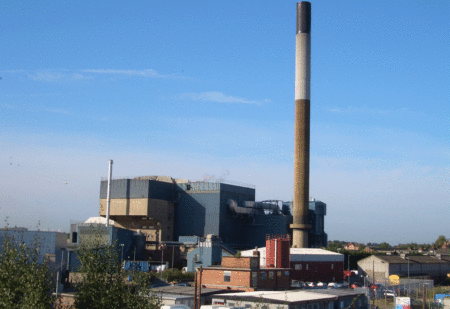
Under plans agreed unanimously by Nottingham city council yesterday (20 January), an additional 140,000 tonnes of throughput will be developed via the installation of a third boiler line at the site.
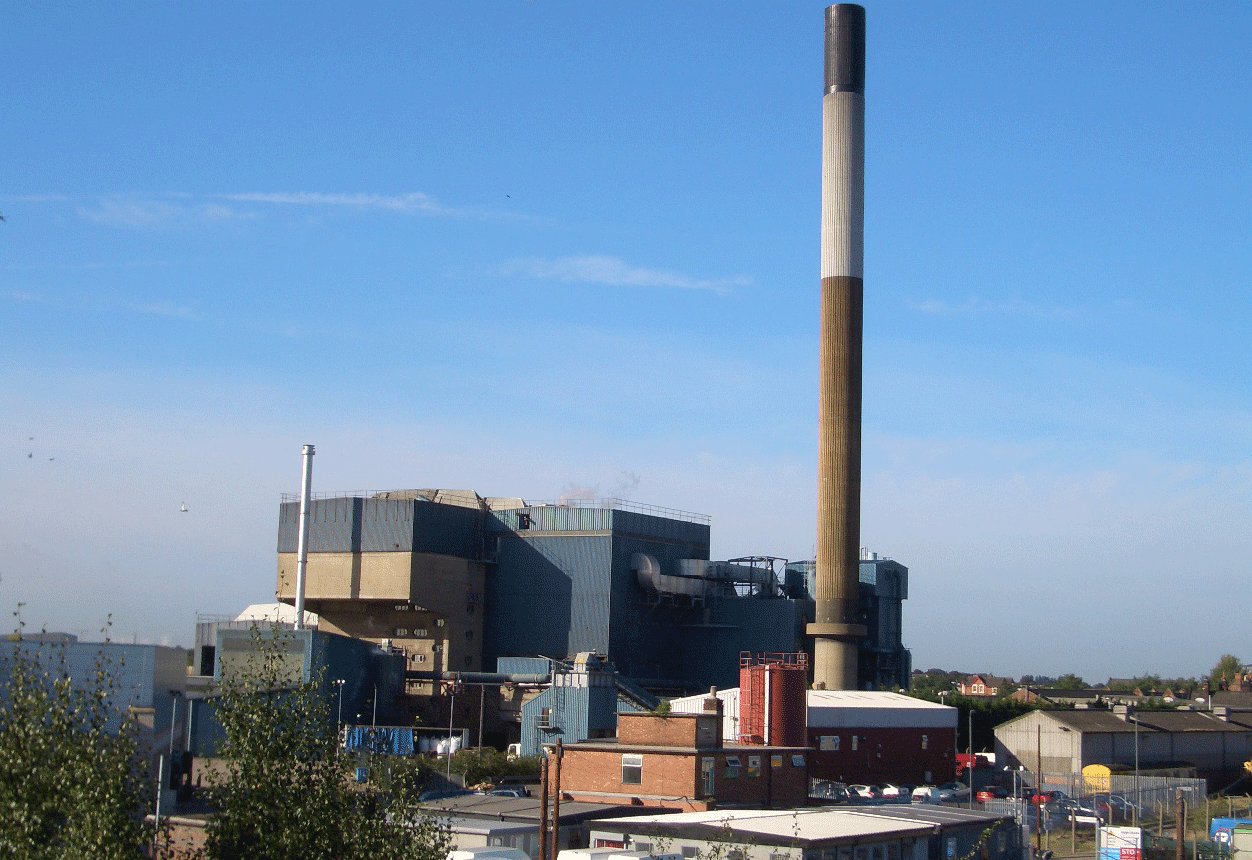
The line had previously been secured under planning permission granted by the Secretary of State in 2008 – however at that time it was envisaged the line would add a further 100,000 tonnes per year.
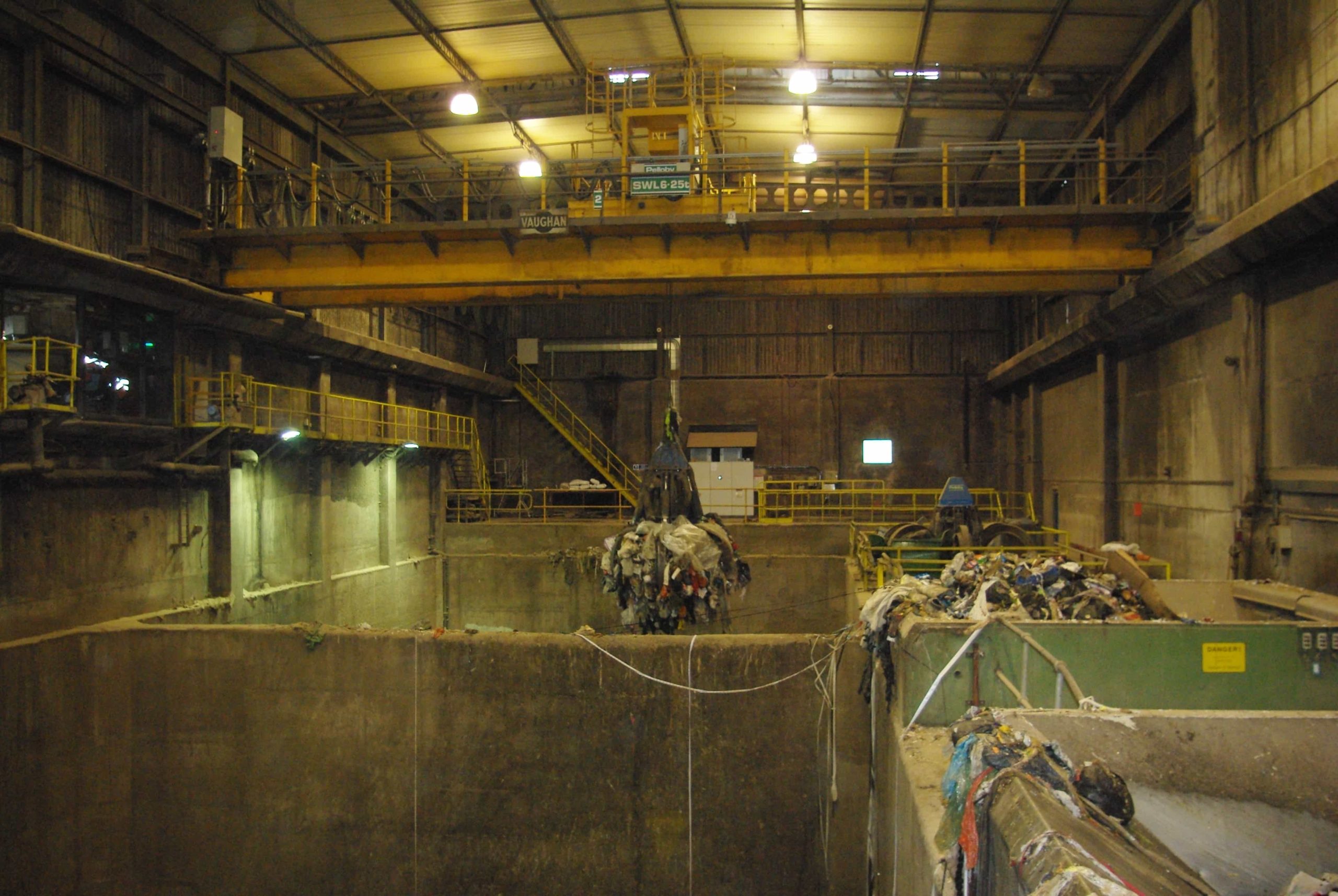
While enabling works have commenced on the third line, the proposal had not been fully implemented due to more recent requests which include an extension of the waste reception hall and the relocation of an air cooled condenser.
Operated by FCC since 1998, the Eastcroft EfW facility is operated under a three party agreement between FCC, the city council and Nottingham county council – with capacity shared between the three.
Steam generated from the recovery process is delivered to public buildings and 4,600 domestic premises in Nottingham via a pipeline to EnviroEnergy Limited, a company wholly owned by the city council.
Until now both the county council and the city council have each sent around 60,000 tonnes per year of waste to Eastcroft, while around 10,000 tonnes per year is reserved for use by FCC. However, both councils have been in talks to maximise spare capacity due to a predicted increase in the region’s population from 2016/17 (see letsrecycle.com story).
FOE
Environmental campaign group Friends of the Earth, which has formally disputed the expansion, argued the proposals will lead to increased emissions, and would be contrary to Nottinghamshire Waste Core Strategy policy of 70% recycling by 2025.
In its objections to the city council, the organisation also argued FCC has failed to demonstrate that the waste imported cannot be recycled – and claims there has been ‘no acknowledgement of research’ that suggests the UK is on track to exceed required residual waste treatment capacity.
But in the planning report presented to the city council yesterday, councillors found that the proposals comply with the Waste Core Strategy as the feedstock would mainly be municipal solid waste derived from within the region.
And on the 70% target, the report adds that the objective is dependent on the ‘level of future local authority funding available for additional collection infrastructure, private sector investment and market demand for recycled materials’.
Assuming the 70% recycling is achieved in the long-term, the council anticipates a minimum additional 194,000 tonnes of energy recovery capacity per year will be required in order to minimise the amount of waste sent to landfill – a figure which takes into account existing capacity and planned capacity under the 2008 extension.
R1
The report adds: “In response to the concerns raised through consultation, a condition is recommended to ensure that the detailed design of the plant will achieve R1 status before the third line is brought into use.”
Commenting after the planning decision was approved, an FCC Environment spokesman said: “We’re delighted to be able to increase the contribution we make to providing green energy to Nottinghamshire. We thank councillors and planning officers for their support and look forward to making progress soon.”

Register for free to comment