

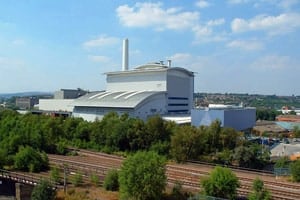
Several waste treatment options are being considered by Nottinghamshire county council, after plans for a PFI funded energy from waste (EfW) facility were rejected by the government.
The alternative options being considered by the council could see household waste sent to FCC Environments Eastcroft energy-from-waste (EfW) plant in the county as well as Veolias EfW incinerator in Sheffield.

And, a report to be considered by the councils environment and sustainability committee this week (January 30) also reveals that Defra has decided to reduce its 38.31 million PFI waste credits towards the county councils 26-year contract with waste management firm Veolia.
Final details of the PFI reduction have yet to be confirmed, the council said.
The report includes an update on waste treatment proposals following communities secretary Eric Pickles decision in 2011 to refuse planning permission for an energy-from-waste (EfW) plant in the county (see letsrecycle.com story).
If the plans had been approved, contractor Veolia would have constructed a 180,000 tonnes per year capacity EfW facility at the former Rufford Colliery near Mansfield. The plant was the cornerstone of the waste management firms 850 million, 26-year contract signed with the county council in 2006.
The PFI waste treatment contract also included the development and operation of the Mansfield materials recycling facility (MRF), composting services, waste transfer stations and landfill.
However, the government said the EfW plans conflicted with national planning policies and as a result, the county council and Veolia have been looking at alternative ways of dealing with the countys residual waste.
Veolia proposals
Following planning permission refusal, Veolia submitted an alternative draft revised project plan, which does not propose the development of any new waste treatment infrastructure within Nottinghamshire.
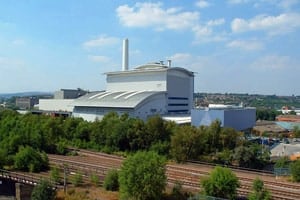
Instead, the plan is based upon the development of a network of transfer stations to feed other Veolia and third party facilities elsewhere, including its own 225,000 tonnes-a-year capacity EfW plant in Sheffield, which could dispose of 60,000 tonnes per year of Nottinghamshire waste by 2016/17.
The company had planning permission granted in May 2011 to source and additional 50,000 tonnes of waste feedstock for the plant from outside the city (see letsrecycle.com story).
Eastcroft
The Eastcroft EfW plant is operated under a three party agreement between FCC Environment, the county council and Nottingham city council, with capacity shared between the three.
Currently, both the county council and the city council each send around 60,000 tonnes per year of waste to Eastcroft, while around 10,000 tonnes per year is reserved for use by FCC.
However, dicussions are currently taking place between the two authorities as the city council anticipates having some 8,000 tonnes per year of spare capacity within its allocation until 2016/17 due to increased recycling and falling waste arisings.
As a result, the county council is looking to increase its inputs to around 68,000 tonnes per year until 2016/17, when the city council expects its capacity needs to increase again due to population growth and changes to waste collection arrangements.
The report, which goes before the county councils environment and sustainability committee on Thursday recommends that the council approves the in principle agreement on arrangements regarding the use of the Eastcroft EfW plant.
The report states that it is in the countys interests to maximise its feedstock to Eastcroft because the rate of disposal is cheaper than landfill.
Defra PFI reduction
Defra awarded the county council 38.31 million PFI credits for the waste treatment contract, which equates to around 80 million over its 26-year lifetime.
After planning permission was rejected for the EfW plant, however, this sum was reviewed by the Department and has now been reduced by an undisclosed amount. This is also set to be discussed at the council committee meeting this week.
In a 2011 letter by the county councils group manager for waste and energy, Mick Allen, he responds to Defras decision to review the PFI allocation, stating that the removal or reduction of funding would not be a proportionate response.
In the letter, sent to Defra on September 29 2011, Mr Allen states: Removal or reduction of funding crucial to the ongoing viability of the overall project as a result of planning failure on one specific asset does not seem to represent a proportionate response, particularly where the project partners have taken all reasonable steps to deliver the wider objectives of the project.
However, the report to the county council committee this week states that although the council is disappointed with the reduction in waste PFI credits, given that other councils in England have had PFI waste credits withdrawn entirely this outcome is the best that could be achieved for the council.

Register for free to comment