
Earlier this year, Hampshire county council began the procurement process for the contract – which also included the transportation of glass – worth almost £4 million.
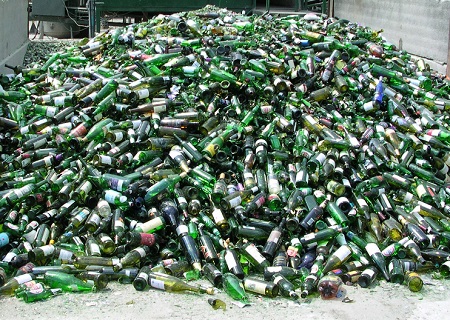
The contract was due to commence on 6 July 2018, for up to five years duration. It would have involved around 40,000 tonnes of glass per annum, collected from bring sites, kerbside and HWRCs (see letsrecycle.com story).
‘Flexibility’
However, the council has now chosen to “abandon” the procurement and make other arrangements for the material “to provide flexibility in the future”.
The council said: “In the light of recent government announcements relating to a Deposit Return Scheme for England there are concerns about the impact this could have on local authority recycling systems.
“For this particular contract the potential quantity of glass processed, and therefore income generated under this contract, could be significantly impacted, depending on the outcome of the government’s consultation later this year.”
Earlier this year, Environment Secretary Michael Gove confirmed that the government will introduce some form of DRS for single use drinks containers, which could cover plastic and glass bottles, as well as cans (see letsrecycle.com story).
Veolia
The glass contract with Hampshire is currently held by Veolia, which also manages HWRCs and waste disposal on behalf of Project Integra – these contracts run until 2030.
Project Integra is the partnership of 14 local authorities and contractor, Veolia, which provides waste services in Hampshire.
Currently, it is understood that there is no fixed outlet for the glass collected from the council, with the contractor largely selling the material on the spot market.
“As a result of limited market interest in the tender as well as uncertainty around the government direction with regards to the proposed national Deposit Return Scheme, we believe the best way forward is to take up the option of bringing glass into the county council’s main waste disposal service contract.”
Councillor Rob Humby
Hampshire county council

Commenting on the move, Councillor Rob Humby, executive member for environment and transport at Hampshire county council, said: “As a result of limited market interest in the tender as well as uncertainty around the government direction with regards to the proposed national Deposit Return Scheme, we believe the best way forward is to take up the option of bringing glass into the county council’s main waste disposal service contract. This ensures a consistent service for Hampshire residents while providing flexibility in the long term to respond to future legislative and market changes.
“Any future changes to these arrangements will be considered, by all partners, in light of the proposed Deposit Return Scheme, once details of this initiative are announced. In the meantime, the county council will work with its contractor, Veolia, to secure stable outlets for glass for the benefit of all Project Integra partners.”
According to Cllr Humby the method of collection varies between the district and boroughs of Hampshire, some offer separate kerbside collection whilst some only offer glass banks at local recycling points.
Concerns
When contacted by letsrecycle.com, Debra Huntington, senior policy advisor at trade association British Glass, said the organisation is “unaware” of the detail surrounding the Hampshire contract.
However, she explained that British Glass and its members “do have concerns about the proposed DRS and the potential effect this may have on local authorities and their household collection systems”.
“Beverage containers are only part of the selection of glass containers used and disposed of by householders via kerbside collection,” she said. “Without careful consideration into a full range of unintended consequences, government could be in danger of undermining the infrastructure and investment made in recent years to help households increase the level of glass collected and recycled.
“We will continue to engage with the Scottish Government in developing the glass sector’s response to their consultation and with Defra as they develop policy options for a DRS in England.”
British Glass is not the first trade association to be apprehensive about the possible impacts of a DRS on collections of materials.
Last month, Alupro – the aluminium packaging recycling organisations – said it was concerned that a DRS “may negatively impact on the kerbside collection of other aluminium packaging such as aerosols, food packaging and foil”.
And, speaking to letsrecycle.com, Alupro’s executive director, Rick Hindley, said that the other factor to consider is that local authorities rely heavily on the value they get from the aluminium, which is one of the higher value materials collected at the kerbside (see letsrecycle.com story).
Councils
The issue has also been highlighted by LARAC – the local authority recycling advisory committee – which has previously said that if a DRS is introduced it should prioritise materials which are not universally collected at the kerbside. LARAC called for a full impact analysis to be undertaken or any proposed DRS scheme to assess impacts on local authority operations (see letsrecycle.com story).

Register for free to comment