
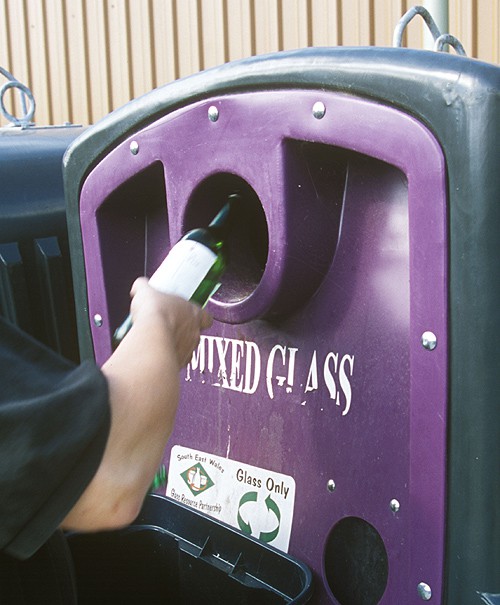
Glass reprocessors have announced further slumps in the price being paid for mixed glass, with some now taking the material free of charge off the back of the decline in the price of packaging recovery notes.
However, the Local Authority Recycling Advisory Committee (LARAC) has sought to bring a measure of calm to the situation and claimed that, while councils require firm pricing for material, the price reduction will encourage them to undertake better quality glass collections.
A statement issued by Berryman said: “Due to the continual decline in PRN revenues from mixed glass which is destined to export the glass is being received free of charge.”
Another reprocessor, who wished to remain anonymous, told letsrecycle.com: “We are getting a little bit more than £5 per tonne, I would say, but that is where we are delivering and going to places like the West Midlands. Other than that we are among those companies that are just not paying for it.”
The price being paid for mixed and green glass fell significantly for the first time in a year at the end of September, which was seen as a response to the fall in the price being paid for packaging recovery notes (PRNs) (see letsrecycle.com story)
In the wake of this, Recresco had dropped its price for mixed glass to £8 to £10 per tonne earlier this month and warned of a possible greater slump in the price (see letsrecycle.com story).
Councils
Commenting on the situation, Andrew Craig, principal policy officer at LARAC, offered a cautious response to the further price fall and said that, while councils would seek certainty for material prices, that it would be the private sector carrying the burden of the slump.
Mr Craig said: “It may not affect local authorities as much as we fear, some obviously will be, but in many cases the local authority's private contractor will handle the risk within their contracts. This may not be in every case but it will be in many.”
“[However] it is a problem for local authorities because, of course, in the long term you want high prices, firm prices and consistent prices for all of your recyclables, which also helps [encourage councils] to recover more materials out of the waste stream.”
He added that he was “not surprised” by the fall but stressed that “any fall in the price of recyclables is not something LARAC thinks is good”. However, Mr Craig added that the decline in price for lower quality glass could lead to local authorities making a more concerted effort to separate the material.
“In essence this is linked to the issue of quality of material between local authorities and their providers, who look to do what they can do and provide recyclables free of contamination,” he said.
Roadfill
Elsewhere, the slump in price for mixed glass has had knock-on effects for other industries. One of the primary end-markets for the material is the aggregates sector, where mixed glass is often purchased to be used as roadfill.
Despite the decline, it would appear that the aggregates sector is not reeling from the price change. London-based Days Aggregates, which supplies virgin and recycled aggregates to the construction sector, said that the costs would be borne by reprocessors rather than those purchasing the material because they have to move the mixed glass.
“Rather than paying for the material the cost will be passed back to the collectors and local authorities,” Myles Willingale, contract manager at Days, told letsrecycle.com. “There is a lot of MRF material available, certainly in the South East, it is either going to go to landfill or aggregates, and we all know what the cost of landfill is.”
Mr Willingale echoed Mr Craig's comments that a decline in the price being paid for mixed glass should be taken as a warning for local authorities over the need to collect higher quality material at the kerbside in the first instance.
“The [glass] industry has been very eager at insisting that the local authority end do the sorting for them but I think that is wrong,” he said. “I think they should sort the material that is given to them and invest in the ability to do that. It is for them to do not just get material and say ‘that is no good, that is no good, do it better'.”

Register for free to comment