



In a Public Policy Exchange event this week where around 40 representatives of local authorities, WRAP, Environment Agency and Defra discussed improving the sustainability of waste management strategies, we heard hints that the EA might be trying to refocus its regulatory enforcement activity away from low risk areas and operations. Could this shift in emphasis free up the blockages, perceived or actual, that prevent many a promising collective composting initiative from even starting out?
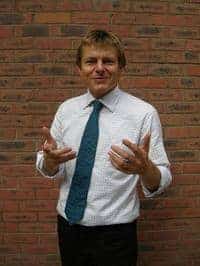
Matthew Thomson has been chief executive of London CRN for nearly two years, bringing over ten years community and social enterprise experience to the re-use, composting and recycling sector. The London network comprises over 200 organisations working in the green economy, public service delivery, regeneration and community engagement.
We heard that the EA lacks the capacity it needs to satisfactorily tackle waste crime, and that it does not have the power to charge for tackling waste crime. Redoubling its efforts at the sharp end of its risk portfolio would seem to make sense. (So would giving them the power to charge for prosecution of its core function surely?!)
We discussed a little the protocols and definitions that determine the nature of Material – whether it's Waste or Product; solid or liquid – and a Premise(s). As mysterious as quantum physics, these shifting boundaries with their ambiguous regulatory shadows confuse people and stymie activity. When discussed in the same breath as waste crime, is it little wonder if local authority officers and members are put off trying to get people to collaborate in taking responsibility for some of their own organic waste?
'Cubic Lamb'
Someone who was close to the origin of the Animal Byproduct Regulation recently explained to me some of the assumptions used in modelling the ABR. Apparently one such input was the 'cubic lamb' used in the calculation of the necessary heat required to satisfactorily 'cook away' the pathogens involved in the decomposition of meat. As a mathematical convenience the cubic lamb may have served a purpose, but doesn't it also distort the equation? To toast the nasties right through this imaginary cubic lamb would require significantly more heat than would actually be needed in a lamb which is not a metre wide. Can this be why so much noise has been made about the way animal byproducts must be treated?
In the reality of food waste composting, meat is shredded before it is composted – pulping the wasted meat accelerates its breakdown. But apparently these cubic lambs were not shred for the purposes of the calculation – perhaps no mathematical macerator large enough for a cubic lamb could be found!? Whether this ABR veteran is telling me the whole truth or not I can't say (and I'd love to hear), but the cubic lamb sounds all too possible. That it is at all credible speaks volumes about the nature and perception of our regulatory regime, which has often been criticized for being over-engineered.
Our regulatory culture is shaped by such concepts as the risks associated with a cubic lamb. Surely now is the time to challenge this culture – in specific circumstances where we can agree the actual risk to human health and to the environment is low. I welcome the possibility that the Environment Agency might now be thinking about giving low-risk composting a break.

Register for free to comment