



And, Germany, which currently holds the Presidency of the EU, has also said that it would like to see a move towards “high quality recycling” across Europe. This could lead to the UK requiring more separate collections of waste paper from households.
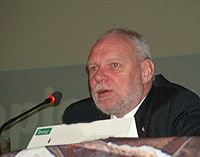
– Dr Helge Wendenburg
The German announcement in Berlin concerning the revision of the EU Waste Framework Directive comes as the UK’s paper sector is supporting the Campaign for Clean Recycling, whose aims includes getting paper collected separately from households (see letsrecycle.com story).
Thirst
Speaking at Germany’s international paper recycling conference last Friday, Dr Helge Wendenburg – the country’s top environment and waste official – said that he was aware that the “paper industry had said that there was need to make sure energy is not lost from recycling of paper through the thirst of incineration plants for material.”
Dr Wendenburg continued: “There must be a priority in recovering paper through recycling before we look at the energy recovery through incineration. During the German presidency, we want to get agreement in June and lay the ground for new waste regulations and then amend ours. We have highlighted high quality recycling as a priority.”
He told delegates to the conference, which was organised by German trade association BVSE: “If you collect paper from homes and industry and mix it with waste, then you will only get low grade paper and then the mills won’t be able to use it for recycling. So we need separate collections from households – only high quality reuse will help us to maintain resources in the long run.”
The German official, who is head of the department of water management, waste management and soil protection for Germany’s Ministry for the Environment, Nature Conservation and Nuclear Safety, was speaking at the conference held by the BVSE trade association.
He gave two examples of where recycling has been threatened in Germany because of the use of materials for incineration and landfilling. The first involved the use of metals dust as a material to fill mines.
He said: “This meant that recyclers didn’t have the materials they needed to recycle. So, we said the metals dust containing a certain percentage of metals must be recycled. For renewable energy you must look at the burning of wood. Burning of contaminated old wood can be beneficial but if as a consequence of burning other wood the chipboard makers do not have enough supplies we have to make sure they have enough.”
Hierarchy
This view on the importance of recycling in the face of “thirsty” energy from waste plants marks a shift in German thinking. Dr Wendenburg went on to tell letsrecycle.com that Germany is now unlikely to vote against a move towards a five stage waste hierarchy, rather than a three stage structure. Crucially the five stage approach puts recycling above energy from waste, and has had strong support from Members of the European Parliament in recent months (see letsrecycle.com story). A number of European states are also favouring the approach.
Dr Wendenburg said that while Germany might not vote in favour of a five stage hierarchy, the country is unlikely to vote against. “We have not decided yet over the three steps of the hierarchy proposal but know a lot of states are in favour of a five stage hierarchy.”
Expanding on the original German position on a three stage hierarchy, he said that “German legislation is very strong for having high quality recycling so we only need one step in the hierarchy for recovery and recycling.”
Dr Wendenburg explained that for high quality recycling, separate collection is usually needed and he gave waste oils as an example where separate collection can work for recycling. “For waste oils there is separate collection for high quality recycling. There are four categories of waste oils and only one category, the first is recycled back into oil.”
| Related links: |
He went on to advocate the separate collection of paper to achieve high quality material and commented on the current developing debate in the UK over whether paper should be sorted at materials recycling facilities. “You must prefer to collect paper separately, you can’t mix it with kitchen and food waste. Yes, Germany collects paper separately.”
And, asked whether the UK should look at its growing use of MRFs, he said: “The UK should slow down and collect paper separately.”

Register for free to comment