



The London Textile Forum met for the first time last month (April 2013) and is made up of textile recyclers, London boroughs and charities with the joint aim of boosting textile recycling and reuse. Members include: the Charity Retail Association; British Heart Foundation; LM Barry; Retrograde; European Recycling Company; and the Textile Recycling Association. Councils signed up to the Forum include Ealing, Lewisham, Hounslow, Lambeth and Merton.
The development of the Forum was facilitated by the Waste & Resources Action Programme (WRAP) and the London Waste and Recycling Board (LWaRB), which is setting up a 400,000 Textile Reuse and Recycling Fund for projects developed and delivered by the Forum.
Collection infrastructure and development as well as communications to encourage behaviour change are two key areas which the Forum will look at. A range of potential projects have been identified including: the assessment of bring bank performance and locations; trials with materials recycling facility (MRF) operators; and the employment of a communications officer.
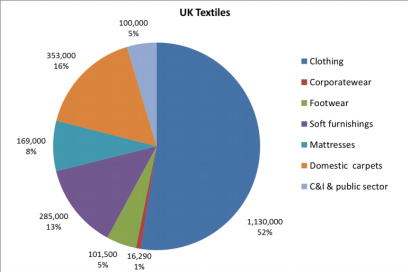
At present, WRAP estimates that between 50,000 and 130,000 tonnes of clothing are being sent to landfill every year in London while 95,000 tonnes of non-clothing textiles waste which arises in London annually is disposed of.
Funding
Details of the London Textile Forum were revealed in a report which is to be discussed at a meeting of the Efficiencies Committee next week (May 14). The report, by Gemma Scott, business development officer for LWaRB, recommends the Board approves the 400,000 Textile Reuse and Recycling fund for 2013-15.
The report states the aim of the textiles fund is to improve the management of post-consumer textiles (both clothing and non-clothing) in London by providing boroughs and other key stakeholders with a fund for increasing reuse and recycling of textiles.
Discussing why textiles have been targeted, the report said: Textiles is a national priority material due to the positive environmental, social and economic impacts of diversion from landfill and reuse. In addition, London has undertaken significant research over the past six months to inform the development of options and delivery of projects for this material.
According to the report, textiles are one of the key contaminants in MRFs as residents place them into commingled collections by mistake. It is estimated that a 50% reuse rate could be achieved through trials which look at how to get the best value from MRF based textiles. The project could also look at providing residents with survival sacks which protect textiles and are sorted at the front end of a MRF. Work is already being undertaken develop the bags (see letsrecycle.com story).
Objectives
A number of objectives for the textile fund have been drawn up, and will be discussed by the Forum before being brought back to LWaRB for formal agreement. They are:
- To divert 5% (6,500tpa) of the clothing textiles currently going to final disposal to Reuse and recycling by March 2015;
- To realise 1.95m of value/income from diverting 5% of clothing textile currently going to final disposal to Reuse and recycling by March 2015;
- Increase diversion of post-consumer non-clothing textiles from final disposal by 5,750tpa by March 2015;
- Reducing the number of people in London having unused textiles in storage at home by 5%; and,
- Increasing the number of people that are likely to donate textiles for reuse or recycling by 5%.
The Fund will be managed by LWaRBs Efficiencies Committee but projects using the money must be developed and delivered by the Forum, or as a minimum a Forum member needs to sponsor the project.
Embryonic stage
Still in an embryonic stage, the Forum is expected to be more formally constituted through the appointment of a chair and the agreement of terms of reference over the coming weeks. Going forward it will meet on a quarterly basis.
Related Links
The Forum was set up in response to two pieces of research by WRAP – one on clothing which was published in December 2012 and one on non-clothing such as mattresses, carpets and bedding which is expected to be published in the summer. The Forum hopes to turn the recommendations and opportunities in the reports into actions.
Work is already being undertaken by to reduce the environmental impact of clothing under the Sustainable Clothing Action Plan (SCAP) which was launched in 2009. To avoid any repetition of work and to share knowledge, the Forum will converse with SCAP on a regular basis.


Register for free to comment