
The revision to the EU Fertilisers Regulation sets out rules on converting biowaste into raw materials that can be used to manufacture fertilising products – as well as safety, quality and labelling requirements.
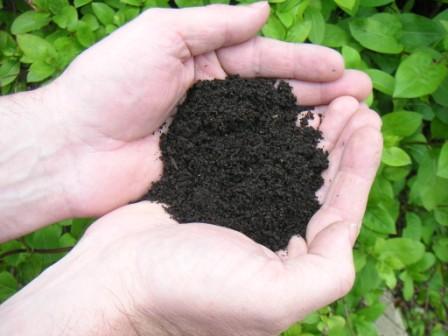
It means that organics recyclers wishing to trade fertiliser products derived from waste between EU nations will be required to follow strict limits for organic and microbial contaminants before affixing the CE-mark, which denotes that a product meets the requirement of associated European Directives.
However, as some fertilisers are not produced or traded in large quantities across the EU, the Commission has also proposed ‘optional’ harmonisation – allowing manufacturers to choose to comply with either Europe-wide or national regulations.
The option will be welcomed by some organics recyclers in the UK who had previously feared that the pan-Europe Regulations would supersede national controls when the legislation was first proposed by the Commission in 2014 (see letsrecycle.com story).
Circular Economy
As well as attempting to introduce more competition within the organics sector, the revision comes as part of the Commission’s wider Circular Economy Package to drive the recovery of secondary raw materials.
In its draft report, the Commission estimates that around 50% of fertilisers on the market are currently left out of the scope of the existing Fertilisers Regulation, with virtually all product types ‘conventional, inorganic fertilisers, typically extracted from mines or chemically produced in line with a linear economy model’.
The Commission states that the fertilisers sector will become ‘less dependent’ on the imports of raw materials such as phosphates as a result of the new regulations. Despite some domestic waste containing largely amount of phosphorus, only 5% of waste organic material is currently recycled for use as fertilisers when it could substitute ‘up to 30%’ of demand.
REA
Commenting on the regulations, Jeremy Jacobs, technical director of the Renewable Energy Association, told letsrecycle.com the final proposals gave UK organics recyclers the ability to retain the current PAS100 and PAS110 standards.
“The fact that we can continue to comply with these protocols enables operators to operate without additional cost burdens.”
Jeremy Jacobs, technical director
REA

He said: “The fact that we can continue to comply with these protocols enables operators to operate without additional cost burdens. At the same time we are keen to promote anything that assists the circular economy debate and making the best use of valued resources.”
Commission Vice-President Jyrki Katainen, responsible for Jobs, Growth, Investment and Competitiveness, said: “Very few of the abundant bio-waste resources are transformed into valuable fertilising products. Our farmers are using fertilisers manufactured from imported resources or from energy-intensive processes although our industry could valorise these bio-wastes in recycled nutrients.
“This regulation will help us turn problems into opportunities for farmers and businesses.”
The revised regulation is due to be put before the European Parliament and European Council in the coming months which will consider the draft for formal adoption.

Register for free to comment