

MBT – Mechanical Biological Treatment – is a way of treating mainly source-separated residual waste through a mechanical separation process and a composting or anaerobic process. It is the subject of much debate in the industry surrounding its merits as the answer to the residual waste problem.
Eco Composting, which treats Dorset county council’s green waste, kitchen waste and wood waste has allocated space for an MBT facility at its site in Christchurch, Dorset. The waste is collected by SITA UK, which has a contract with Dorset, and is then delivered to the Eco Composting site.
“
– Trelawney Dampney, director of Eco Composting
Planning issues
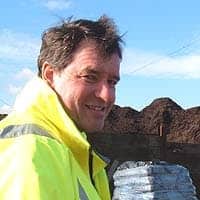
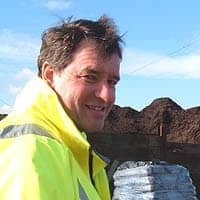
However, director Trelawney Dampney, said there may be some planning difficulties involved in the proposal. “It is an ideal site and many people locally agree with this, but the land, which is part of our site, is identified as in the green belt and is subject to tight regulation on what it can be used for.
“We have started the planning process with SITA and Dorset county council,” said Mr Dampney, who is also chair of The Composting Association. “We would expect a facility to take 100,000 tonnes a year of source separated residual waste.”
Mr Dampney’s company currently manages about 100,000 tonnes of green, kitchen, wood and building waste, turning it into a variety of products including composts, mulches, animal bedding and turf.
Mr Dampney is currently closely following research into MBT and weighing up the options for what the outputs of a process could be used for.
He said: “We would have to see what type of material any facility we used produced at the end of the process and then look at what it could be used for. If it is only suitable for landfill then that may be what we use it for.”

Register for free to comment