

Defra’s summary of waste statistics over the 2010-2012 period show that the overall recycling rate in England continued to show very slight improvement – increasing from 42.9% in 2011 to 43.9% in 2012.
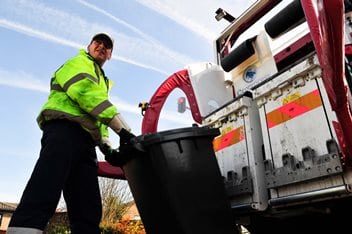
At the same time the amount of waste arisings produced by UK households fell overall between 2010 and 2012 from an estimated 27 million tonnes to around 26 million tonnes.
Meanwhile, the amount of biodegradable municipal waste (BMW) sent to landfill across the whole of the UK fell by 7% between 2010 and 2012. The data shows that 13 million tonnes of BMW was sent to landfill in 2010, representing 36% of the 1995 baseline value by which targets are set.
The result means that the UK ‘comfortably’ met targets under the Landfill Directive – which stated that the amount of BMW sent to landfill should be no greater than 75% of the 1995 tonnage by 2010.
By 2012, the amount of BMW sent to landfill across the UK had dropped to 29% – below the 35% target set out under the Directive by 2020.
Elsewhere, an estimated 48 million tonnes of commercial and industrial waste was generated in 2012, of which 39.4 million tonnes was from England.
Viridor
Commenting on the government figures, Viridor external affairs director Dan Cooke said England must continue to challenge itself to do more, and reiterated the firm’s call for to limit the amount of ‘poorly-managed’ waste exports to support domestic jobs.
One of the UK’s largest waste management firms, Viridor is currently investing £1.5 billion into UK waste infrastructure.
Mr Cooke said: “Defra’s figures published today confirm that we are still not making the progress required of us and it remains touch and go as to whether the UK will meet the EU’s basic recycling target of 50% by 2020. We must continue to challenge ourselves to do more if the UK is to truly deliver a circular economy.”
He added: “Limiting the increasing amounts of poorly-managed waste being ‘exported’ (at a cost) to the EU in particular would support domestic jobs and investment and allow the UK to maximise the potential of a national renewable resource to help power and assist with the UK’s energy security.”
Wales
Meanwhile, Wales’ newly appointed natural resources minister Carl Sargeant welcomed the figures, which showed the principality recycled 52.5% of its household waste in 2012 – nearly 10 percentage points above the UK average.
Mr Sargeant said: “Wales has long been ambitious to increase our recycling rates, to help generate secondary materials for the Welsh economy. The EU target is to recycle at least 50% by 2020, which we have already comfortably met, and we are already looking towards our Welsh target of 70% recycling by 2025.
“Our natural resources ultimately underpin both our economy and our society and increasing the materials we recycle in our homes and businesses is a practical step more and more people in Wales are taking to help protect the wonderful resources we have.”

Register for free to comment