

Last month, the Department tightened a permitting exemption that allowed lighting producers to crush lamps on their own sites without need for a permit in England and Wales.
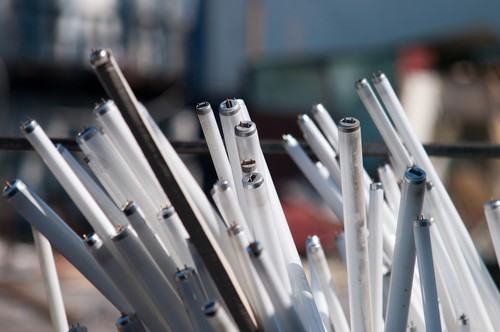
Typically when waste lamps are collected, they are transported whole in their collection container to a treatment plant. However, they can also be crushed at the collection site, and then transported in sealed packaging to a treatment plant. This approach is usually more applicable to smaller sites where the volume of lamps for collection is fewer and smaller vehicles are needed for transport.
Previously, this practice was allowed to take place without need for the site operator to apply for an environmental permit, under exemption T17 of the environmental permitting regulations.
In December Defra consulted on changes to the rules for the mobile crushing of lamps containing mercury, to amend the exemption, due to the potential for lamp crushing to release mercury vapour and mercury containing phosphor powder into the atmosphere.
Changes
Now, the Department has announced its decision to change the rules to only allow sites crushing a maximum 2 tonnes of the material per year to continue to do so. This is designed to ensure that only waste producers doing so at the place of production are able to continue with the practice.
In a statement, Defra said: “A business or organisation that wishes to crush its own waste lamps at a location that is different to the place the waste lamps were produced or at amounts higher than allowed in the revised T17 exemption would require a site based permit from the point at which the regulations are implemented.
“Similarly a business or organisation that carries out mobile crushing operations at a national scale will require a mobile plant permit form the point at which the regulations are implemented.”
The Department has also stated that the Environment Agency will be working with mobile crushing operators that will need to use a permit from the start of 2017.
Commenting on the regulatory changes, Nigel Harvey, chief executive of lighting WEEE compliance scheme Recolight, said: “The new permitting regime they propose will extend the situations in which mobile lamp crushing can be used by professional operators, whilst putting in place proportionate controls. At the same time, Defra will continue to allow companies to use their own crushing equipment, on their own premises, to crush their own waste lamps.”

Register for free to comment