



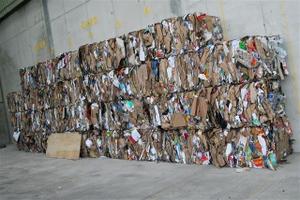
Speaking today, AFOR suggested that councils should be “putting in a call” to local biowaste processors to discuss co-composting some of their material with more conventional feedstocks such as green and food waste. This advice comes in the wake of media reports in the Daily Mail (see letsrecycle.com story) and on BBC News last night that materials, like paper, were being “stockpiled”.
Jeremy Jacobs, managing director of AFOR, commented: “At a time when there is a growing volume of paper and cardboard waste looking for a suitable home, as a result of more traditional outlets drying up, there is potential use for the biowaste processing industry to recover it. This could provide a better environmental outcome compared with alternatives such as landfill.”
However, the organisation warned that not all types of paper and cardboard were suitable for composting due to problems with contaminants, such as ink, and issued guidance to show how different types of paper could be treated by the sector.
Mr Jacobs said: “Treating this material presents significant challenges for composting operators, particularly the ones that are investing significantly in compost quality and market development.”
AFOR claimed that problems which could prevent the composting of paper and cardboard were:
• Only clean material can be composted
• Material collected commingled is often contaminated and likely to include plastics, dyes and inks, glues and foils which adversely affect the composting process
• Non-plain cardboard, such as cereal boxes with shiny surfaces, cannot be composted within a typical composting timescale
AFOR said that only a “few types” or cardboard and paper is suitable for composting. These include:
• Toilet roll and kitchen roll tubes
• Egg boxes with non-compostable labels removed
• Brown and plain corrugated cardboard
The process for composting these types of paper also has to be carefully controlled and balanced. AFOR said that WRAP trials had shown that to produce compost successfully only 16% of the material can be made up of paper and cardboard.
This is due to the carbon/nitrogen ratio which facilitates the composting process. If there is not enough nitrogen, the feedstock simply will not compost. Paper and cardboard provides the carbon element and green waste, such as grass cuttings, provide the nitrogen.
According to AFOR, this means composting paper in the winter months is particularly difficult, because volumes of green waste coming into facilities is traditionally low.
AFOR also advised that PAS 100 accredited composters would also have to “return to a process and quality validation phase” if they wished to start accepting paper. Composting paper is also more labour intensive, and therefore expensive, because it requires pickers to screen the waste and remove contaminated items.
Oxfordshire-based organic recyclers Agrivert already compost cardboard but the company's director, Harry Waters, explained just how difficult it is to get the composting of paper right.
“In principal, the composting of paper and cardboard is sound as long as the nitrogen high feedstocks are available to create the required blend for composting,” he said. “Agrivert has considerable experience of composting cardboard and currently processes up to 70 tonnes daily, producing a high quality product. However, composting of cardboard, especially kerbside collected card and paper is not for the faint-hearted.”
He added: “Cardboard invariably arrives with a high level of contaminants which need to be separated and this requires considerable investment. Composters looking to start processing cardboards and paper should be aware of the additional cost of processing cardboard and plan to reflect these in the cost to local authorities. Agrivert's experience is that the processing cost of cardboard included waste is up to 50% greater than processing standard green waste.”
AFOR is advising councils to access its website and examine the directory of members to see if paper and cardboard composting can be pursued as an option.

Register for free to comment