


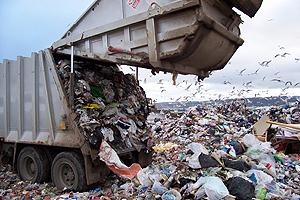
When as Chancellor in 2003, Mr Brown announced that he was increasing the rate from the then rate of £14 per tonne, his Budget pledged that further increases would be returned to local government.
However, after last year's tight budget settlement from the Comprehensive Spending Review, the Local Government Association said yesterday that there are big questions as to whether the extra Landfill Tax was actually being handed back to councils within their central government funding.
And, after requesting clarifications on where the money was, the Association said ministers had yet to clearly demonstrate how this money is being given back to councils.
The LGA warned that households could each end up paying an extra £70 on their Council Tax over the next three years unless the government fulfils its promise to give money raised through landfill tax back to councils.
It would mean £1.5 billion taken away from council services up to 2011, it added, on top of the estimated £200 million in fines the LGA forecasts could come from authorities failing to meet their landfill targets by 2013.
Cllr Paul Bettison, chair of the LGA's environment board, said: “It is totally unacceptable that the government should backtrack on its promise to give this money back to councils, thus turning this into another stealth tax.
“To stop Council Tax bills rising in the future, ministers must make good on their pledge to reimburse the billions of pounds that councils pay for landfilling rubbish,” Cllr Bettison added.
Receipts
Landfill Tax receipts for 2007/08 were around £900 million. While the government has continued to state that the Tax will be revenue neutral to business overall – mainly through a 0.2% reduction in employers' contributions to National Insurance – October's joint pre-budget and comprehensive spending review did not explicitly guarantee the same for local authorities.
A briefing note from Suffolk county council on the Comprehensive Spending Review and the announced increases in the Landfill Tax stated: “Government will receive an additional £150m extra income in 2008-09 as a result of the rise in Landfill Tax. Government stated that this money would be returned to local government; however, it is not clear from the settlement where this money has been returned to councils.”
Other councils have suggested following the Spending Review that they will not receive a refund on the increased Landfill Tax.
London Councils, the organisation representing London boroughs, warned that the extra Landfill Tax will impact “severely” on waste disposal authorities and, through them, collection authorities.
Commenting on the annual £8 per tonne Landfill Tax increase, it warned: “Although there is an economic rationale for this policy, its implementation potentially places further financial pressure on authorities. Waste authorities pay these charges directly but do not receive refund of the element of this expenditure that comes back to the local authority as part of its Revenue Support Grant.”
If this is true, it would appear to go against Mr Brown's pledge, and also Defra's promise in 2005, when it was setting up the Landfill Allowance Trading Scheme, that: “Local Authorities will be fully compensated for expenditure on the Landfill Tax Escalator in that Landfill Tax receipts from local authorities will be returned through the Environmental, Protective and Cultural Services block, in line with the general EPCS formula. The tax increase will therefore be revenue-neutral to local authorities.”
Queries
Behind the scenes, local government queries as to where the Landfill Tax revenue has gone have been answered by government officials claiming the money is in the central pot for local authorities.
But, local government officers believe that since the Comprehensive Spending Review effectively gave councils just a 1% increase in spending, if the Landfill Tax revenue is actually still there, it would mean aside from the returning of councils' own Landfill Tax money, the government settlement is actually a cut in funding.
This, as local authorities claim waste management costs have increased by 10% each year on average in the last five years.
The latest comment from the Treasury came late last month, in response to a Parliamentary Question from Bromley & Chislehurst MP Bob Neill on whether the Landfill Tax escalator was still revenue-neutral in relation to local authorities.
Skirting the term “revenue-neutral”, Treasury minister Angela Eagle replied on January 29: “I can confirm that the costs of Landfill Tax, including the increase in the Landfill Tax escalator, were taken into account when agreeing the local government settlement.”

Register for free to comment