

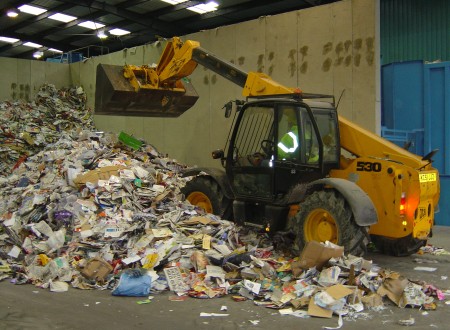
And, some have raised fears that councils may be forced to change services if commodity values remain low, potentially putting England’s target to recycle 50% of household waste by 2020 at risk.
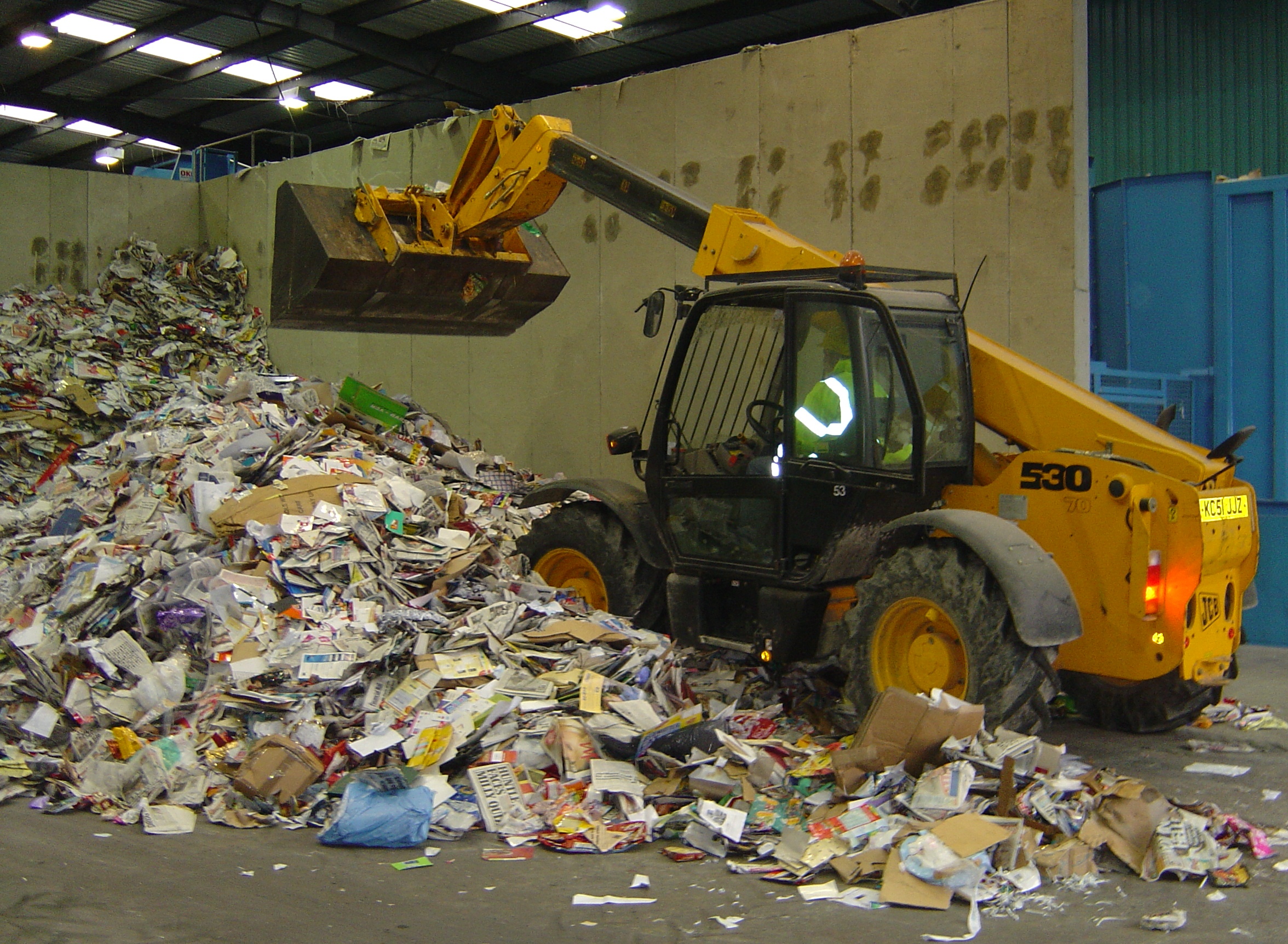
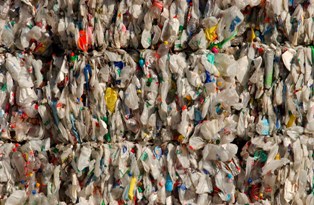
The comments come in the wake of the closure of the Aylesford newsprint mill in Kent last month and alongside a difficult period of trading for UK plastics reprocessors (see letsrecycle.com story).
Associations including the National Association of Waste Disposal Officers (NAWDO), the Local Authority Recycling Advisory Committee (LARAC) and the Association for London Cleansing Officers (ALCO) told letsrecycle.com that members were still managing to move material, but prices had tumbled – with the prices being paid for some paper grades reducing significantly.
NAWDO
Steve Palfrey, chair of NAWDO, said that the market situation was a “real issue” for local authorities. The topic is on the agenda for the next NAWDO meeting, due to take place in London next week (March 16).
He said: “This is a real issue for local authorities. It depends on what contracts you have and how they are structured in terms of risk and reward. There will be some local authorities who are immediately affected as they have contracts with Aylesford that can no longer be honoured – where does that leave them?”
Mr Palfrey said that local authority budgets were increasingly built around the assumption that recyclables have a value and help to subsidise the service and that without that income, schemes may no longer stack up.
He said: “As more dry recyclables are recovered we are more susceptible to market prices than before. The big fear is that we end up in a position that schemes are no longer financially viable and people have to decide whether to terminate schemes.”
LARAC
Similar concerns were voiced by Andrew Bird, chair of LARAC, who has been contacted by a number of local authorities on the issue and is discussing the situation with WRAP, which is co-ordinating a cross-sector response to the closure of Aylesford.
He commented: “This has come at a bad time…Some councils will have shortfalls in their budgets and will have to find the money elsewhere which will mean pressure on services. Some councils could cut services – that would be a scenario that local authorities could be looking at.”
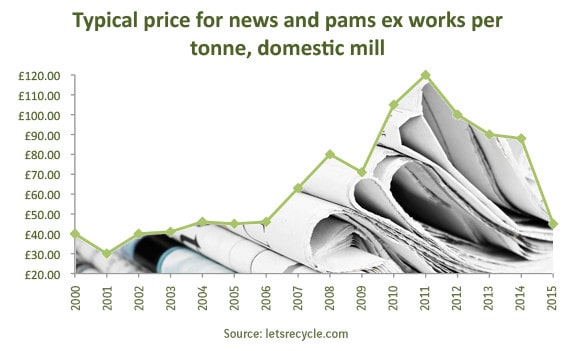
Mr Bird suggested that councils with commingled collection schemes were facing some of the biggest challenges due to perceived quality issues, adding that “it is becoming more and more evident that higher quality materials will achieve better, if not as good as a few years ago, values than contaminated material.”
Mr Bird added that recycling targets were “not helpful” in terms of driving a sustainable recycling market and called for government intervention: “It needs everyone to sit up and ask some real questions across the supply chain. I think there is a role for central government to help steer and provide some confidence in the development of markets. At the moment they clearly leave it to the market to determine.”
Somerset
In Somerset, contractor Kier has managed to place paper mainly in other UK mills, albeit for a reduced price. This is something which Steve Read, managing director of the Somerset Waste Partnership, attributed to the “high quality” of the material which is collected through a kerbside sort method.
[testimonial id = “201” align=”right”]
Despite this, Mr Read said the commodity price drop had highlighted the vulnerability of councils.
‘Double-whammy’
He said: “Current trends in the reprocessing market shows the vulnerability of local authorities to a system which places so much risk on the public sector. It’s a double whammy at a time when – and after 27 years in the sector I really know this – unprecedented financial pressures on local authorities.
“If we were a company supplying raw materials or components to a larger manufacturing company, we would have to regulate our production output to meet changes in demand. With our duty and public expectation to recover materials we can’t turn the tap on and off.”
He continued: “This really demands a re-think of the circular economy to be able to share risks more appropriately. But all the time that local authorities have no option but to take on the risks and there is no central policy steer, others are hardly going to queue to take on more of the burden.”
London
Commenting on the situation in London, Michael Singham, ALCO information officer, said: “Falling commodity prices will only make it harder for London’s local authorities to improve recycling performance whilst balancing their budgets. Sudden and unforeseeable price drops and loss of market outlets such as the one resulting from Aylesford Newsprint’s closure are particularly difficult for them to plan for.”
Given the continuing pressure on local authorities to reduce costs, Mr Singham added that “the government should consider what more it needs to do to ensure that England does not cause the UK to miss its 50% recycling target for 2020.”
WRAP is currently in the process of setting up more meetings with industry and local authority representatives to see how it might assist, in an initiative headed by director Marcus Gover.
Providing an update on this work, a WRAP spokesman told letsrecycle.com: “Marcus is really keen to talk to people and see what we can do. It is a broad spectrum of people he is talking to including bodies such as the Resource Association. If anyone wants to contact him on this issue they can.”
Defra
Meanwhile, the Department for Environment, Food and Rural Affairs said that it was “closely monitoring” the situation.
A Defra spokeswoman said: “We are aware of the challenges facing both the reprocessing industry and local authorities and are closely monitoring the situation.”
Earlier this year, speaking at a parliamentary reception, resource minister Dan Rogerson said he was aware of the decline in commodity values and did not want to see a situation where material was stockpiled.

Register for free to comment