

At the same time, the paper industry was also reviewing markets and prices with prices for used newspapers set to be slashed and MRF and kerbside sorting fees increased.
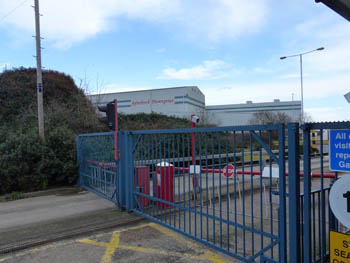
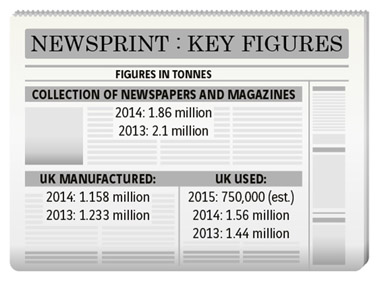 The Aylesford closure is impacting on a pan-European level as it means about 480,000 tonnes of used newspapers and magazines per annum, which went into Aylesford, is now without a home. In Norway, for example, media reports suggested that the closure was good news for its paper industry on the competitor front while in the UK sources said that the move would have a huge market impact. A further volume, about 200,000 tonnes is also in the marketplace, as a result of the already-announced closure of one of the two machines at UPM Shotton.
Waste management companies, including Biffa, SITA UK, Kier, Veolia and Hills are all thought to supply into Aylesford and are believed to be trying to find alternative recycling routes. A spokesperson for their trade association, the Environmental Services Association, said: “The fate of Aylesford is very regrettable and bad news not just for the company but for paper recycling in the UK in general, potentially leading to a greater reliance on the export market. ESA members will be working hard to adapt to the new situation to ensure the continued recycling of collected paper.”
[testimonial id = “189” align=”right”]
Steve Read, managing director of the Somerset Waste Partnership, which had supplied material to Aylesford via contractor Kier, said: “This is a seismic event for the sector. I think that Aylesford has been a bedrock of UK recycling for a couple of decades. Our contractor is working extremely hard to find alternative outlets for our newspapers. We have a very short term solution but are now looking to the short and medium term.”
Mr Read added that he believed that newspapers from Somerset were of a high quality because they were sorted at the kerbside and that this should help attract buyers for the material.
Kent
Local authorities in Kent were in urgent meetings today to discuss the situation. The councils supplied in to Aylesford and a statement from the Kent Resource Partnership is expected soon.

Dennis Gardner, head of waste and street scene services for Tonbridge & Malling borough council – close to the Aylesford mill site, said: “The council was very concerned to learn that Aylesford Newsprint has gone into administration and our thoughts are with the staff and families who are affected by this shocking news. The council has two paper recycling collection contracts with Aylesford Newsprint: one for the kerbside collection of paper (the green box service) and one for the emptying of paper banks at ‘bring’ sites across the borough. We have already made emergency arrangements to ensure that both services can continue in the short-term while we continue to investigate longer-term solutions to ensure that our recycling services are maintained.”
Markets
In terms of markets, the closure of Aylesford means that there are two domestic mills using newspapers and magazines – UPM in North Wales and Palm Recycling in King’s Lynn, Norfolk. Other buyers of used newspapers and magazines include Stora Enso (via Newport Paper) in Belgium and other mills on the continent as well as buyers serving China and India.
Paper industry sources said they “very much doubted” whether KPMG as administrators would be able to find a buyer who would restart the Aylesford plant. And they also doubted whether the machine would be resold rather than going for scrap. Letsrecycle.com was told: “There are no newspaper machines being installed, no increased capacity in the world and it is unlikely that the Aylesford machine could be used for anything else.”
In terms of the UK market, about 1.9 million tonnes of used newspapers and magazines has been collected each year for recycling although this has been falling to around 1.8m now.
With the closure of Aylesford and the shutting of one of its two machines by UPM in north Wales, about 750,000 tonnes of usage has been taken out of the market. Usage in the UK was at about 1.5m tonnes in 2014 meaning that some 750,000 tonnes of material will need to find a new market.
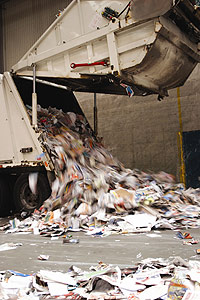
At some point in the future, there is expected to be more balance in the market as readership of newspapers reduces, less newspapers are consequently collected for recycling and newsprint mills close. However, sector experts say that the situation is going to be “very difficult for at least 18 months”.
And, the situation is expected to exacerbated by the availability of cheap imports of newsprint available to the UK newspaper industry as well as the market in Europe being awash with material, despite closures of other mills. At least one more newsprint mill on the continent is also expected to close, according to industry sources, before some sort of better equilibrium is reached.
‘Perfect storm’
One UK recovered paper member said: “This is going to have a serious knock-on effect on the market. It is the perfect storm where a lot of people will want to export but it will take time to do. In the short term newspapers and magazines will end up going to the mixed paper market but this is currently weak. We could even see the packaging market crash as a result and be back to 2008 where material was not moving and prices collapsed.”
Industry sources suggest that prices paid for used newspapers and magazines could fall dramatically, down by as much as £25 a tonne or more with mixed paper prices also reducing. Gate fees at MRFs will also be affected with local authorities having to pay to have material sorted while kerbside charges are also likely to increase.
Councils which have contracts with UPM and Palm are expected to be “relieved”, letsrecycle.com was told. Devon, for example, switched from Aylesford to Palm last year.
Balers
A particular problem to councils who have been supplying Aylesford may arise because their own or contractor depots do not have easy access to baling machines. Sending material out on the export market is likely to mean used newspapers have to be baled rather than tipped loose as has been allowed at Aylesford. This could mean that contractors will face significant extra costs in moving used newspapers to sites where they have balers.
Both Palm and UPM are said to be looking closely at the current situation. Neither would comment on the immediate situation.
However, it is clear that Palm in particular is known to be keen on taking in only high quality material and has in the past been critical of contamination in commingled supplies. One sector expert suggested that the company is likely to look at the “new” marketplace and potentially target better quality, source-separated newspapers.
UPM Shotton runs a newsprint making machine as well as a MRF at Shotton. The situation is not expected to impact on its MRF but the company is likely also to look at the quality of material supplies and even buy some of the surplus material for use at its overseas mills.

Register for free to comment