


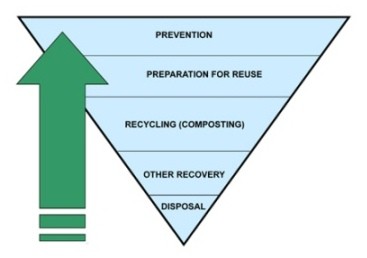
A range of policy options have been outlined by the European Commission for EU Member States seeking to draw up waste prevention plans, in a document published last week (October 26).
The Preparing a Waste Prevention Programme guidance is designed to support Member States developing policies intended to push waste up the waste hierarchy.

Under the revised Waste Framework Directive, Member States are required to create national waste prevention programmes by December 2013.
The document highlights a range of best practices and examples of national and regional measures that have successfully been employed.
The UKs Waste Strategy, published by the former Labour government in 2007, is cited among the case studies of waste prevention plans currently in operation around the world. The Commission highlights the former Labour governments efforts to strengthen incentives for households, businesses and local authorities to reduce waste, and setting targets to reduce household waste generation by 29% by 2010 and 45% by 2020.
Also mentioned in the analysis are strategies drawn up for California, Ireland, Japan and Finland.
Categories
The Commission outlines the three broad categories that waste prevention policy options fall into, which involve different levels of involvement by national and local authorities. These categories are: information, promotion and regulation.
Informationstrategies are aimed at changing public behaviour and include awareness campaigns and training programmes for authorities, the document explains, whereas promotional strategies are designed to incentivise behavioural change, offering support for voluntary agreements and promotion of research and development.
Regulationary strategies meanwhile involve enforcing limits on waste generation and may include taxing excessive waste generation or extending producer responsibility policies.
On drawing up a fresh waste prevention strategy, the guidance states: A waste prevention programme should not be a mere list of top-down-measures prescribed by the national government but a plan which integrates the interests and concerns of interested and affected parties (stakeholders) based on a commitment to carry on the programme.
There are hundreds of potential or existing waste prevention measures, instruments and initiatives which could be integrated into the programme. The main task of the programme therefore is to provide a global vision and a framework that builds up on existing initiatives and to add the most efficient and effective complementary measures.
Steps
The guidance then goes on to outline the steps that Member States must carry out to implement a successful waste prevention strategy, which includes undergoing an initial assessment of current waste prevention performance, in order to determine which of its policies are working, and which need amending.
It is then necessary to decide on the scope of the waste prevention programme, and set targets to quantify the aims of the strategy. The guidance then states that it is necessary to engage with stakeholders and identify opportunities for waste prevention policies to be effective.
Related Links
Following the December 2013 deadline for Member States to draw up national waste prevention programmes the European Commission, alongside the European Environment Agency will assess each Member States strategy in 2014.

Register for free to comment