


The Audit Office highlights how the Welsh Government has favoured kerbside collections in contrast to the view of some councils and contractors that commingled colletions are more effective.
And, it urges the Welsh Assembly Government to work with Welsh local authorities to set up a board to independently assess the collection methods used by different councils in a bid to resolve the situation.
Auditor General for Wales, Huw Vaughan Thomas, said: It is clear that the public are engaging more in recycling waste, and the Welsh Government and local authorities should be commended for their efforts over the last six years to encourage this. But the momentum will be lost unless there is significant change in some areas.”
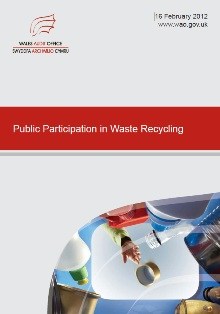
The Public Participation in Waste Recycling report, published today (February 16), is the first to be produced by the Welsh Audit Office on waste management for six years andhighlights how recycling rates in Wales are increasing.
The report acknowledges the Welsh Governments efforts in making recycling a priority, with its ambitious vision for sustainability, detailed recycling targets for local authorities and its injection of over 360 million in waste grants to councils since the year 2000.
Progress
With the overall recycling rate in Wales at 43.6%, it says that local authorities have made steady progress in meeting targets for waste.
They now provide a range of facilities and services that give residents the opportunity to reuse, recycle and compost more of their rubbish. Recycling is increasingly a part of normal daily life for many citizens, it says.
However, the study claims that increasing public participation and the recycling rate even further faces a number of hurdles. For example, although local authorities understand the importance of waste prevention, it says they are fixated on meeting the Welsh Governments recycling targets.
Producing less waste is a major challenge and must happen in parallel with a high recycling rate if Wales is to meet the aim of living sustainably within available resources, the report says.
According to the Audit Office, the Welsh Governments leadership, and particularly the clarity, timeliness and prescriptive style of communications about sustainable recycling, has also left some local authorities confused and disengaged. And, it claims that national plans do not take sufficient account of local circumstances, such as variations in the materials found in waste leaving some councils disadvantaged.
‘If disagreement over recyclable waste collection methods continues, there is a risk that it will inhibit further progress in achieving recycling objectives and reduce the momentum of public participation’
Welsh Audit Office
Collection
On the issue of kerbside collection methods, the report highlights the difficulties caused by conflicting views between the Welsh Government and local authorities about how best to provide recycling services for the public.
It says: The Welsh Government believes that kerbside recycling, and sorting, is the most consistent mechanism for producing quality waste material. It dislikes commingling dry waste such as bottles, cans and card. However, some local authorities and private sector contractors dispute this assertion, saying that modern recovery facilities can mechanically sort commingled waste to sufficient quality and at a similar cost. They say it is a much easier process for the public, who dont have to sort materials and would boost levels of public participation further.
The report warns that if disagreement over recyclable waste collection methods continues, there is a risk that it will inhibit further progress in achieving recycling objectives and reduce the momentum of public participation.
Information
Current information gathering about public participation in recycling is also a weakness, according to the report. While most Welsh local authorities measure participation, it claims there is often insufficient detail and measurement is too infrequent. It recommends that the Welsh Government should gather and share good practice and provide the guidance that local authorities need to be more effective in persuading people to recycle at the level that the national strategy and targets require.
The report says that the Welsh Government and local authorities should also build trust and seek a consensual route that improves understanding and acknowledges and respects local circumstances.
The report makes a number of recommendations for improvement, including:
The Welsh Government and local authorities should work together more effectively to ensure there is an independent performance assessment of methods used for kerbside collection. This should include the establishment of a board or similar body capable of designing and implementing an independent and objective assessment’. The body would assess collection methods used by each local authority.
The Welsh Government should clarify, consolidate and better signpost guidance available to local authorities to increase public participation and do more to capture and share good practice;
The Welsh Government and local authorities should work more closely with the private sector, in particular to steer them towards more sustainable methods of recycling that also offer value for money; and
The Welsh Government, in partnership with local authorities, should develop consistent performance indicators to improve the measurement of public participation in recycling.
The audit report is available on the Welsh Audit Office website.

Subscribe for free