

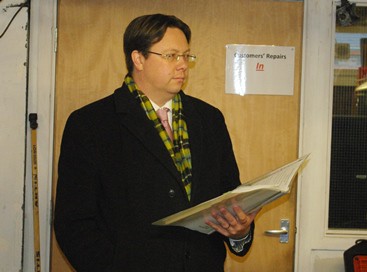
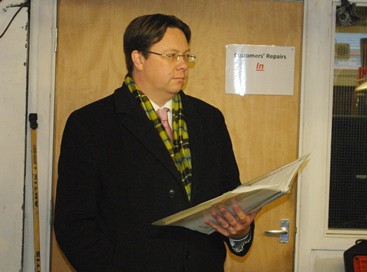
Measures encouraging private sector action are at the forefront of the long-awaited Waste Prevention Programme for England, which was launched today (December 11) by waste and recycling minister Dan Rogerson.
The Programme includes a continuation of the WRAP-managed 1.5 million waste prevention loan fund for small and medium businesses and a 900,000 programme of Action Based Research pilots on resource efficient business models and supply chain innovations.
Additionally, it includes support for sustainable design through the proposed development of a Sustainable Electricals Action Plan as well as an investment of up to 5 million in design research and development through the Technology Strategy Board (TSB).
An 800,000, two-year scheme to support communities in preventing waste was also announced, but no overall targets have been set, with Defra stating in the Programme: As a principle, the government considers that targets can have unexpected and undesirable consequences.
The Programmes focus on business comes despite comments made in 2012 by Dr Colin Church, director for resource and waste at Defra, that it was very difficult to talk to stakeholders about waste prevention, and that the then waste minister Lord de Mauley was personally extremely interested in the development of the Programme for England (see letsrecycle.com story).
Todays Programme launch instead appears to fit in with Defras announcement last month that it is to step back on areas where businesses are better placed to act on waste in 2014/15 (see letsrecycle.com story).
But, the Resource Association said it was disappointed with the lack of an overall prevention target in the Programme, while plastics recycler ECO Plastics described the plan as a missed opportunity.
Dan Rogerson
At the launch which took place at social enterprise Bright Sparks repair and reuse warehouse in Islington, London Mr Rogerson commented: Everyone has a role to play in reducing waste and I want to see businesses helping consumers and the environment by designing products to last longer and using resources better.
‘we will keep the whole thing under review it’s not something you just publish and then you walk away – we are very much committed to this.’
Dan Rogerson, Defra waste and recycling minister
Speaking to letsrecycle.com, Mr Rogerson said: What we are keen to do with this Programme is to show we can put some frameworks in place. When it comes to legislation or regulation negotiations at EU level, that’s very much jobs for us.
He added: And we will keep the whole thing under review it’s not something you just publish and then you walk away – we are very much committed to this.
When asked whether the Programme marked the end of Defras activities on waste for next year, he said: I certainly wouldn’t say we are not doing much on waste. We are still doing a great deal we are still pricing a big chunk of money to WRAP it’s just that we are focusing on things which we are going to take forward.
Mr Rogerson added: I think it is about building on that work that we have already done, it’s not about carrying on doing things for the sake of it. Where we have actually got things in place we now need to let things mature and deliver, so we don’t actually need to necessarily keep reinventing them every ten seconds, but there are areas where we are very keen and we will be working.
Reuse standard
However, the minister for waste would not be drawn on when the proposed reuse standard might be launched.

Asked by letsrecycle.com whether he had taken recent criticisms that the draft standard would be devastating for the reuse sector (see letsrecycle.com story) into account, Mr Rogerson said he had attended a meeting this morning featuring representatives from the reuse sector.
He said: I’m very happy to carry on those discussions with the sector and see what we can do to help. We want to see this work continue and to grow and I’m very happy to talk to people to make sure we get that as right as we can to allow them to do what they want to do.
And, commenting on the possibility of Defra guidance being issued on commingling, Mr Rogerson said: Lord de Mauleys letter set out the position to local authorities with regards to where we think the risks are of not meeting the commitments that we have under that, and it’s obviously very much up to local authorities to respond to that. Some are taking a different view, but what we are keen to see and what we are doing with the MRF regulations as well is that there is a quality product coming out at the end of that.
A waste prevention plan is a requirement under the EU Waste Framework Directive, and the Programme for England follows the launch of the Welsh Waste Prevention Programme last week, which sets targets on cutting waste until 2050 (see letsrecycle.com story).
Resource Association
Trade association the Resource Association welcomed several initiatives in the Programme, such as the 800,000 communities innovation scheme on waste prevention and the Sustainable Electricals Action Plan.
However, RA chief executive Ray Georgeson said he was disappointed but unsurprised at the lack of an overall target for waste prevention in England and wonders how easily this sits alongside the specific targets set separately by governments in Scotland and Wales.
ECO Plastics
Jonathan Short, deputy chairman of ECO Plastics, also said there were some welcome proposals to support waste prevention for businesses and consumers in the Programme, but added that there were also important omissions.
He commented: The government has already set challenging recycling targets, but mechanisms which are crucial to the delivery of those targets are still missing. Until we stop encouraging the export of recyclates ahead of domestic processing, until we introduce incentives to incorporate the use of recycled content in new products and until we have a mandatory code of practice for materials recycling facilities we wont have the regulatory framework to underpin a truly circular economy. Today is a missed opportunity.

Register for free to comment