
The glass container industry trade confederation has said local authorities are being forced into collecting household glass within commingled collection schemes because of their weight-based targets set by the government.

British Glass has been lobbying for many years to protect the separate collection of glass, and the collection of separate glass colours, which its container manufacturer members see as producing the highest quality recycled glass cullet.
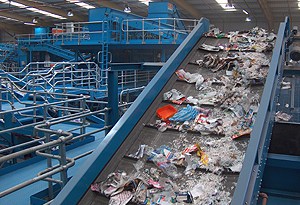
But after letsrecycle.com revealed the rising trend of the nation's sorting plants to include glass processing equipment (see letsrecycle.com story), the trade association expressed “deep concern”.
Directive
The confederation's recycling manager, Rebecca Cocking, explained to letsrecycle.com yesterday that the concern has arisen that the weight-based local authority targets could prove a threat to packaging industry meeting its European recycling targets, as set by the Packaging Directive.
She said: “Local authorities are striving towards meeting their own waste based targets, with no reference to the more demanding and immediate packaging targets. The consequent effect on collection infrastructure means the packaging targets are becoming more and more difficult to achieve.
“We have some concerns about the short fall and loss of environmental benefits but the debate is not something we can start ourselves. Materials recycling facilities are seen as a solution, but it might end up being an understandable knee-jerk reaction rather than ensuring long-term sustainability,” she added.
Quality
What is needed is recycling legislation that concentrates on delivering the biggest environmental benefit not the greatest tonnage.
David Workman, British Glass
In a statement issued to the media after last week's report, British Glass director-general David Workman accused MRFs of producing “poor quality” material.
He said that because glass from commingled collections is sent for use in construction products rather than in making new glass, carbon emissions savings – gained when glass is made from recycled rather than virgin materials – are lost.
Mr Workman said in his statement: “What is needed is recycling legislation that concentrates on delivering the biggest environmental benefit not the greatest tonnage. The majority of MRFs produce poor quality mixed material that has little use other than as aggregate replacement, which is the least environmentally friendly way of using post consumer glass waste. This is tantamount to squandering a precious natural resource.”
Mrs Cocking explained that other European countries, such as France, rely less on kerbside collections than the UK, and take much of their glass from bring banks, which yields better quality material.
Some glass recycling companies are now taking matters into their own hands regarding commingled collections, because they say they want to drive up the quality of the glass they receive. West Yorkshire-based Berryman Glass revealed plans last week to use new technology to sort commingled collections (see letsrecycle.com story).
Barnsley firm Glass Recycling UK's Ron England said his company has been sorting commingled collections of glass, cans and plastic bottles for two years.

Register for free to comment