

Until now, much of the heat generated by burning the biogas produced by anaerobic digestion to generate electricity has literally gone up the chimney. In the light of climate change, escalating emissions targets and the pressing need for energy security, that seems like a criminal waste. But with the recent introduction of the Renewable Heat Incentive, the economic case for cleaning this gas and converting it into biomethane for injection into the grid is starting to look very attractive. It may be early days yet, and a variety of technology options are still being tested, but the future for biogas seems promising.
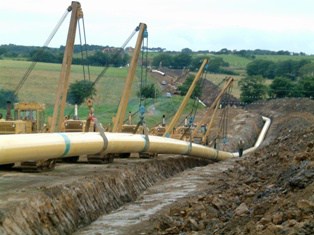
We only have to look across the Channel to see how continental Europe is embracing the idea of injecting biomethane into the natural gas grid. Not surprisingly Germany is leading the way, while the number of biogas plants in Switzerland, the Netherlands and Sweden is also growing.
With domestic production of gas declining, the UK is now a net importer. We clearly need to find new and sustainable resources to supply the 85% of British homes that are heated by gas. At least 190TWh will be needed by 2050, and we have to meet this demand in the most economical way. And as the UK electricity grid is progressively de-carbonised via wind, nuclear, solar, and carbon capture and storage, theres a strong argument to say that biogas should only be used to generate electricity when all the heat can also be used.
Renewable gas in the form of biomethane could be a key contributor to a stable and reliable energy supply, with ample supplies available from a variety of feedstocks. The UK produces sixteen million tonnes of food waste per year (of which half is from households) and ninety million tonnes of animal waste. The majority of this still goes to landfill, despite landfill tax rising to 64 per tonne on 1st April 2012. On the other side, the UK has invested heavily in its gas supply infrastructure. Major energy suppliers and distribution network owners such as British Gas, National Grid and Scotia Gas Networks are showing active support for biomethane injection.
Ticking all the boxes
Its hardly surprising that interest in biogas is growing so fast when you consider that in many ways it ticks all the boxes as an investable form of renewable energy. Feedstocks are available in abundance. Only about 9% of the projected 3 billion market for UK AD/bio-energy has so far been commissioned (72 AD projects) with possibly as many again in the planning process so theres huge scope for development. Biomethane is transportable using existing infrastructure. Its used in existing household appliances without needing any end user involvement. And it operates at very high efficiencies – 50% greater than electricity-only applications.
Gas to grid provides a greater contribution to meeting renewable energy targets than electricity generation. And the methane produced by the degradation of organic material is 23 times more damaging to the environment as a greenhouse gas than carbon dioxide so converting it into a sustainable form of heat makes a valuable environmental contribution.
Biomethane also has an alternative use as vehicle fuel in the form of compressed biomethane (CBM). Commercial vehicles produced by major OEMs such as VW, Mercedes Benz, Volvo and Iveco are all using this technology and starting to gain serious interest. New dual fuel diesel-CBM tractors are also on the market.
Put all this together and the prospects of creating a thriving domestic biomethane industry able to make a very material contribution towards the UKs 2020 targets look good. According to a study by National Grid, it could account for at least 15% of domestic gas consumption by 2020.
Back to basics
But lets go back to basics just for a moment. What exactly is biogas? What makes it suitable for the grid? Why and how does it need to be cleaned and converted into usable biomethane? What feedstocks can be used?
The biogas that comes out of the AD organic waste treatment process typically contains around 65% methane and 35% CO2. It may also contain small amounts of hydrogen sulphide (H2S), moisture and siloxanes. Natural gas on the other hand contains around 90% methane, with ethane, propane, butane, CO2 and nitrogen making up the rest. The process to clean AD biogas is necessary to strip out the other elements to produce biomethane with a methane content of around 98%. This makes it suitable to be exported to the pipeline at an acceptable quality standard and as close a match as possible to natural gas.

The three main steps involved in the clean-up and upgrading process are the removal of CO2 and trace contaminants, the removal of H2S, and drying to remove water content. Various technologies for achieving this are currently being tested. They include water wash, chemical wash, pressure swing adsorption, membrane separation and cryogenic/CO2 liquefaction. A wide variety of feedstocks are also available from farm, food, brewery and manufacturing waste streams to organic crops, waste water, sewage and landfill gas capture.
Several demonstrator projects are currently underway at different locations. These are certain to be of great value and importance in testing a wide range of alternative technologies and feedstocks. The results should help to determine which options are the most effective in terms of cost and sustainability, and how they can be best optimised to meet technical and regulatory challenges so as to exploit market opportunities and deliver return on investment. They should also help to determine what size of plant makes economic sense, and whether the current assumption of viability above 500 m3/h bio-gas (300 m3/h biomethane) needs to be reviewed.
At Didcot in Oxfordshire, Scotia Gas Networks (SGN) delivered the UKs first biomethane gas to grid plant in October 2010, working with their partners Thames Water and Centrica. Sited at an existing sewage treatment works with two digesters producing sufficient biogas, SGN are using innovation funding to improve understanding of legislative and regulatory issues, gas quality (especially oxygen and siloxanes) and the impacts of biomethane on the operation and configuration of the local gas network. They also aim to prove biogas clean-up and upgrading technology in the UK, to provide a base-line for gas quality monitoring and associated equipment from which lower cost options can be developed, and to share project learning and improve efficiency for the benefit of future schemes.
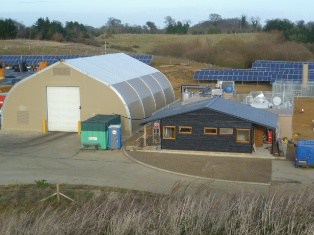
In Southwold in Suffolk, Adnams Bio Energy Limited is working in partnership with British Gas and the National Grid to use brewery and local food waste to produce biomethane for injection into the national grid and for use as a vehicle fuel. Generating up to 4.8 million kilowatt-hours per year enough to heat 235 family homes – the facility aims to produce enough renewable gas to power the Adnams brewery and run its fleet of lorries while still leaving up to 60% of the output for injection into the grid.
The RHI new rules
The current UK government coalition has already made clear its support for AD and for renewable gas. But financial support structures so far – such as Renewable Obligation Certificates (ROCs) and the feed-in tariff (FiT) – have largely been based on encouraging the generation of electricity rather than heat.
Now however, with the Renewable Heat Incentive (RHI) announced in March 2011 and declared open for applications (after some delay) ten months later on 28 November, the project economics and industry frameworks for gas to grid are becoming much more attractive. They could change the rules by stimulating an entirely new market sector in which developers can take advantage of incentives to invest in treating biogas and sell it into the grid rather than simply burning it to claim FiT.
The Department of Energy and Climate Change describes the RHI as the first financial support scheme for renewable heat of its kind in the world, and a policy which will revolutionise the way that heat is generated and used as a key foundation stone of our energy future where both carbon reduction and energy security are assured. They see bio-energy as having the potential to provide about 30% of the governments binding target under the European Commissions Renewable Energy Directive to source 15% of our overall energy from renewable sources by 2020.
The idea is initially to target long-term tariff support to the big heat users that account for 38% of the UKs carbon emissions industry, business and the public sector with a second phase that will expand the RHI scheme to include more technologies as well as support for households. The biomethane RHI tariff currently stands at 6.8p/kWh, for all scales of biomethane injection installations.
So what does the future hold for biogas, and for the developers who could invest in its deployment? There are of course still technical and economic issues to be explored and addressed through the current trials and demonstrator projects. But with the financial incentive of the RHI, the active support of key players such as British Gas, National Grid and SGN, the positive experience in continental Europe, the ready-made infrastructure to take biogas to millions of homes and businesses, and the likely attractiveness to banks through long term security, everything looks as if its coming together to make it happen.


Register for free to comment