

The revelation came as the company urged councils to do also more to improve the quality of glass collected for recycling to make sure it is suitable for remelt.
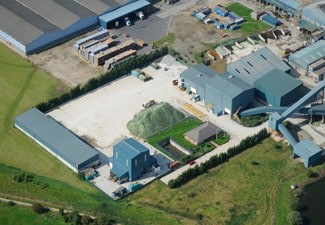
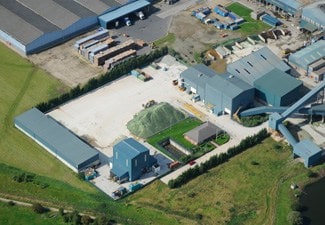
The £9 million investment is being split between two sites – Knottingley and South Kirkby. The bulk of Berryman’s £9 million investment will be spent on upgrading the colour separation equipment at the firms Knottingley site to K9 Flash technology provided by KRS Recycling Systems.
The company said this technology will be able to achieve a 99% accuracy in colour separation, allowing for a better quality material to be processed into furnace ready cullet. The machine will also come with a de-labeller. The remainder of the money will help improve operations at South Kirkby.
The K9 Flash machine is an optical separator which sorts the glass into three different colours flint, amber and green as well as removing ceramic, stones and porcelain. It will use a light source, a high speed camera and an electronic and air ejection unit to do this.
Investment
Discussing the investment, Mark Wilson, chief executive of Berryman told letsrecycle.com: The business had been slowly deteriorating in terms of profit but essentially the recycling market is very simple and we need to get back to basics to understand what the key drivers are. We restored it quite quickly back on to a profit This has given us the confidence to undertake 9 million worth of investment.
Mr Wilson continued: “”What we are investing in is the colour separation plant at Knottingley. To start with the machinery is KRS and uses K9 Flash technology.
K9 Flash technology would do a pre-processing element then the mixed glass is presented for colour separation and it looks at the glass with optical sorters.”
Work on the Knottingley site is expected to begin at the end of July 2013 and the technology should take ten weeks to install, during which time the facility will be out of action. During that time Berrymans Doncaster site will process the glass which would have been handled at Knottingley.
Once commissioning has taken place, the Knottingley site will then only accept mixed coloured feedstock and the separated colours will go to Doncaster.
At present at the Knottingley site, glass is weighed and bulked up after arriving. It is loaded into a vibrating hopper which feeds it into the facility. It then undergoes a sorting process which sees the manual and automatic removal of recyclables such as metals and plastics. Ceramics and other non-recyclables including stones are also removed as the glass is screened, sorted and crushed to produce a furnace ready cullet of varying sizes depending on the customers specifications.
Councils
However, Mr Wilson said that while Berryman councils also need to play their part to improve the quality of glass.
“Because the industry collection methodology has moved from bottle banks the amount of investment required to extract glass in its three separate colours is at a significant increase.” – Mark Wilson, Berryman
Mr Wilson said the move towards commingled kerbside collections has had a detrimental effect on the quality of the glass collected for recycling but also means significant investment is needed by recycling firms to be able to sort and process the material.
In a bid to tackle this, he suggested that councils should look to encourage the separate collection of glass by stipulating the methodology in contracts or outlining what percentage of material should go to remelt processes in the UK.
Discussing the impact commingled collections have on glass recyclers, he said: “Because the industry collection methodology has moved from bottle banks the amount of investment required to extract glass in its three separate colours is at a significant increase. It is all being driven by EU legislation and now the fact that councils are incentivised by government on a tonnage basis rather than a quality basis.
“What that has meant and it is not just for glass recycling, it is for all recyclates is that to extract recyclates the amount of investment we need to get the glass out is significantly greater. We have to invest in huge expensive machines to take out metals, take out paper and take out plastics.”
Contracts
Looking at what councils can do to improve the situation, he said: “Councils can do more in their contracts to help. They could specify that glass goes specifically to UK manufacturing processes or state that a percentage of the glass must go to remelt processes in the UK.”
He added that even those local authorities which are in long term contracts can provide extra support. “All contracts can be varied if all parties have a willingness to vary it.”
Demand for furnace-ready cullet from manufacturers of glass products currently outstrips supply, according to Mr Wilson, who says the UK needs to do more to push more material into remelt to help meet this demand. If the UK fails to do this, he said it could risk losing the business altogether as many of the manufacturers are pan-European and could move their processes elsewhere.
More material is expected to be directed towards remelt as the packaging recycling targets stipulate that 63% of all glass packaging collected for recycling must go to remelt. This will be managed through the packaging waste recovery note (PRN) system.
For more information on Berryman and Mr Wilsons views on the glass recycling industry, click here to read the special report.



Register for free to comment