
In an announcement on 4 January, the Agency said the latest five month delay would give the waste wood industry time to publish a code of practice which meets the legal requirements for assessing and classifying potentially hazardous waste wood and comply with that code of practice.
However, in a statement last month the Wood Recyclers Association (WRA) called for an 18 month delay to the RPS while it continues testing and sampling hazardous wood.
After the expiration of the RPS, wood highlighted as potentially hazardous from both household and demolition sources could have to be identified, separated and consigned at source.
This could lead to household waste and recycling centres (HWRCs) having to segregate hazardous wood.
Project
The RPS was introduced in 2017 with the aim of ensuring that waste wood is properly classified at its origin and is processed into appropriate end markets.
It was launched after the European Commission asked the UK to examine why approximately 0.2% of its waste wood was classified as hazardous, while in Germany, for example, it was 15%.
The WRA has been leading the Waste Wood Classification project with the Agency since then, and has been undergoing testing and sampling of potentially hazardous waste wood.
The RPS aims to allow current compliant practises while this work is undertaken.
Challenge
Last month, the WRA issued a statement saying it plans to “challenge” the Environment Agency over its latest proposals (see letsrecycle.com story). The WRA wrote to Malcolm Lythgo, head of waste regulation at the Environment Agency, stating its plans to challenge the regulations this year.
In the meantime it has asked the EA and the three other regulators (SEPA, NRW and NIEA) to “support the industry” and extend the current RPS for 18 months while the WRA continues testing and sampling hazardous wood.
“This would enable material to continue to flow to both the panel board industry and Chapter IV biomass beyond next summer,” the WRA said.
HWRCs
The WRA added that the Agency has asked the association to work with HWRCs to segregate fence posts and decking when they come on to HWRC sites.
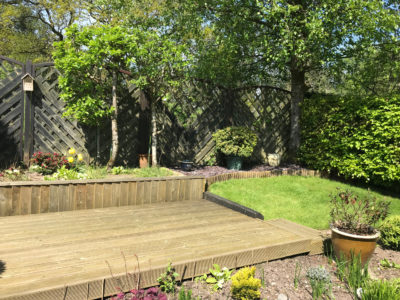
However, the WRA says it has surveyed HWRCs and found that segregation of fence posts and decking was not felt to be viable due to a number of reasons, such as a lack of space, the small volumes of waste wood involved, the expenditure required and the difficulties in getting the public to comply.
The WRA estimates that in the case of fence posts and decking, it was found that these two items make up approximately 1%, (10,000 tonnes) of the volume of HWRC waste wood.
From sampling and testing to date, the WRA has only found that 6% of the fence posts and decking are hazardous, a total 600 tonnes combined.


Register for free to comment