

In his BBC television programme ‘Hugh’s War on Waste’, which aired on Monday (November 9) Mr Fearnley-Whittingstall criticised supermarkets’ use of anaerobic digestion (AD) as a defence for the overproduction of food. He was also quoted in an interview in the guardian newspaper describing the energy recovery levels from the AD process as ‘pathetic’.
In the past, some supporters of food waste distribution schemes have been critical of AD as a treatment option for food waste. And, with finding available feedstock becoming an increasing challenge for some AD plant operators in England, redistribution has been viewed as a threat to the sector in the past.
However, experts in the AD industry have dismissed the criticism and claimed that AD infrastructure will still be necessary even if food waste distribution is increased.
Speaking to letsrecycle.com, Jeremy Jacobs, technical director at the Renewable Energy Association (REA), said: “He [Mr Fearnley-Whittingstall] was saying that food waste that is fit for human consumption should not be sent to AD plants, which is something that we in the industry agree with. Additionally the amount of energy produced from the AD process is significant to the renewables market and is a far more resourceful way of processing food waste than sending it to landfill.”
Waste hierarchy
Monday night’s programme also highlighted the food hierarchy model, which outlines how waste should be minimised and edible food waste should be redirected for human or animal consumption wherever possible.
Charlotte Morton, chief executive at the Anaerobic Digestion and Bioresources Association (ADBA), added that the hierarchy is ‘fully supported’ by the AD sector
She said: “The AD industry fully supports the waste hierarchy. Businesses need to put in place policies that reduce waste and redistribute whatever they can, with only the remainder being sent to AD.”
Reducing waste
According to food waste treatment firm ReFood, if the UK were to achieve zero food waste to landfill nationwide, by 2020 the country could generate over 1.1tW of energy, 27 million fewer tonnes of greenhouse gas emissions and return over 1.3 million tonnes of nutrient-rich fertiliser to farmland.
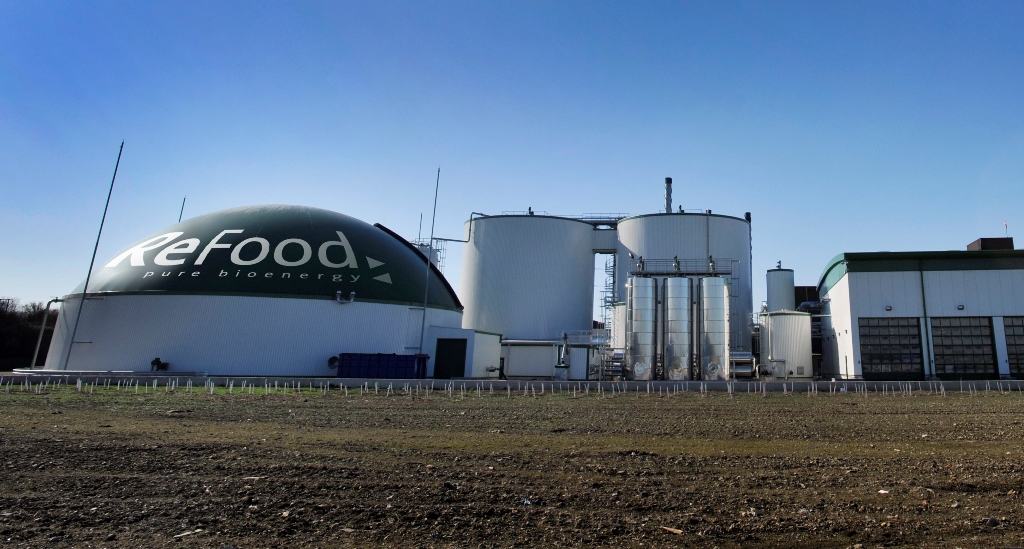
Commenting on the issues raised in the programme, Philip Simpson, commercial director at ReFood said: “Reducing waste must be a priority whether by working with redistribution charities, sending surplus food to animal feed companies or changing supermarket policies. However, there will always be a nominal amount of unavoidable food waste. This is where AD must be prioritised. While recycling food via AD isn’t the one size fits all solution, its involvement, as part of a wider integrated waste management strategy, is hugely important.”
Campaign
In an aim to combat the issue, REA recently launched a petition to introduce mandatory separate collections of food waste across England (see letsrecycle.com story). According to the petition, currently only 10% of household food waste is captured and recycled in the UK, with roughly 7 million tonnes being sent to landfill.
Requirements for some businesses to present food waste separately for collection were introduced in Scotland last year, with Wales setting up a goal for mandatory collection by 2025. REA’s petition urges England to follow suit and impose a similar strategy.

Register for free to comment