

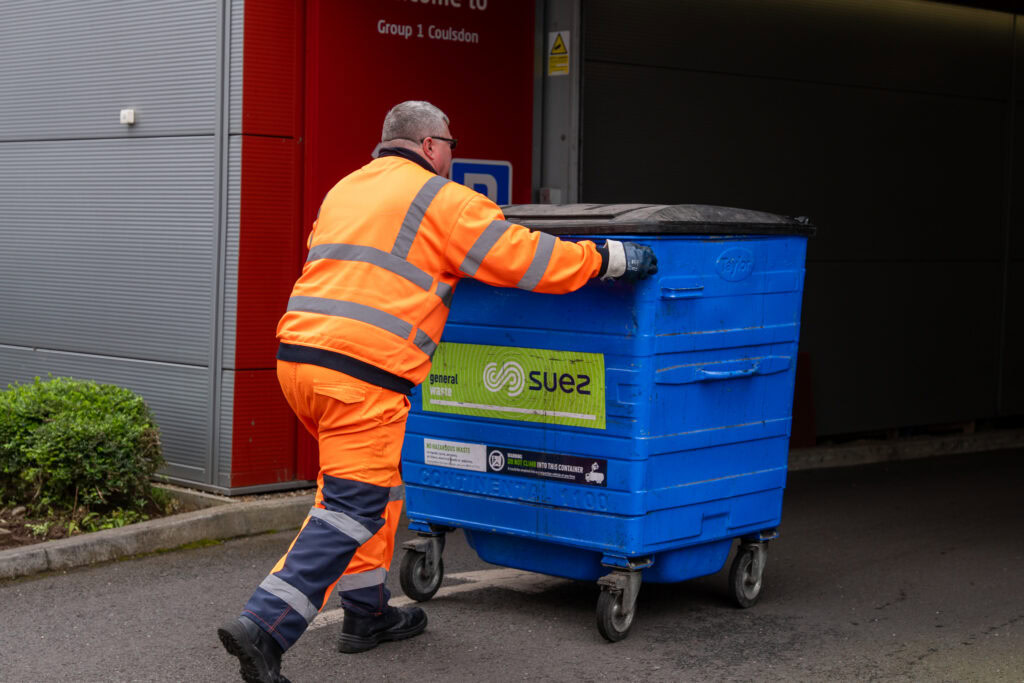
Suez confirmed that the positions were all agency staff fulfilling roles on the picking line.
The losses highlight the wider impacts of waste fires, which continue to increase in frequency across the waste sector.
Fred Stinchcombe, South West Regional Manager for Suez in the UK, said: “A fire broke out at our Avonmouth materials recycling facility in the early hours of 15 July, resulting in the loss of the plant.
“Thankfully, there were no injuries, and we remain grateful to Avon Fire and Rescue Service for their quick response and support throughout the incident.
“The fire resulted in the temporary loss of 100,000 tonnes of processing capacity for the UK that will cost in the region of £30 million to reinstate, and although the wider impacts can be more difficult to quantify, they are also keenly felt.
“Around 50 agency staff lost their positions as a result of the fire, while many local suppliers and businesses that worked with us lost an important source of income overnight.
“Beyond the very real health and safety risks, fires like this can have a lasting impact on the wellbeing of our teams as well as on the livelihoods of the local communities that we support.”
Avonmouth
The repairs follow a major fire which broke out in the early hours of 15 July.
Avon Fire and Rescue Service was called to the Suez facility at around 1.32am, with a major incident subsequently declared.
The major incident status was downgraded at 10.24am, suggesting that the most intense period of the fire lasted for approximately nine hours.
All personnel at the site were safely evacuated and there were no reported injuries.
Crews from across the region attended the incident, with firefighters from Avonmouth, Patchway, Southmead, Nailsea, Temple, Pill, Portishead, Kingswood, Chew Magna, Clevedon, Bedminster, Yate, Thornbury and Weston-super-Mare responding.
The risk of lithium-ion batteries
The incident was the latest in a series of fires affecting waste and recycling facilities, with batteries increasingly identified by the industry as a significant risk.
Material Focus reported more than 1,200 battery-related fires in refuse vehicles and waste facilities during 2023/24, a 71% increase on the previous year.
Suez Chief Operating Officer for operations and business development, John Wilkinson, said the changing nature of consumer electrical products was contributing to the issue.
Wilkinson commented: “The shift from replaceable batteries to rechargeable devices, combined with the rise of fast-tech, means devices with embedded lithium-ion batteries are now common place in our daily lives.
“With limited awareness of the risks posed when they are incorrectly discarded, it’s no surprise that we are seeing a rise in fires across our operations as these devices make their way into the waste stream.
He said the financial impact of incidents such as the Avonmouth fire was significant, but that the priority was the safety of frontline staff.
Wilkinson added: “Urgent action is needed to get lithium-ion batteries out of people’s general waste and mixed recycling, and into separate, designated streams so we can recycle them safely.”
The comments come as waste operators continue to report rechargeable electrical devices, particularly vapes, entering residual waste and recycling streams despite existing take-back arrangements.
Biffa reported that an estimated 480,000 vapes entered four of its busiest MRFs during June and July – its highest recorded figure.
Call for vape DRS
Wilkinson also backed a deposit return scheme (DRS) specifically for vapes as part of the solution.
He said Suez would like to see “a deposit return scheme for vapes and convenient, widely promoted recycling options for small, rechargeable electrical devices”.
Under a DRS, consumers would pay a refundable deposit when buying a product and receive the money back when the used item is returned through an appropriate collection point.
The Environmental Services Association (ESA) and Biffa have previously called for such a system for vapes, arguing that an existing network of collection and take-back points could be used to handle returned devices. Biffa has proposed a £5 refundable deposit to provide an incentive for consumers to return used vapes.
The proposal comes despite the existing legal requirements around vape take-back and the ban on single-use vapes.

With the risks from disposable batteries from an increasing range of sources more investment is needed at MRF’s to identify and remove from processing at the front end. Trying to change the public to dispose of at their local Household recovery and recycling centre will not reduce the risk of these fires sufficiently.