


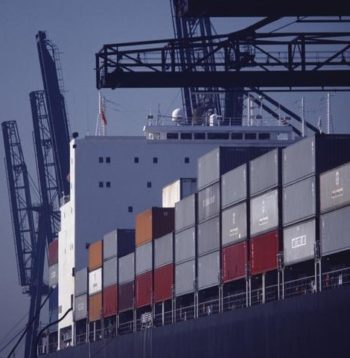
Notified waste involves the movements of certain wastes to certain destinations which are subject to stricter notification controls (see: Importing and exporting waste).
The Agency announced its intentions to consult on increasing these earlier this year (see letsrecycle.com story), saying it has an “obligation to recover the costs of our regulatory activities through charges to our customers”.
This came on the back of complaints from parts of the industry over delays (see letsrecycle.com story).
Today, the consultation on increasing these charges were launched. The proposed fees and consultation can be found here.
These updated charges will apply to both the export and import of notified waste to and from England and are set to take effect on April 1, 2024.
Consultation contents
To make sure our charges are “a fair reflection of the work we do”, the Agency said it will be consulting on:
- Introducing new charges for anyone sending over 1,000 shipments under a notification
- Replacing the existing band for notifications for 101-500 shipments with two smaller bands for 101-300 and 301-500 shipments
- Removing the extra charges in its scheme for notifications which involve an ‘interim site’
- Reflecting the extra costs that arise when shipments are made up of multiple containers or lorries
- Refund requests need to be made before the Environment Agency transmits an application to the overseas authorities
- Charging customers for any changes to a notification after we transmit it to overseas authorities
- Additional charge for any notification that includes mercury, ozone-depleting substances (ODS), fluorinated gases (F-gases) or Naturally Occurring Radioactive Materials (NORM).
- Charging for the work required to assess applications for ‘pre-consented’ status for facilities in England
Proposal
Explaining its rationale for the consultation, the EA has stated that at present, the cost incurred by the EA for its regulating shipments exceeds the fees it charges to waste importers and exporters.
The charges for international waste shipments have remained unchanged since 2012, and in the past decade, various factors such as market dynamics and environmental standards enhancement policies have escalated costs.
According to the EA the proposals outlined in this consultation are designed to ensure several objectives such as ensuring that individuals and businesses only pay for the specific services they receive.
It also aims to reduce the reliance on additional taxpayer funds to support its regulatory work.
Our proposed changes will reflect the full cost of the chargeable services we provide
- Steve Molyneux, Environment Agency
‘Responsibility’
Steve Molyneux, deputy director of waste regulation at the EA, said: “Notification controls are crucial – they allow us to work with the UK’s waste industry and our partners around the world to ensure waste movements are correctly managed and don’t cause harm to the environment.
“Currently, the cost of these regulatory activities is greater than the fees we charge. We have a responsibility to avoid passing on costs to the taxpayer and a commitment to fairness and transparency.
“Our proposed changes will reflect the full cost of the chargeable services we provide – ensuring we continue to protect the environment internationally, as well as people’s health, safety and wellbeing.”

Register for free to comment