



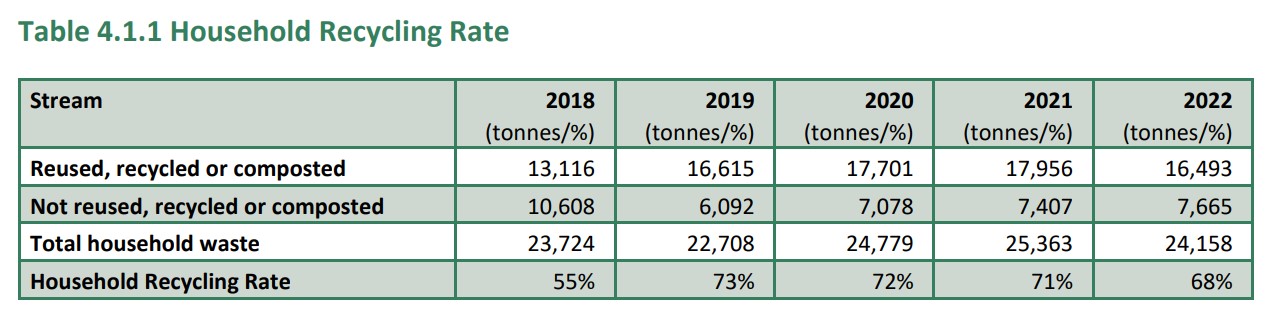
The figure was revealed in a report published by States of Guernsey yesterday, 13 April. The 68% rate for the country, with a population of around 64,000, means it has missed its own 70% target for the first time since launching a ‘pay as you throw’ system in 2019.
Overall household waste volumes fell from 25,363 tonnes to 24,158, however a 14% drop in garden waste tonnages sent for recycling led to an overall drop in the rate.
Other standout figures include a significant jump since the pandemic in tonnages at household waste and recycling centre, with levels trebling from just over 1,000 tonnes in 2019 to nearly 3,000 tonnes in 2022.
Of the household waste not reused, recycled, or composted, 99% was exported for energy recovery as RDF – the same as in 2021 – and only 1% sent to landfill.
Sources
Nearly two thirds of overall waste volumes in Guernsey come from commercial sources.
Commercial waste tonnages rose from 37,094 tonnes to 40,265. Inert waste rose from 116,238 tonnes to 138,106. This reflects the fact many of the island residents are returning to pre-pandemic working habits, States of Guernsey said.
The recycling rate for commercial waste was 54%.
The report explained: “For a number of metrics, tonnages have reverted to near-2019 levels which would indicate the impact of COVID-19 on the volumes and nature of waste and recycling being produced in 2020 and 2021, and the degree of shift from commercial to household.
“Total inputs into the Longue Hougue Land Reclamation site (before recycling or reuse) increased by 23% compared with 2021, reflecting a continued uplift in the construction industry. Tonnages of inert waste recycled and reused at the Longue Hougue Land Reclamation site also continued to rise (a 14% increase compared with 2021).”
Reuse
States of Guernsey also highlighted the progress made with reuse.
In 2022, 122 tonnes were taken for reuse by charities and not-for-profit organisations. This is lower than in 2020 and 2021, “although the tonnages in those years may reflect islanders taking the opportunity to clear out unwanted items during the COVID-19 lockdowns in those years,” the report said.
Methodology
In 2014, the UK changed its methodology for calculating its Recycling Rate to excluded materials not considered to have come directly from households, such as the content of litter bins. A further methodology change was introduced in 2016 to include metal recovered and recycled after incineration in the recycling tonnage.
Guernsey’s methodology was amended for 2019 to bring it in line with the UK.


Subscribe for free