

The body of Mr McKeague, who was 23 when he disappeared after a night out in September 2016, has never been found but the inquest found he died around 4.20am in Bury St Edmunds as a result of “compression asphyxia in association with multiple injuries”.
While the full report is due to be made public next week, the coroner confirmed it will order a prevention of future deaths report in relation to “ineffective locks on bins”.
Prevention of future deaths reports are made by coroners to address concerns arising from inquests.
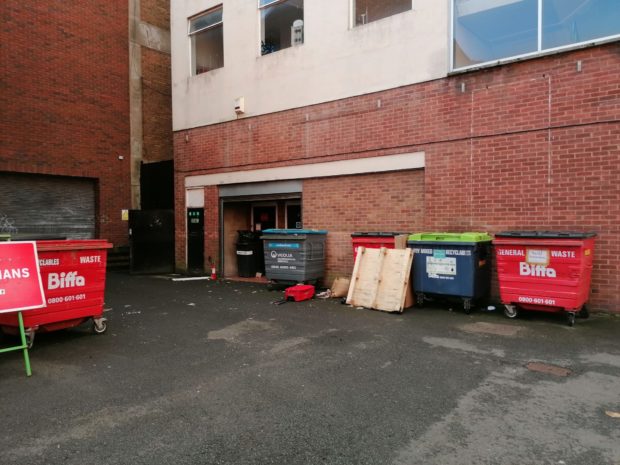
There are a wide range of locks available for larger communal or commercial bins which can often attract rough sleepers.
However, there have been some concerns that these could be more dangerous as they could trap people who manage to get in.
Bin sleeping
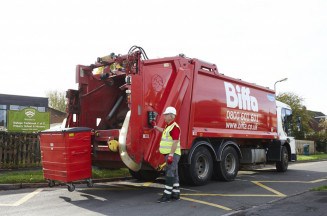
The bin lorry in question was operated by waste management company Biffa.
In a statement given to letsrecycle.com, a spokesperson explained they have worked extensively on efforts to tackle sleeping in bins, and added that more secure bin locks “could cause more problems than they solve”.
The spokesperson said: “As a member of the Environmental Services Association, Biffa has, for many years, been part of the Waste Industry Safety and Health Forum and is currently chairing the latest review of industry guidance on best practice for dealing with the issue.
“In 2020 we co-published a report investigating the extent of the problem and recommending the action that needs to be taken – including calling on waste companies, waste producers, homeless charities, and the public to work together – to tackle it (see letsrecycle.com story).
“We continue to explore opportunities to work with charities and other third sector organisations to raise awareness of the plight of the homeless.
“Bin and lock design is industry standard and not specific to Biffa. Locks are designed to keep waste securely in the bin and not to prevent determined access.
“More secure locks, such as ‘slam locks’ or external padlocks, could cause more problems than they solve by trapping people who get into a bin and preventing them from getting out again.”
Guidance
The waste industry has worked extensively in recent years to tackle the issue with a number of campaigns launch and guidance issued.
For example, the WISH Forum, the Waste Industry Safety Health, published guidance on the issue in consultation with the Health and Safety Executive (HSE) in 2015.
The document, known as WASTE 25, is “aimed at helping prevent death or serious injury when people shelter in large commercial or communal domestic bins used for storing waste or recycled materials”. It can be accessed here.
WISH secretary Toni Gladding told letsrecycle.com: “We have been looking at revising the guidance but as it stands it is still relevant and so has not been changed at this time.”
HSE
A spokesperson from the HSE said the issue of people sleeping in bins has “concerned HSE and the waste and recycling industry for many years”.

They explained that there are “various WISH documents which identify good practice to minimise the risks of both sleeping in bins and around bins, e.g. under waste such as cardboard.
“In the latter case, the risk tends to relate more to being run over by collection vehicles.”
The HSE added that these risks “should be captured in the routine risk assessments which waste and recycling contractors are obliged to carry out”.
Areas known to attract rough sleepers should be identified and extra steps taken to ensure operatives are vigilant for people sleeping in or around bins, the HSE added.
The HSE spokesperson concluded: “The best way to prevent further accidents arising from sleeping in or around bins is this for the bin owners – those in control of the premises or undertaking – to take all reasonable steps to keep people out of and away from the bins, e.g. by keeping them in locked enclosures or locking the individual bins.”
Viewing panels
According to the BBC, the Coroner Nigel Parsley also said during the inquest that he would contact British Standards Institute, bin lorry manufacturer Dennis Eagle and waste firm Biffa about his concerns regarding the viewing panels, used to see inside the back of bin lorries.

Register for free to comment